Why should we celebrate Ukraine’s independence together? Veidas. 25 August 2016
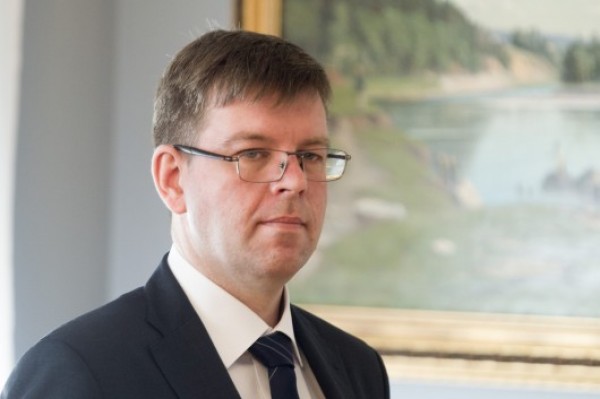
An interview by Marius JANUKONIS, Lithuania’s Ambassador to Ukraine
25 August 2016
The 24th of August is an extraordinary day for Ukraine: the country celebrates the 25th anniversary of its independence. The people of Ukraine mark the anniversary beset with enormous challenges. In the meantime, they are very proud of their freedom. The people of Ukraine, regardless of what languages they speak, in the 20th and 21st centuries proved that they cherish their freedom above everything else. Their freedom has been relentlessly trampled on by Stalin, other communist leaders, Hitler, and, unfortunately, leaders of modern-day Russia.
Since my first visit to Ukraine in 1998 (I visited Kyiv when I was still a schoolchild in 1986), I have noticed a few things: the country’s diversity, enormous opportunities for development and a warm and friendly feeling, which the people held towards Lithuanians. Today, as an Ambassador, I can confirm that my initial impression was the true impression.
Some believe that Ukraine’s multiculturalism, bilingualism and regional differences present a challenge for the development of the country, and that is burdensome. However, we know that Ukraine is not the only multinational state in Europe, where many languages are spoken, but diversity and inclusion work. So this is an opportunity, which Ukraine has quite successfully exhausted for 22 years. Unfortunately, the Russian Federation, which illegally annexed Crimea in 2014 and began its military aggression against eastern Ukraine, exploits these differences to discredit Ukraine today.
For example, everyone knows very well that the language issue in this country is an artificially created issue, which has never caused any communication problems for the people or their relationships with state authorities. I myself was once a victim of stereotypes, but when I visited western Ukraine for the first time, I learned that the people did not mind speaking Russian, if that was convenient for both interlocutors.
Ukraine is incredibly multi-faceted and offers unique opportunities for business, tourism, and culture.
A deeper understanding of the country helps to eliminate many myths and discover the natural, cultural, and historic resources that sometimes have been insufficiently exposed to public scrutiny.
Besides its rich natural resources and powerful heavy industry, Ukraine can reasonably be called a modern country whose information technology sector’s productivity is one of the largest in Europe.
Many people would not expect that Ukraine, which has filled global markets with cereals and sunflower oil, could also have an old tradition of quality wine-making. However, the most important asset of Ukraine is, doubtlessly, the potential of its people.
The name of Lithuania opens a lot of doors to me in Ukraine. I get excited when a random person on the street remembers visiting Vilnius to support Lithuania during the January events in 1991 or when a resident of Vinica says that the city was founded by Algirdas, the Grand Duke of Lithuania.
There are abundant traces and names in our common history – the noble families in the Grand Duchy of Lithuania, authors of the 19th and 20th-century classics, links among the interwar period, the resistance movement and deportations. I think it would be wrong to overlook this legacy when creating even stronger relations between Lithuania and Ukraine. We all wish Ukraine to implement reforms and achieve progress faster, but some processes slow down also due to subjective reasons. Nevertheless, we cannot quit.
Lithuania not only provides its official support, there is also an invaluable consolidation of a large share of Lithuania’s civil society, businesses, and non-governmental organizations in providing support for the people of Ukraine, who build and defend their country. Therefore, this year Lithuania and Ukraine celebrate the 25th anniversary of their diplomatic relations with dignity as they look back at our impressive history. Ukraine’s civil society and volunteers I wish to mention separately. I think, Europe and the world have failed to properly assess the phenomenon that has finally become manifest on Kyiv’s Maidan Nezalezhnosti in 2013.
It was then that Ukraine’s new civil society was born – courageous, selfless, determined to defend the country and to help its suffering citizens. Today, a large network of volunteers extends from Lviv to Donetsk, consisting of various professional Ukrainians who thwart the internal discord that had been artificially created, dedicate their time without remuneration, as well as sacrifice their health and well-being for the sake of the country and its people. These people are a true symbol of a new, different Europe and deserve our exceptional respect, as well as respect and recognition of the state of Ukraine.
Europe is at the crossroads, as it confronts extraordinary challenges today. The future of success of the project of the European Union depends on us, Europeans, as well as on our faith and determination to defend our common values. It is obvious that the EU’s security and prosperity go hand in hand with the success in Ukraine, which suffers from both open and hidden aggression of its neighbouring country that is looking to redraw Europe’s 21st century borders by force. As we pay homage to the ten thousand Ukrainians who have been killed over the last two years, we must realise that this sacrifice touches every one of us.
Indifference and fatigue must be replaced by solidarity and belief in Ukraine’s progress and its independence. And, finally, the European Union should open its doors wider and grant visa-free travel for the citizens of Ukraine in the nearest future.
We clearly understand concerns over the new challenge of migration in Europe, so we have to remain objective. The citizens of Ukraine do not pose an essential threat to us. Those several million Ukrainians who now live and work in the EU member states are successfully integrated and comply with the local laws. Granting freedom of movement, which is one of the most important European values, to the citizens of Ukraine would contribute to the EU’s courageous foreign policy and be the perfect gift for the anniversary of the Ukrainian State.

Social media