


Vice-Minister Mitkus: EU defence and security initiatives need to be stepped up, with a particular focus on eastern border regions
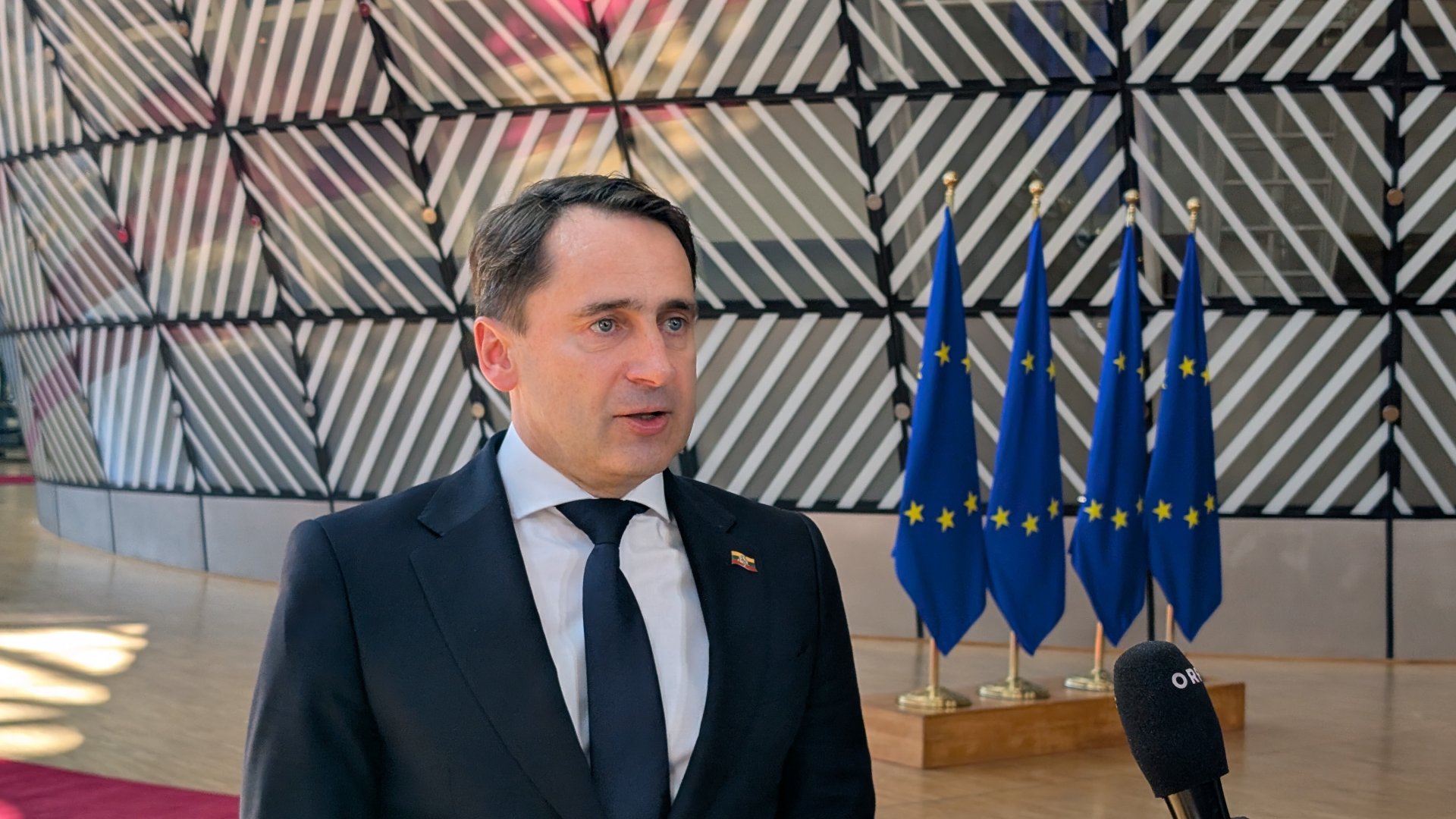
On 26 May, the Vice-Minister of Foreign Affairs Sigitas Mitkus attended a meeting of the General Affairs Council in Brussels, which started preparations for the upcoming European Council meeting, held a policy debate on the next Multiannual Financial Framework of the European Union, and discussed the state of play of EU-UK relations.
Ministers exchanged views on the annotated draft agenda of the European Council meeting of 18-19 June, which included major geopolitical and economic issues, such as support for Ukraine, the next MFF, global economic challenges, European defence and security, and migration.
"We need to send a clear signal at the June European Council meeting: Europe is not only responding to Russia's aggression and hybrid operations, but is also building a real deterrence capacity. Ukraine's EU membership, the security of the eastern flank, and the EU's ability to act as one are inseparable," said the Vice-Minister.
Mitkus stressed that Russia remains a direct and long-term threat to European security, and recent incidents involving drones in the Baltic states have once again highlighted the vulnerability of the EU's eastern flank and the need to strengthen the resilience and security of the EU's eastern border region.
"Hybrid threats are not just a national or regional issue but a security test for Europe as a whole. The EU’s response must be united and swift: from drone defence, air defence and military mobility to resilient infrastructure, civil protection and prevention of hybrid threats", stressed Mitkus.
In a discussion on how the future 2028-2034 MFF could contribute to strengthening the Single Market, the Vice-Minister stressed that EU competitiveness cannot be decoupled from security, resilience, and the real functioning of the Single Market in all regions.
"The future EU budget must not only be an instrument for investment but also an instrument for resilience. Eastern border regions bordering the aggressors - Russia and Belarus - are the first to face security, social, economic, and hybrid challenges, so their resilience is a matter of security and competitiveness for the EU as a whole," said Mitkus.
Lithuania aims to have a horizontal priority for the EU’s eastern border regions in the MFF 2028-2034, including investments in security, resilience, civil protection, infrastructure, connectivity, military mobility, and economic viability. Funding must also be ensured for both new priorities – security and defence, military mobility, support for Ukraine, and competitiveness – and traditional policies, including Cohesion Policy and the Common Agricultural Policy.
"The Single Market needs to be strong across Europe, not just in major industrial centres. The future MFF must reduce fragmentation, support reforms, ensure fair access for smaller member states, regions, small and medium-sized enterprises, and pay special attention to the EU's eastern border regions," said the Vice-Minister.
The General Affairs Council meeting also discussed the state of play of the EU-UK relations. "Lithuania remains a strong supporter of a closer EU-UK partnership, especially in the foreign, security and defence fields, supporting Ukraine, strengthening sanctions coordination, military mobility, resilience to hybrid and cyber threats", underlined the Vice-Minister.
Ministers held country-specific discussions under the annual rule of law dialogue, focusing on the situation in France, Croatia, Italy, and Latvia. For each country, the Commission first presented the main findings of the respective country-specific chapter in its 2025 rule of law report. Lithuania welcomed the Single Market dimension included in the report, stressing that effective respect for the rule of law is a prerequisite for a strong and competitive EU.

Social media


