


UNDERSECRETARY OF THE MINISTRY WELCOMED PARTICIPANTS OF THE BILATERAL LITHUANIAN-RUSSIAN COMMISSION OF HISTORIANS
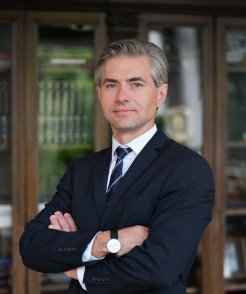
On 16 September, Undersecretary of Lithuanian Ministry of Foreign Affairs Laimonas Talat-Kelpša welcomed the participants of the third meeting of the Bilateral Lithuanian-Russian Commission of Historians. Undersecretary of the Ministry indicated that this event, during which Lithuanian and Russian historians were discussing important issues of history, exchanged thoughts and ideas, was yet another step towards the development of better relations between Lithuania and Russia.
‘I would like to stress that regardless of the abundance of comments on Lithuanian-Russian relations that had recently appeared in the media of both countries, the development of good neighbourly relations with neighbouring countries was one of the most important goals of Lithuania’s foreign policy’, said the Undersecretary of the Ministry.
L.Talat-Kelpša indicated that Russia was a very important partner, with which Lithuania was seeking to cooperate in various areas and to foster good neighbourly relations.
‘Even though the 20th century was not the most successful one in the history of our relations, as Lithuania’s occupation and annexation by the Soviet Union was an invincible obstacle for the development of close and equal bilateral cooperation, nevertheless, today we can appeal to an earlier experience of long term cooperation and historical relations, which will help us to develop harmonious neighbourly relations in the future,’ said L.Talat-Kelpša.
As one of the most successful examples in bilateral cooperation, L.Talat-Kelpša named the so-called ‘Kaliningrad issue’. According to the Undersecretary of the Ministry, Russia is a very important economic partner of Lithuania. This Bilateral Lithuanian-Russian Commission of Historians also presents a good example of bilateral cooperation.
According to L.Talat-Kelpša, Lithuania seeks for relations based on good neighbourhood, mutual help and equal partnership. A new high-quality stage of bilateral relations can be achieved only when it is not overshadowed by the ghosts of the past.
‘Wounds from the past do not heal instantly. Unavoidably, we will have to return to historical issues and it would be the best, if those issues were addressed by professional historians’, stressed L.Talat-Kelpša.
The first meeting of Bilateral Lithuanian-Russian Commission of Historians took place in Vilnius in 2006 and the second was held in Moscow in 2007. On 17-18 September at the Lithuanian Institute of History in Vilnius, the Commission is organising an international conference of scientists called ‘The Empire and Nations in the 19th Century’.
Social media


