


UNDERSECRETARY OF THE MINISTRY OF FOREIGN AFFAIRS: MOBILIZATION OF EUROPEAN FINANCES IS NECESSARY IN ORDER TO ESTABLISH ENERGY LINKS AS SOON AS POSSIBLE
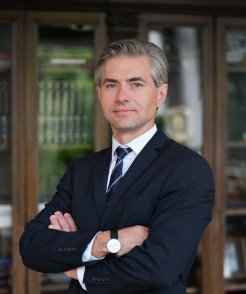
During the European Union’s General Affairs and External Relations Council (GAERC) meeting on 8 December in Brussels, Undersecretary of the Ministry of Foreign Affairs of Lithuania Žygimantas Pavilionis and heads of diplomacy of the EU Member States discussed the issues of energy, Eastern Partnership, the review of European Security Strategy and the EU enlargement matters. During the meeting, European Commission’s plan to revive the European economy and financial incentives of prompting the establishment of energy links were discussed. The latter issue included the Baltic Interconnection Plan which is especially important to Lithuania.
“Now it is most important to mobilize financial mechanisms and to start implementing such projects as “Swedlit” urgently,” said Ž.Pavilionis.
On 11-12 December at the European Council Lithuania will seek that new financial resources are used for solving energy security challenges in the Baltic region after 2009. This way Lithuania seeks to reduce the dependence of the region on a single external energy supplier.
“While discussing the climate change package and making decisions on quotas of gas emissions that evoke the greenhouse effect, the European Council has to introduce a clause on Lithuania’s complicated energy situation, in relation to the consequences of closure of Ignalina Nuclear Power Plant,” said Ž.Pavilionis.
Ž.Pavilionis also expressed Lithuania’s support to the proposal for the Eastern Partnership that had been submitted by the European Commission. This initiative is dedicated to the deepening of bilateral relations with six neighbouring countries: Armenia, Azerbaijan, Belarus (when the latter meets requirements), Georgia, Moldova, and Ukraine. The European Commission suggests signing association agreements with them, create free trade areas and facilitate visa regime, gradually waiving the visa fee.
“For the proposal for the Eastern Partnership, greater political involvement of the whole EU is not less significant than the financial support,” said the Undersecretary of Foreign Ministry. According to Ž.Pavilionis, the main challenge of the Eastern Partnership is to achieve accord of all EU Member States. According to him, a question of financing is also a sore subject. The Commission suggests finding finances already in this financial perspective, while continuing to consistently increase funding for the neighbouring countries in the East.
In Brussels, Foreign Ministers also discussed the review of the European Security Strategy.
Ž.Pavilionis noted that Europe has to be prepared to face various threats – the new ones as the proliferation of weapons and technologies of mass destruction, energy blackmail, and cyber and information attacks - as well as the old ones. According to him, Europe seeks to emphasize once again that its relations with other countries are based on values, justice and respect for international obligations.
Social media


