


UNDERSECRETARY OF THE MINISTRY OF FOREIGN AFFAIRS GAVE A SPEECH REGARDING LITHUANIA’S FOREIGN TRADE POLICY
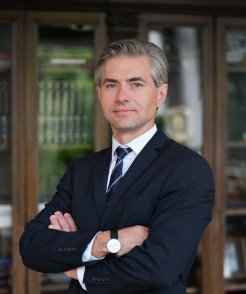
On 16 January, Undersecretary of Lithuanian Ministry of Foreign Affairs Žygimantas Pavilionis gave a speech titled ‘The Lithuanian Foreign Trade Policy Goals and Tasks’ at the round table discussion, which was organized by the President of Lithuania Valdas Adamkus, ‘Lithuanian Foreign Trade Policy after Accession to the European Union: Are We Prepared for Globalization Challenges?’
The Undersecretary of the Ministry spoke about Lithuanian foreign trade policy, its goals and challenges.
The most important goals and tasks of Lithuanian foreign trade policy, according to the Undersecretary of the Ministry, are the following: increasing economic security, creating new opportunities for the development of Lithuanian goods and services’ export, supervision of rules for free and honest trade, strengthening trade and economic relations with the neighbouring countries, advocacy of sustainable development and public interests, and realization of development cooperation policy goals.
In his speech about Lithuanian foreign trade policy, Ž.Pavilionis stressed the importance of obtaining consensus.
‘Globalization is a controversial topic, interests are diverse in various market shares and we have to harmonise those interests, searching for a common denominator and a pragmatic balance. It is also important to escape the contraposition of market shares, social partners and governmental institutions,’ indicated Ž.Pavilionis.
‘Foreign trade policy is a part of competitiveness and new generation agenda. Therefore, the issues of openness and of ensuring competitiveness are important in all spheres. It is necessary to pay more attention to internal market, innovations and challenges of migration,’ said the Undersecretary of the Ministry.
The Ministry of Foreign Affairs intends to prepare a study regarding the challenges of trade policy.
During the discussion, experts of the Office of the President, of the Ministries, representatives of business and consumers’ organisations, and economic experts also exchanged their opinions.
Social media


