


UN RESOLUTION ON NON-PROLIFERATION OF WEAPONS OF MASS DESTRUCTION SHOULD BE IMPLEMENTED GLOBALLY, LITHUANIAN FOREIGN VICE-MINISTER SAYS
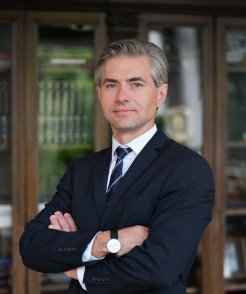
At the on-going seminar on the implementation of the United Nations Security Council Resolution 1540 (2004) on 5 June in Vilnius, Lithuanian Vice-Minister of Foreign Affairs Evaldas Ignatavičius stressed that the resolution, which included the need for all member states to fulfil their obligations to prevent proliferation of nuclear, chemical and biological weapons, should be implemented around the world.
“Implementation of this resolution must be top priority for each state. It is a long-term objective of all countries,” Ignatavičius said.According to him, the resolution that was unanimously adopted by the United Nations Security Council in 2004 is one of the most universal instruments against threats of the proliferation of weapons of mass destruction.
The Vice-Minister stressed that Lithuania had taken up a leading role in the region aiming to achieve the objectives of the resolution, while participation in the Seoul Nuclear Security Summit allowed intensifying activities in this sphere.
According to Ignatavičius, Lithuania’s greatest achievement so far has been the establishment of the Centre of Excellence for Nuclear Security in Medininkai, which will contribute to closer cooperation and increase security of the region.
At the event, Director of the Conflict Prevention Centre of the Organization for Security and Co-operation in Europe (OSCE) Adam Kobieracki highlighted the importance of international and regional cooperation and invited all regional organizations to contribute to the implementation of the objectives of the resolution. According to the OSCE representative, it is possible to develop a good system to address threats posed by the proliferation of weapons of mass destruction only when acting in concert.
The event is co-organized by Lithuanian Ministry of Foreign Affairs, OSCE and the United Nations Office for Disarmament Affairs (UNODA).
Resolution 1540 obliges states to adopt legislation to prevent the proliferation of nuclear, chemical and biological weapons, and their means of delivery, and establish appropriate controls over related materials to prevent their illicit trafficking.
The seminar aims to encourage states share examples of best practices and relevant experience, gained when seeking to achieve the objectives of the resolution, and thus contribute to a more effective implementation of provisions of the resolution.
The event is attended by experts from the Nordic and Baltic States, Germany, Poland, Russia and the United States. During the seminar on June 5-6, countries will present their main achievements in implementing the objectives of the United Nations Security Council Resolution 1540. Experts from the OSCE, United Nations, European Commission, Interpol and other international organizations will also deliver speeches.
Social media


