UKRAINE’S ROAD TO THE WEST – GUIDED BY A LITHUANIAN MAP (Made in Lithuania, vol. 22. No.4, 2006)
Ukraine has a faithful partner, which has helped it in its difficult moments and supports it on its way to NATO and the European Union. This partner is Lithuania, the President of the Ukraine, Victor Jushchenko, referred to this friendship many a time.
The citizens of both countries used to live in a single state and there are many other common historical ties between these two nations.
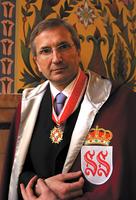 The magazine Made in Lithuania spoke to the Ambassador of Lithuania to Ukraine, Algirdas Kumža, not only about this common history. The two countries have business and art ties as well.
– Your Excellency Ambassador Kumža, will you tell us, how political co-operation between Ukraine and Lithuania began, please.
– In December this year, we will mark the 15 year of Lithuanian-Ukrainian diplomatic relations. However, the history of our two countries’ co-operation is much longer – the Lithuanians signed the first peace agreements with Galicia-Volhynia as far back as the beginning of the 13th Century. In the 14th-15th Centuries we lived in one state, which historians refer to as the Velvet Empire.
The Ukrainians speak fondly about that period because the Lithuanians who had arrived imposed neither their order nor their customs on the Ukrainian people. Both nations remember the famous chieftain Konstantin Ostrogishki and his legendary victory at Orsha.
Many heritage symbols of the Grand Duchy of Lithuania have survived in the Ukraine. For example, the castle of Lubert in Ùuck – a restaurant named Vytautas’ Crown welcomes tourists there.
– Recently the Historical Memory Forum was established following your initiative. Why was this initiative necessary?
– I became convinced that, unfortunately, the impressive pages of our history today have been quite forgotten. I noticed this fact last summer, when, together with Lithuanian historians, we visited Lvov, Ùuck, Ostrog and other places related to ancient Lithuania. I saw the ruin and oblivion that prevailed there. Therefore in the end of the trip, in co-operation with Lithuanian and Ukrainian historians, we established the Historical Memory Forum, which endeavours to re-invoke historical memory, encourages preservation of heritage and research. The famous historian Prof. Alfredas Bumbliauskas heads the Forum. This Forum will stimulate co-operation between the historians from the two countries. We remember quite well that in Soviet times, the theme of the Grand Duchy of Lithuania was not included in the available research scope.
– Let us move from history to the present. Lithuanian business people are successfully conquering adjacent markets and the Ukraine is not an exception. What Lithuanian goods are known amongst the Ukrainian people?
– Children in Kiev can no longer imagine their life without Chilli pizzas. This Lithuanian Company has opened only one restaurant thus far, but in the immediate future it plans to expand further. It plans to open as many as 11 pizzerias in Kiev alone.
Lithuanian bread and cheese are freely available in Kiev. The residents of Kiev like Lithuanian products.
– Is it true that Lithuanian petrol is especially highly valued by motor car owners in Ukraine?
– It is true – the most important commodity is Lithuanian Maþeikiø nafta petrol. It accounts for about one third of Lithuania’s export to Ukraine. Thus far there has been a lack of high quality petrol in Ukraine. The Ukrainian drivers, concerned about extending the life of their engines, look for Mažeikių nafta products.
Apart from petrol there are more Lithuanian products which stand for quality. Alytus’ Snaigė has gained a large share of the refrigerators market. Buyers know that they are able to purchase a beautifully designed Lithuanian fridge at a reason-able price.
The Company Baltija Druk, which was established by Lithuanians, prints high quality books. They are the leaders in the field of publishing albums and travel guides.
The furniture manufacturing company Narbuto baldai, trade whole-salers Sanitex, home textiles creators Merkys, the famous clothes manufacturers Utenos trikotažas, and the Sandora juice manufacturers have firm positions in the Ukrainian market.
– Mr. Ambassador, how would you assess the investment climate in Ukraine?
– The Ukrainian market is very attractive – it is huge and poorly explored. Some companies earn millions per year, whereas others lose the same amount. Lithuanian companies have faired the same. I can mention many companies, which have made good on their investments (Sanitex, Sandora, Utenos trikotažas and others).
However, I know companies, which looked around and turned back (VP Market) or still sadder – they lost a lot of money here. It is not in vein that the World Bank gave Ukraine the 124th place for investment climate.
However, I am not trying to frighten our business people. On the contrary – I invite them all to the Ukraine. I can only tell them to be patient, cautious, and to choose proper partners. I am convinced that in ten years Ukraine’s economy will be developing along the lines of Oxford and Harvard textbooks. Then it will need a different kind of investors. Today it needs strong people who have walked the road of post-communist reforms themselves. This year, two investment companies have acquired neglected plants and are rapidly modernising them.
– What other niches, which have not been occupied by business people yet, have you identified while working in this huge country?
– There are a huge number of niches in the Ukraine. Ukrainian agriculture, dairy and meat industry, road building and many other fields are waiting for Lithuanians. Ukraine takes great interest in our experience in saving energy and looks for alternative sources of energy. For example, recently gas specialists in the Cherson region appealed to me because they were concerned about losses incurred in gas transportation. We organised their trip to Vilnius. They became acquainted with the experience of Lietuvos dujos and are willing to continue in this co-operation.
The Embassy is ready to provide our business people with all the necessary information and acquaint them with relevant partners. We have set up a Business Council at the Embassy where experienced experts, politicians and business people work together. I think that their recommendations will be of value to the investors.
– And what do ordinary Ukrainians know about Lithuania and places of interest in our country? What are their favourite sites?
– They are fascinated with the Old Town of Vilnius, the seashores in Palanga and Neringa, and the rebirth of the resort town of Druskininkai. Residents of Kiev and other large Ukrainian cities like a quiet holiday near Lithuanian rivers and lakes.
The Embassy, together with Lithuanian tourist institutions, tries to disseminate as much information as possible about the possibilities to have a holiday in our country. We organise conferences and tourism fairs. This year we have organised several trips for Ukrainian journalists to our country during which they came to know Lithuania better. The result of these trips came in the form of dozens of articles and television features.
Ukrainians know very well that Lithuania is the basketball country. The legendary basketball player A.Volkov – currently a member of the Parliament of Ukraine – recalls his friendship with our Arvydas Sabonis, Romas Kurtinaitis and others in almost every interview. By the way, this year two Lithuanians played in the championship winning the basketball team of Ukraine, and the Lithuanian coach R.Girskis brought them to victory.
– Lithuania is a recognised partner of Ukraine – it helped it avert political crises and straighten the country on its road to NATO and the European Union. How do ordinary Ukrainians perceive this?
– People value the concord of our society, which is necessary for the Ukraine to join the European Union and NATO. Upon their return from Lithuania, Ukrainian politicians say that they have seen a growing economy and mature democracy in Lithuania. They noticed that our politicians have already learnt the art of compromises.
Our artists are also known here. The youth has memorised our extravagant participants in Eurovision, and older people still admire Mikalojus Konstantinas Ciurlionis and our cinema veterans – Donatas Banionis, Remigijus Adomaitis, Juozas Budraitis, Antanas Masiulis. We will try to organise several evenings of their creative work.
– You mentioned artists. Which representatives of Lithuania’s art are most popular in Ukraine?
– Perhaps, the greatest event was the play Othello produced by Eimuntas Nekrošius. No other artistic event has been given more attention in the media than this brilliant performance. Our actors and producers – Marcinkevičiūtė, A. Rubinovas and S. Rubinovas – won all the laurels at the mono performance Festival in Kiev.
The exhibition of Sigitas Staniūnas Mėnulio burės – Kijevo valsas (The Moon’s Sails – Kiev’s Waltz) was a great success too. The exhibition was held in the main exhibition hall located in the Ukraine’s House. Art critics called this exhibition one of the greatest events in recent years. More attention should be paid to literary translations. Unfortunately, Lithuanians do not have the most famous contemporary Ukrainian authors translated into their language. We are unfamiliar with talented works, which in Soviet times were prohibited. Recently only a few books have appeared in Ukraine – Vincas Mykolaitis Putinas’ Sukilėliai (The Rebels) and a collection of Lithuanian fairy-tales. A while back, Kristijonas Donelaitis Metai (The Year) was published. All this work can be attributed to a single man – Dmitro Cherednitchka. The Embassy constantly encourages him to educate a new generation of translators and he does. He himself intends to publish a book devoted to Mykalojus Konstantinas Ciurlionis in the immediate future.

Social media