


THE EU’S NEIGHBOURING COUNTRIES THAT IMPLEMENT DEMOCRATIC REFORMS SHOULD GET MORE EU SUPPORT, LITHUANIAN FOREIGN MINISTER SAYS
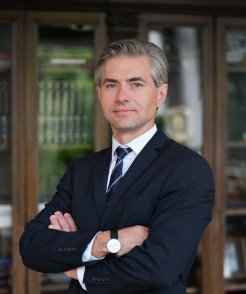
The European Union’s neighbouring countries, which implement democratic reforms and undertaken commitments, should get more EU support than the countries that do not implement reforms, Lithuanian Minister of Foreign Affairs Audronius Ažubalis said at the EU’s Foreign Affairs Council on 20 June in Luxembourg.
The EU foreign ministers had a discussion on the Joint Communication entitled „A new response to a changing Neighbourhood” and future principles of the European Neighbourhood Policy.The Communication was announced by the European Commission and the High Representative of the EU for Foreign Affairs and Security Policy Catherine Ashton on 25 May 2011.
A.Ažubalis spoke in favour of the new principles of the European Neighbourhood Policy that are set out in the Communication.
“The Neighbourhood Policy should be based on mutual accountability and shared commitment to European values. Moreover, it is obvious that strong democracy is necessary for economic and social growth,” the Minister said.
The head of the Lithuanian diplomacy emphasized the importance of the conditionality principle of ‘more for more’ - the EU’s neighbouring countries that make every effort to implement reforms leading to European integration should receive more support from the EU than the countries, which do not make such efforts.
The EU’s Foreign Affairs Council concluded by recognizing the objectives of the Eastern European countries on the path to the EU. The Council looks forward to the Eastern Partnership Summit in Warsaw this September with the view to enhancing the relations between the EU and the Eastern partners.
“Lithuania’s consistent position is that the EU’s Eastern neighbours have a European perspective. This is provided in Article 49 of the Treaty on European Union and we shall strive that this would be formulated with greater determination, even though discussions on this topic are never easy,” A.Ažubalis noted.
According to him, the EU’s response to the countries that are implementing reforms should not be limited only to increased financial support, but has to include also other areas, such as further liberalization of visa regime and trade, and the promotion of cooperation in separate sectors.
The EU’s Foreign Affairs Council further discussed the deteriorating situation in Belarus. The Council has decided to designate additional persons, who participate in the repressions, to travel restrictions and assets freeze.
The Council has also decided to freeze the assets and to impose an embargo on Belarus on materials that might be used for internal repression. The Council agreed that the extension of European Investment Bank operations to Belarus should be related to the human rights and rule of law situation in the country. The EU reiterated its commitment to further support the Belarusian civil society.
“When considering economic sanctions, we have to be careful and avoid giving a pretext to Alexander Lukashenko to accuse the EU for the economic difficulties, which Belarus currently faces,” the Lithuanian Minister of Foreign Affairs said at the meeting.
He stressed that today’s decision of the EU’s Council regarding the freezing of assets of companies that were illegally financing the regime would not worsen the situation of ordinary people in Belarus.
The head of the Lithuanian diplomacy welcomed the Commission’s formal invitation to Belarus to start negotiations on visa facilitation and readmission agreements.
“The opening up of borders will contribute to the strengthening of civil society in Belarus,” A.Ažubalis said.
The EU foreign ministers also discussed the situation in the EU’s Southern neighbourhood with the ongoing conflicts and unrest in Libya, Syria and Yemen, and adopted conclusions regarding those countries. They also discussed the situation in Albania, Bosnia and Herzegovina. The EU’s Foreign Affairs Council adopted a conclusion on Albania.
Social media


