


THE EU MUST EMPLOY A SOLID EXTERNAL ENERGY POLICY, LITHUANIAN FOREIGN VICE-MINISTER SAYS
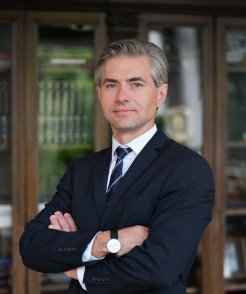
Having high dependence of imported energy resources, the European Union needs to employ a solid and strong external energy policy, Lithuanian Vice-Minister of Foreign Affairs Egidijus Meilūnas said.On 20 March, he opened a round table discussion “Towards enhanced EU external energy policy”, which was organized by the Lithuanian Ministry of Foreign Affairs and the Ministry of Energy in Vilnius.
“The EU needs a truly common energy policy which guarantees secure access to energy at reasonable and stable prices and which maintains our competitiveness. Having high dependence of imported energy resources we cannot achieve this goal without employing a solid and strong external energy policy. As a result, competitiveness of the EU economy is directly related with creation of EU internal energy market as well as with common EU stance towards third countries,” Lithuanian Foreign Vice-Minister said.He highlighted the importance of regional cooperation – the close Lithuanian-Polish and Nordic – Baltic cooperation – for the development of a common EU energy policy.
“As far as internal and external energy dimensions are mutually dependent, I see the Nordic Baltic Eight (NB8) and the Baltic Energy Market Interconnection Plan (BEMIP) formats as supplementing platforms having huge potential to promote both dimensions of the energy policy and produce good practice examples and proposals for the rest of the EU,” Meilūnas said.
He also highlighted the cooperation between Lithuania and Poland, which aimed at initiating important provisions in the Lisbon treaty regarding important aspects of energy solidarity.
“I would like to emphasize that strengthening solidarity between EU member states should not mean just empty pledges or empty concept. If we make practical steps to build energy interconnections and talk with one voice with our partners from third countries, I am sure that soon we shall witness decreasing energy prices for our citizens,” the Vice-Minister said.
He underlined that the European Union’s external energy policy would be one of the main priorities of Lithuania’s Presidency of the Council of the EU next year.
The round table presented findings of researchers who prepared a study on instruments to enhance the EU external energy policy and strengthen coordination among member states in relations with third parties in this field. The study was commissioned by the Foreign Ministry and financed under the EU project “The assessment of the participation of Lithuania in the EU initiatives”. The conference was attended by representatives from the Lithuanian Ministry of Foreign Affairs, the Ministry of Energy, experts from the Baltic and Nordic states, and Poland.
Social media


