THE ESTABLISHMENT OF ENERGY SECURITY CENTER RESPONDS TO GLOBAL ENERGY CHALLENGES, LITHUANIAN FOREIGN MINISTER SAYS
On 14 January in Vilnius, at the opening ceremony of the Energy Security Center (ESC), Lithuanian Minister of Foreign Affairs Audronius Ažubalis said that the establishment of this center was a response to the major contemporary global challenges in the field of energy.According to the Minister, the ESC will play an important role in determining general energy security principles. At the same time it will also be beneficial to the entire NATO.
Minister A.Ažubalis stated that in aiming to achieve this goal, the ESC will bring together experts and professionals from Lithuania and other countries.“Only by working together with the defence and academic communities we can improve security and stability, and reduce the risk,” the Minister said.
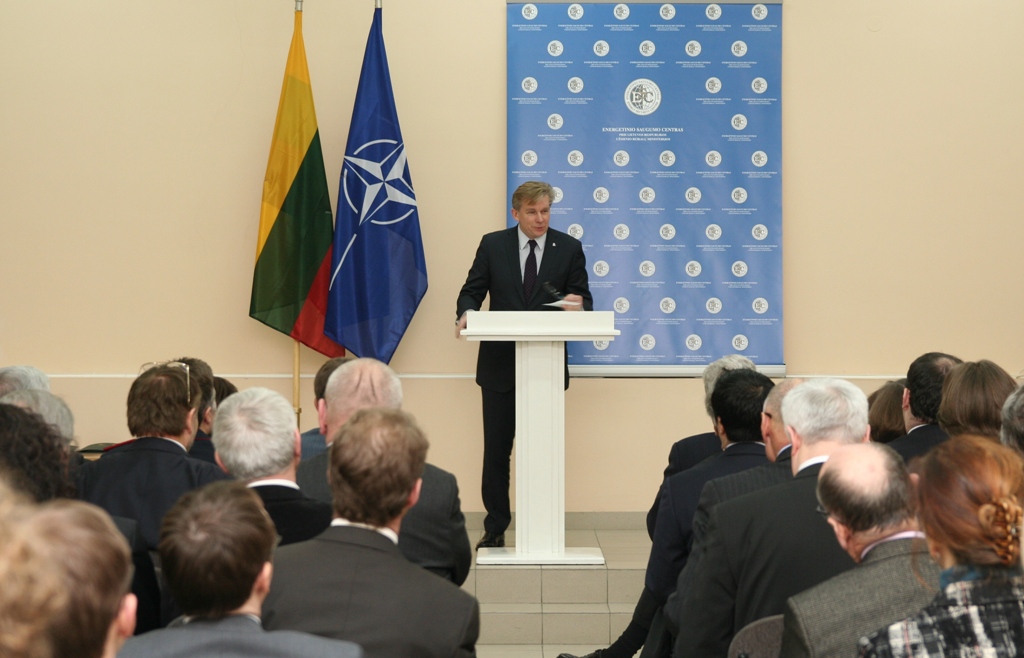 At the opening ceremony of the ESC, welcome speeches were delivered by Lithuanian Minister of National Defence Rasa Juknevičienė, Director of the ESC Audrius Brūzga, Chairman of the Committee on Foreign Affairs of the Seimas (Parliament) Emanuelis Zingeris, NATO officials: Assistant Secretary General for Political Affairs and Security Policy Dirk Brengelmann and Jamie Shea who is the head of the new Emerging Security Challenges Division, that deals with a growing range of non-traditional risks and challenges, including energy security.
The greeting words of President of Lithuania Dalia Grybauskaitė were conveyed by Chief Adviser to the President Darius Semaška. The ESC was established under the Ministry of Foreign Affairs. The Center’s Acting Director is A.Brūzga, the former Director of the Economic Security Policy Department of the Ministry of Foreign Affairs.
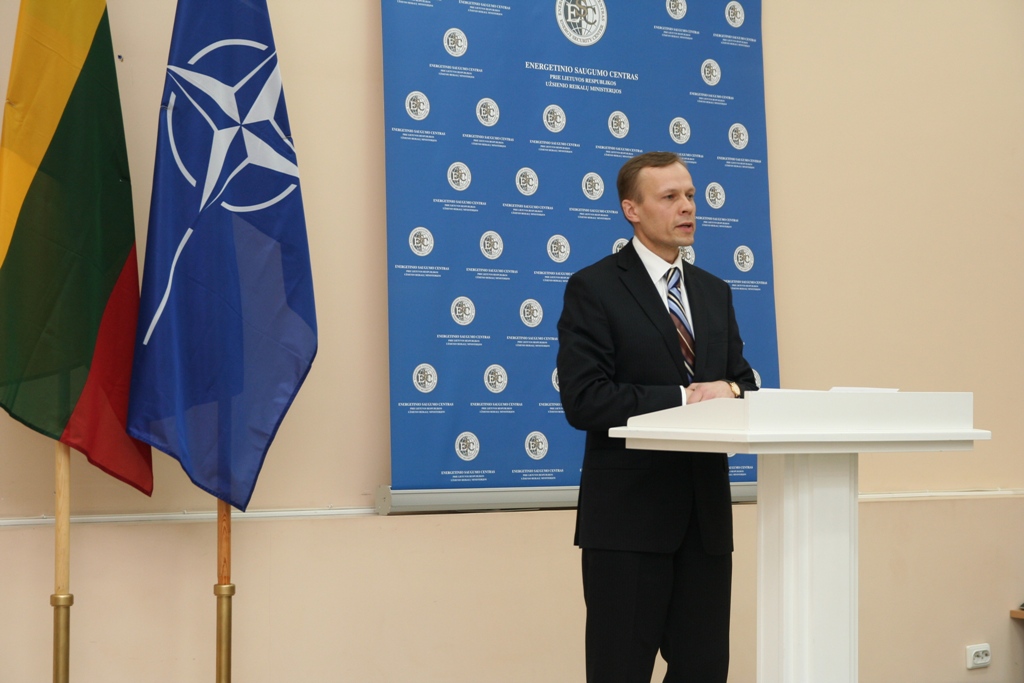 The purpose of the ESC is to participate in the implementation of the state policy on energy security and international cooperation in along with the Ministry of National Defence, the Ministry of Education and Science, and other state institutions and agencies.
The Centre will seek to play an active role in the international public space, contributing to international initiatives for energy security improvement. A special emphasis will be placed on cooperation with NATO, aiming to gain the status of NATO’s Centre of Excellence for the ESC and to contribute to the strengthening of the Alliance’s capacity in the sphere of energy security.

Social media