


Protecting EU external borders is essential for reducing illegal immigration, says Linkevičius
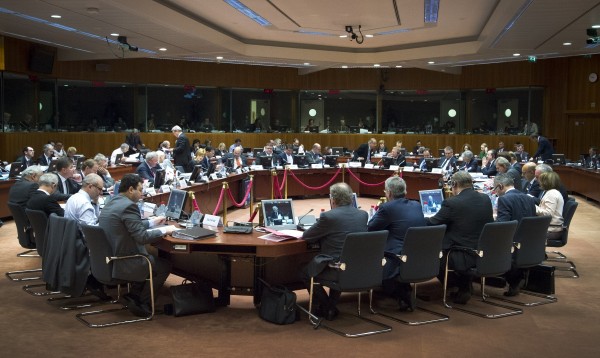
At the EU’s General Affairs Council meeting on 15 December in Brussels, the Minister of Foreign Affairs of Lithuania Linas Linkevičius said that in order to resolve the migrant crisis it was important to implement agreements in the EU and beyond.
“The strengthening of the EU’s external borders remains essential for reducing illegal immigration and preserving the Schengen area, the fundamental principle of which is free movement of persons. It is necessary to strengthen cooperation with third countries, to ensure that illegal migrants can be immediately returned to their country of origin, and to effectively fight against trafficking in persons,” said Linkevičius.
The Council prepared for the European Council meeting to be held on 17-18 December. The European Council is due to focus on migration, the fight against terrorism, economic and monetary union, internal market, energy union and British EU reform proposals.
When speaking about the fight against terrorism, Linkevičius stressed that the EU had to actively disseminate its values and build resilience against propaganda, including terrorist propaganda. According to Lithuania’s Foreign Minister, it is necessary to strengthen the EU’s strategic communication capacity. Another priority for the EU is the creation of an integrated EU energy market that would also help ensure Lithuania’s energy security.
The General Affairs Council adopted conclusions on the EU’s enlargement policy, covering Turkey, Montenegro and Serbia, as well as the EU-Western Balkans stabilisation and association process, covering the Former Yugoslav Republic of Macedonia, Albania, Bosnia and Herzegovina and Kosovo.
The Ministers also approved the text of a new interinstitutional agreement on better law-making provisionally agreed with the European Parliament and the Commission.
The Commission presented its annual growth survey for 2016, in which it outlines the main features of its jobs and growth agenda.
The Council endorsed the 18-month programme, which is drawn up by the incoming trio of presidencies – the Netherlands, Slovakia, Malta - and sets out the Council activities for the next 18 months.
For more information, please read here.
Photo: The Council of the European Union
Social media


