


Political Directors at Baltic-Visegrad Foreign Ministries discuss security challenges and priorities of the EU’s agenda
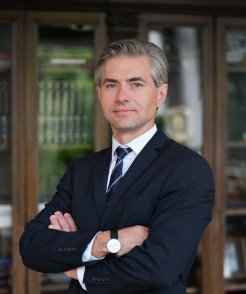
On 22 November in Warsaw, the Political Director at the Ministry of Foreign Affairs of Lithuania Rolandas Kačinskas participated in the consultation of Political Directors at Baltic-Visegrad Foreign Ministries.
Kačinskas noted that the meeting in Warsaw offered a good opportunity for countries in the region to discuss common challenges, adjust steps to finding solutions for issues concerning security, the Eastern Partnership, and other relevant important items on the EU’s agenda.
“Violations of international law amid rising tensions in the region, in Europe and beyond are a major concern and a common challenge facing all the EU and NATO member countries. Thus, only by acting together can we achieve concrete results. Coordination of actions with the Visegrad Group countries and other Baltic states is particularly relevant given the major current changes in the international environment,” said Kačinskas. At the same time, Lithuania’s Political Director emphasized that regional cooperation should not take place at the expense of European unity. According to Kačinskas, in this difficult period for the European Union we need to find what unites all the member states and meets expectations of the people of Europe.
According to Lithuania’s Political Director, we need transatlantic unity now more than ever. “The United States of America remains the EU’s important partner in bilateral and multilateral relations. Today, more than ever before, we must maintain a close relationship with the United States and dispel all doubts about our mutual relations, as well as make further effort to strengthen the transatlantic relationship,” said the Lithuanian representative.
At the meeting, Kačinskas stressed the need to maintain the EU’s ambition with regard to the Eastern Partnership countries and help them along the path of reform. “In the run-up to the next Eastern Partnership summit we must make a joint effort to keep the issue on the EU’s agenda and to develop a strategic vision for the Eastern Partnership.”
When discussing energy issues, the Political Director at Lithuania’s Foreign Ministry reminded of the issues concerning the Astravets nuclear power plant and stressed that the nuclear power projects that were being developed in the EU’s neighbourhood had to comply with international nuclear safety standards, and that this was not only Lithuania’s concern, but that of the entire region.
Social media


