


NORDIC AND BALTIC STATES HAVE A NEW ROLE IN STRENGTHENING THE TRANSATLANTIC INTEGRATION OF THE EU’S EASTERN NEIGHBOURS
On 10 September in Pärnu, Estonia, Nordic and Baltic Ministers of Foreign Affairs unanimously and clearly spoke up for the transatlantic integration of the EU’s Eastern neighbours. Heads of diplomacy from Lithuania, Latvia, Estonia, Finland, Sweden, Denmark, Norway and Iceland took part at this meeting of Nordic and Baltic states (NB8).
Indicating how unanimously and coherently the Nordic countries acted upon opening up the EU and NATO perspective for the Baltic States, the heads of diplomacy of the Nordic-Baltic Eight have agreed that today the situation also demanded to muster up for teamwork, seeking to provide a transatlantic perspective for countries of the Eastern Neighbourhood.
The Ministers agreed to cooperate unitedly in opening up the European perspective for Ukraine, Moldova and Georgia, as well as keeping the specific situation of Belarus in mind. The united steps would also be taken in extending the NATO Membership Action Plan for Georgia and Ukraine as well as in preparing for the upcoming NATO Summit in December, the Ministers decided.
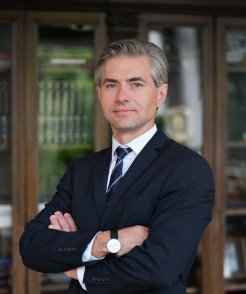
On the subject of Belarus, Minister P.Vaitiekūnas heeded the attention of his colleagues to the fact that recently Belarus had made a few positive decisions.
‘We have to take into account these signals and assess them accordingly,’ said P.Vaitiekūnas, expressing his hope that the upcoming Belarusian Parliamentary election would be based on the European standards.
While speaking about the conflict between Russia and Georgia, all Nordic and Baltic Foreign Ministers agreed that Russia must immediately pull out its troops from all Georgian territories. Ministers noted that the international community would never tolerate breaching of international principles, which Russia did by recognising the independence of occupied Georgian regions.
The Ministers indicated that Russia’s role as a peacekeeper in the Caucasus was finally discredited. Until Russia pulls out its troops from all Georgian territories, the impact on Russia’s relations with the EU and NATO will be significant.
The Ministers also remarked that the EU and the international community had to immediately provide concrete and diverse assistance to Georgia.
‘We have to do what we can in order to give a transatlantic perspective to the Eastern neighbours, so that Georgia’s scenario would not be repeated in the future,’ indicated Minister P.Vaitiekūnas at the meeting.
The Ministers also made a unanimous conclusion that in the light of Russia’s aggression in Georgia cooperation of the Baltic Sea states had to be strengthened, particularly in the area of energy security. It is necessary to speed up the establishment of energy links and to link the Baltic States both with the North European and with the Western European energy networks.
Social media


