NATO Foreign Ministers discuss Alliance’s response to coronavirus pandemic
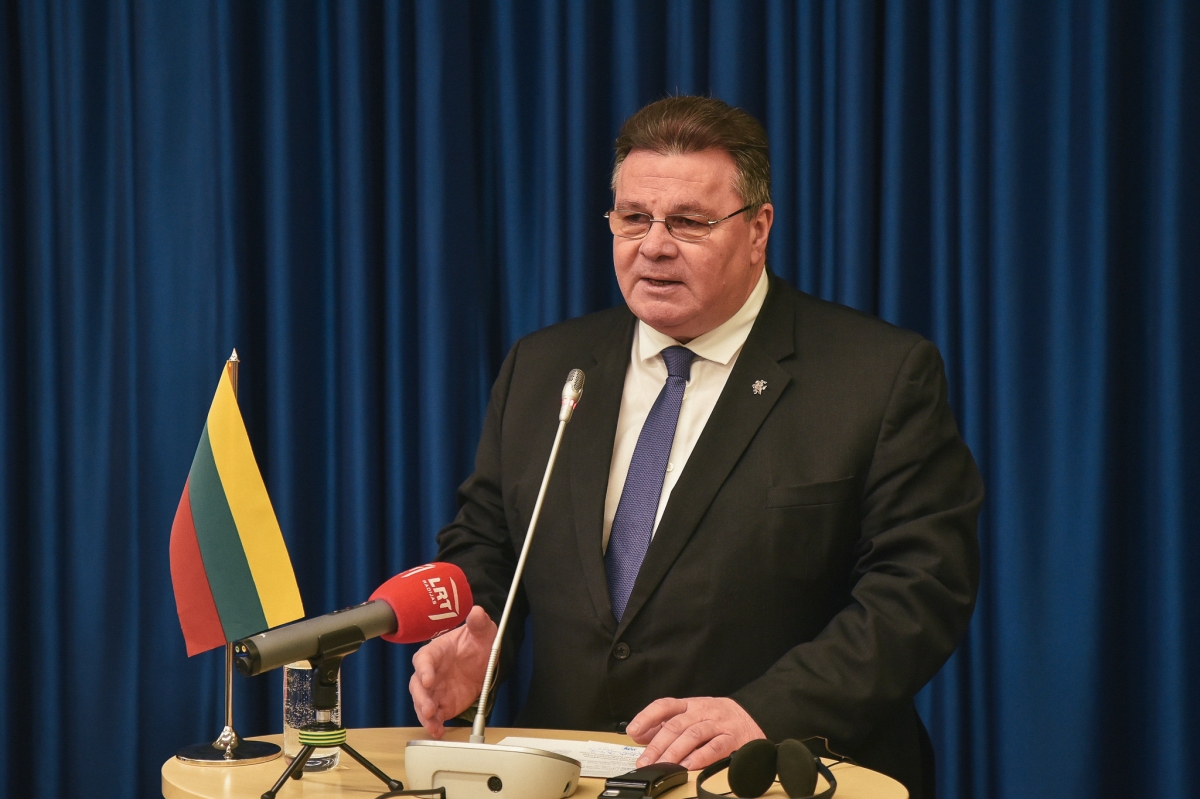
On 2 April, the Minister of Foreign Affairs of Lithuania Linas Linkevičius took part in a meeting of NATO Foreign Ministers by secure videoconference for the first time in the Alliance’s history. The meeting discussed the Alliance’s response to the coronavirus (COVID-19) pandemic, situation in Iraq and Afghanistan, NATO’s role in the Middle East and North Africa region. NATO Ministers also exchanged their views on Russia, arms control, and relations with partners.
Ministers stressed that NATO commitments remained unchanged in the face of the COVID-19 pandemic. The Alliance maintains continuity of its activities, continues to carry out its tasks, such as deterrence and collective defence, crisis management, and to participate in stability and training operations. NATO's enhanced Forward Presence (eFP) in the Baltic States and Poland, as well as the Baltic Air Policing Mission will be continued.
L. Linkevičius expressed condolences to the most-affected by the pandemic Allies – Italy and Spain – and thanked NATO members for their support.
According to Lithuania’s Foreign Minister, despite everything, the Alliance must continue to ensure security of its missions, carry out its operations, and fulfil its commitments. This also applies to the missions in Iraq, Afghanistan, the Middle East, and North Africa. Lithuania will continue its participation and commitments.
“We are grateful to the team of Croatian and German military medics, which arrived in Lithuania with specialised equipment. In its turn, Lithuania continues to provide all Host Nation Support to those NATO allies deployed in Lithuania," said L.Linkevičius.
The Minister also congratulated North Macedonia on becoming the newest member of the Alliance. The country officially joined the North Atlantic Treaty Organisation on 27 March. On 2 April, North Macedonia attended the NATO Ministerial meeting for the first time as an Ally.
“North Macedonia's accession to NATO has completed the twenty-year-long Vilnius Ten process. At the same time, it shows that NATO’s open door policy works”.
As part of the implementation of a decision taken at the NATO summit in London, Ministers formally launched the Reflection Process to offer recommendations to reinforce NATO’s unity, to increase political consultation and coordination between allies, and to strengthen NATO’s political role. NATO Secretary General Jens Stoltenberg will lead this process.
The Foreign Minister also offered for all the Allies Lithuania’s experience in using software (Debunk.eu) to counter fake news, and stressed the need for providing further support for Georgia and Ukraine on the path to Euro-Atlantic integration.

Social media