


MUTUAL UNDERSTANDING BETWEEN THE PEOPLES CAN ONLY BE BUILT THROUGH CLOSE PEOPLE-TO-PEOPLE CONTACTS AND INTERCULTURAL DIALOGUE, LITHUANIAN FOREIGN MINISTER SAYS
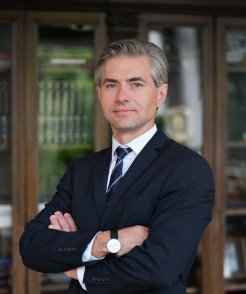
At the discussion “Santara – Witness of History of the Nations and Tolerance”, which was co-organized by the Lithuanian Foreign Ministry and the Vilnius Jewish Public Library on May 23, Lithuanian Minister of Foreign Affairs Audronius Ažubalis stressed the importance of close people-to-people contacts and intercultural dialogue for building and strengthening peace and mutual understanding between the peoples.
According to the Minister, we should learn to build the bridges of concord “not only to link state institutions, delegations, but, first of all, to establish direct people-to-people contacts”.“The Israel-Lithuania Friendship Association IsraeLita that was established this year in Israel invites people to build new bridges based on mutual respect and establish a sister organization in Lithuania. I believe that not politicians, but people in culture could be among the first ones to respond to this invitation. Because, essentially, writers and poets, artists and composers, actors and playwrights have always preserved close ties,” Ažubalis said.
According to him, Jewish artists, scientists and entrepreneurs with the Lithuanian background, no matter where they live, have graced this world and also homeland with their talent and wisdom.
The Jewish Public Library that recently opened in Vilnius hosted an event, during which the latest issue of the Santara, a cultural journal, was presented. This issue acquaints its readers with works of art, literature and scientific achievements of prominent Lithuanian Jews.
Head of the library Daiva Giminaitė, Lithuanian literary critic Petras Bražėnas, editor of the Santara Romualdas Norkus, conductor Saulius Sondeckis, scientist, educator Rita Aleknaitė-Bieliauskienė, poet Markas Zingeris and Person of Tolerance of the Year and writer Daiva Čepauskaitė attended the event and participated in the discussion about the interaction of Lithuanian and Jewish cultures and cultural exchanges.
“Lithuanians and Jews share an exceptional passion for their language and literature. It is through the people of Israel that the Holy Scriptures entered this world, while Lithuanians are famous for book-smuggling. This is a good sign, because an appropriate word, book, cultural activity or an open dialogue create stronger links between the peoples than official intergovernmental agreements,” Ažubalis said.
The Minister also shared impressions on his visit to Israel in March. He believes that more efforts should be given to perpetuate the memory of the Righteous among the Nations in Lithuania.
“When I bowed my head before the victims of the Holocaust at Yad Vashem in Jerusalem, my eye caught the glance of the evergreen trees planted in the Avenue of the Righteous among the Nations. It would be a great idea to have such an avenue also in Vilnius, the Jerusalem of Lithuania, and, thus, erect a memorial for the Lithuanian-born Righteous among the Nations. By the way, that is also a wish of Icchokas Meras, a Lithuanian Jewish writer, recipient of the Lithuanian National Prize, who lives now in Israel,” Ažubalis said.
He strongly condemned the recent vandalism and throwing paint at the façade of the only synagogue in Vilnius.
“We should not tolerate such incomprehensible vandalism in our civilised country, as throwing paint at the synagogue. This exposes a painful stigma of Lithuania,” the Minister noted.
Social media


