


MINISTER OF FOREIGN AFFAIRS COMMENTS RECENT EC DOCUMENTS RELATED TO THE EU ENLARGEMENT PROCESS
Created 2001-11-14
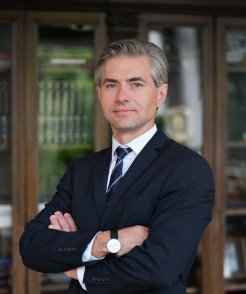
The latest European Commission’s documents define a further direction for Lithuania’s activities towards her membership in the European Union, says the Head of the delegation for EU Accession Negotiations, Minister of Foreign Affairs of Lithuania Antanas Valionis.
That was the Minister’s comment on the European Commission’s report of November 13 on Lithuania’s progress towards the EU accession as well as on the strategy paper, analyzing the process of accession. A new accession partnership program defining future priorities of membership arrangements as well as its financial and technical support follows the report.
According to the Minister, it is of great importance for Lithuania that the European Commission in its strategy paper confirms the intentions of being prepared to finish the negotiations with the most progressive candidates by the end of next year so that the countries could join the EU in 2004. The European Commission also admits that the EU budget for the period 2000-2006 is big enough to accept 10 new candidates. ”Therefore, the scenario of a wide enlargement involving a large number of candidate countries including Lithuania is mostly expected”, says the head of the delegation for negotiations.
Next year the European Commission are to prepare the last reports on candidates’ progress and a general strategy document indicating that the states are ready for final accession negotiations as well as to become the EU members.
According to the Minister, the professionally prepared 4th European Commission’s report on Lithuania’s progress towards the EU accession provides us with right and thorough evaluations as well as necessary advises. “We can rejoice at our achievements pointed out in the report, however, that motivates us not to slow down at our membership preparations and to continue consecutive reforms”, stressed Minister Valionis.
The Minister says that our shortcomings pointed out by the European Commission are very well known and acknowledged by Lithuania, and we are working hard to eliminate them. “It is obvious, that only after we eliminate the shortcomings and implement or at least begin the implementation of the most necessary reforms, the strategic Lithuania’s goals will be achieved, which are to finish the accession negotiations by the end of next year as well as to be prepared to bear the EU membership obligations”, the head of the delegation for EU accession negotiations.
The Minister thinks that we must concentrate our work on strengthening the systems of administration and courts, so that the complete continuance, stability and quality of public administration as well as the ability to implement the EU law into national legal system would be ensured.
The head of Lithuanian diplomacy praised at the European Commission’s intentions to prepare an individual schedule as well as an action plan of strengthening administrative capabilities for each candidate country during the several months period.
It is planned by the European Commission to establish according to PHARE program a separate financial fund. It could be used by candidate countries on the only condition the candidates implement the schedule.
In its report the European Commission note that the court system in Lithuania has been gradually reformed, still, a lot should be done – and firstly, to sufficiently budget and improve the quality of legal administration.
Referring to the report on Lithuania’s progress in 2001, our country should enhance and coordinate its efforts against corruption, to continue stimulating direct foreign and domestic investments and to reduce unemployment. The European Commission admits Lithuania as a functioning market economy, though notice that the structural reforms mainly of the systems of pensions, agriculture and energetic should be implemented in Lithuania. It is also of great importance to be prepared to use the EU funds’, as well as to control the usage of the resources. “The goals are mentioned among the priorities in the Lithuanian Government’s program and in the action plan of its implementation”, Minister Valionis notes.
The Minister of Foreign Affairs also stressed upon the fact that The European Commission admitted the importance of public opinion and thus, some of the negotiation with the candidates sectors were expected to be understood as socially sensible, and the negotiation results would be acceptable for our society.
The Minister praises at the European Commission’s intention to draw the candidate countries into the discussions on the EU future. It could help the EU to prepare for the Intergovernmental conference (IGC) in 2004, which is to decide on the future EU reforms. Minister of Foreign Affairs also mentioned the importance of the new EU members to participate in the IGC decision-making process.
Social media


