


Minister Linkevičius discusses security of the Ostrovets nuclear power plant at a meeting with EU Energy Commissioner
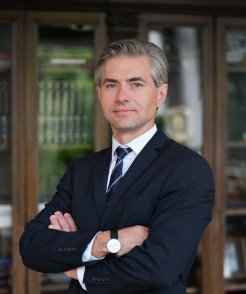
On 15 April, Lithuania’s Foreign Minister, Linas Linkevičius, who is currently taking part in GLOBSEC security conference in Bratislava, Slovakia, met with Maroš Šefčovič, Vice-President of the European Commission in charge of the EU’s Energy Union. During the meeting, major attention was given to the security of the Ostrovets nuclear power plant (NPP) which is being constructed in Lithuania’s and EU’s neighbourhood and the issues concerning synchronization of the electricity grids of the Baltic States with the continental European systems; the meeting was also focussed on the impact of the gas pipeline Nord Stream 2 on the EU’s energy security.
Minister Linkevičius expressed his concerns over the fact that the ongoing construction of the Ostrovets NPP failed to comply with the international security standards, and that Lithuania’s questions concerning selection of the site for the Ostrovets NPP, the environmental impact analysis, etc. remained unanswered, meanwhile Belarus continued to follow the selective approach towards nuclear safety. “In the context of the nuclear safety, the continuous attention of the EU and the international community for the Ostrovets NPP is crucial for the entire region,” Mr. Linkevičius said.
At the meeting, Minister Linkevičius and EU Energy Commissioner agreed that EU and Lithuanian experts would discuss security of the Ostrovets NPP in detail at a meeting in Brussels.
“It is important to Lithuania that the Commissioner has reiterated that the Commission would give major attention to ensuring that the NPPs constructed in the neighbourhood of the EU adhered to the highest security standards, and that the worst-case scenario testing was conducted in compliance with the EU requirements. Lithuania will continue to take efforts to convince Belarus to involve EU experts in the so-called stress testing. There may be no doubt that nuclear safety issues will always remain our priority. In this regard, we expect that we can develop an open dialogue and cooperate with our neighbours,” Minister said.
At the meeting, the actions and achievements of the Baltic States in their efforts to ensure the energy security were also discussed. Minister Linkevičius stressed that the energy isolation of the Baltic States in the European Union would only be eliminated when the challenge of the next decade, i.e. synchronizing the electricity grids with those of the continental Europe, was accomplished.
At the meeting, it was emphasised that the plans to construct the second line of the Nord Stream gas pipeline on the bottom of the Baltic Sea conflicted with the goals of the European Energy Union and that this project could be used as a tool for shattering the unity of the EU Member States.
Mr. Linkevičius and Mr. Šefčovič stressed that, when developing the energy infrastructure, it was crucial to adhere to the principles of the European Energy Union.
Social media


