


MFA UNDERSECRETARY: EU NEIGHBOURHOOD POLICY IS ONE OF THE MOST IMPORTANT EUROPEAN POLICIES FOR LITHUANIA
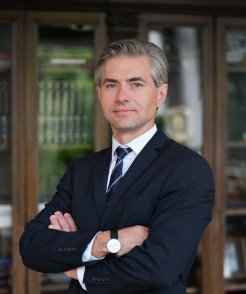
On 21 May Undersecretary of Lithuanian Ministry of Foreign Affairs Laimonas Talat-Kelpša during a discussion of Foreign Affairs Committee and European Information Centre of the European Affairs Committees of Lithuanian Seimas “European Neighbourhood Policy and Central Asia Strategy” stressed that relations with countries of the Eastern Europe should occupy a special place in the EU Neighbourhood Policy.
Presenting Lithuania’s input in formulation and implementation of the European Union’s policy in Eastern neighbour states and Central Asia, Undersecretary of the Ministry underlined that the neighbourhood policy is one of the most important European policies for Lithuania, closely related to country’s security and foreign policy interests.
“Through the EU Neighbourhood Policy we are not only protecting Lithuania’s national interests in the East, but also establishing ourselves in the EU mechanism, finding our place and “diplomatic identity” there,” L. Talat-Kelpša said, highlighting that the Ministry of Foreign Affairs bears special responsibility in implementation of the Neighbourhood Policy.
The format of the EU neighbourhood enables Lithuania to maintain more active relations not only with traditional partners in the Eastern Europe, but also with less familiar countries of the Mediterranean. Undersecretary of the Ministry noted that thus Lithuania participates in international processes, takes more significant role in regional and global cooperation.
According to the Undersecretary of the Ministry, the fact, that the EU has changed its approach to the Eastern Europe in recent years and today is not only observing the situation in the Eastern neighbourhood, but also participates in it, is a great support to Lithuania. And one of the crucial tasks is to expand the development cooperation policy and other practical instruments for supporting reforms in the Eastern neighbourhood.
Undersecretary of the Ministry L. Talat-Kelpša also drew attention to the lack of agreement on the ways of bringing the abstract neighbourhood policy closer to real actions of Lithuanian institutions, indicating as an example the present situation with visa policy for neighbour states.
Social media


