


Lithuania’s Foreign Vice-Minister: ‘EU-Ukraine free trade agreement enters into force in 5 weeks’
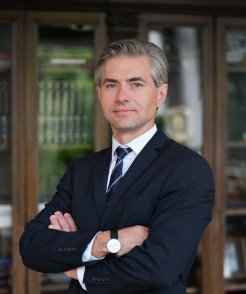
In the EU’s Foreign Affairs (Trade) Council meeting on 27 November in Brussels, the Vice-Minister of Foreign Affairs of Lithuania Raimundas Karoblis stressed that all parties were waiting for the EU-Ukraine Association Agreement, including the Deep and Comprehensive Free Trade Area (DCFTA), to provisionally enter into force on 1 January 2016.
The EU Trade Commissioner Cecilia Malmström presented preparations for her upcoming meeting with the Ukrainian and Russian trade ministers on 1 December 2015. The EU has participated in trilateral talks with Ukraine and Russia, which have rendered no concrete results yet.
“We can hardly imagine how we should continue the trilateral talks, if Russia does as it has threatened – terminates the CIS free trade agreement with Ukraine, cancels the CIS free trade preferences and imposes additional ban on food imports,” said Lithuania’s Foreign Vice-Minister.
The Council reviewed a number of ongoing bilateral free trade negotiations. Lithuania’s Foreign Vice-Minister Karoblis noted that Lithuania supported the EU’s ongoing free trade talks with the United States and Japan, actively participated while representing our important interests and expected even greater progress in the coming year.
Karoblis said that negotiations on the Transatlantic Trade and Investment Partnership (TTIP), which were gaining momentum, could be completed by the end of the next year. However, this will depend on the involvement of the United States in the negotiations and on real progress achieved in terms of content in all the areas of the negotiations.
“Such important EU interests, as public procurement and removal of regulatory barriers, are complex and it takes a lot of time to achieve ambitious results; therefore, it is necessary to make progress on these issues now,” said Lithuania’s Foreign Vice-Minister.
Karoblis also reminded of the need to include a separate chapter into the TTIP, covering issues of energy trade, which would also send a strong signal on strengthening the EU-US energy cooperation and application of principles of free trade to energy trade, transit and access to infrastructure.
In a discussion on the preparations for the 10th World Trade Organisation’s ministerial conference, Lithuania’s Foreign Vice-Minister stressed that the rigor of the Doha Round should not be the only criteria for evaluating the organization’s significance.
“When speaking about the WTO we cannot forget that this particular organization effectively monitors the level of compliance with the rules of international trade. Its dispute settlement mechanism helps to address trade conflicts in a civilized manner and to avoid the imposition of new trade restrictions. Multilateral negotiations are the most effective way of creating global trade rules, so we strive to ensure that this legislative process is renewed, and the WTO remains a viable and relevant centre of the multilateral trading system,” said Karoblis.
For more information about the Foreign Affairs Council, please read here.
Social media


