


Lithuania’s Foreign Vice-Minister: EU must support Ukraine, supplementing additional trade concessions
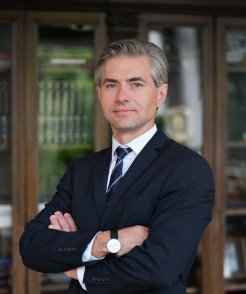
The Vice-Minister of Foreign Affairs of Lithuania Albinas Zananavičius took part in the EU’s Foreign Affairs Council on trade issues on 11 May in Brussels. Zananavičius called on member states to unanimously and immediately support the Commission’s proposal that aimed at improving access for Ukraine to the EU market for some products in view of the difficult economic situation.
“The EU stands in solidarity with Ukraine, as the country is facing economic difficulties. The EU solidarity is very important for Ukraine, because it aims for an ever closer economic integration with the EU,” stressed Lithuania’s Foreign Vice-Minister.
The Foreign Ministers welcomed the compromise regarding the Council’s position on the new EU anti-dumping methodology for assessing market distortions resulting from state intervention in third countries. It will give support to the negotiating mandate and call for the quick conclusion of the legislative process with the European Parliament. The application of the new methodology will be very important for Lithuanian companies affected by dumping.
The Commission and the Foreign Ministers unanimously stressed the need to strengthen the multilateral trade system, when preparing for the WTO ministerial conference in December. Zananavičius supported the Commission’s efforts to achieve results that would improve conditions for trade on a global scale, especially for small and medium-sized enterprises. Lithuania’s Foreign Vice-Minister noted that all WTO members had to contribute equivalently in order to achieve results.
The Foreign Ministers welcomed the Commission’s effort to improve the implementation of the EU’s free trade agreements, to more effectively inform companies about their benefits, opportunities and favourable conditions for increasing exports. Zananavičius emphasized the importance of close cooperation with business, which had significantly contributed to the fact that Lithuania, when trading with the EU’s partners, used 92 per cent of preferences and was ahead of other EU member states. Lithuania’s Foreign Vice-Minister noted that the implementation efficiency of the free trade agreements depended also on how the agreements were being implemented by EU partners. Therefore, the EU’s support is very important for them, especially when implementing such ambitious agreements as the DCFTA.
The Commission also informed the Foreign Ministers about the state of play of trade negotiations with Japan, Mexico and Mercosur, as well as about trade relations with Chile, New Zealand and Australia. Talks with Japan picked up again. Therefore, it is expected that the negotiations on the EU-Japan free trade agreement will be completed in the near future. The signing of this agreement would significantly improve the opportunities for Lithuanian exporters to export agricultural and food products to Japan.
Social media


