Lithuania’s Foreign Vice-Minister called on international community to fight terrorism more effectively
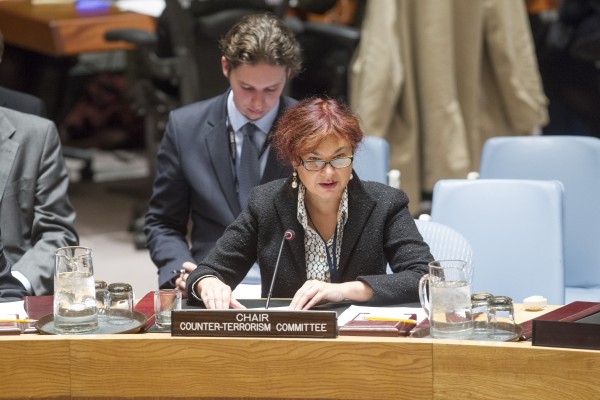
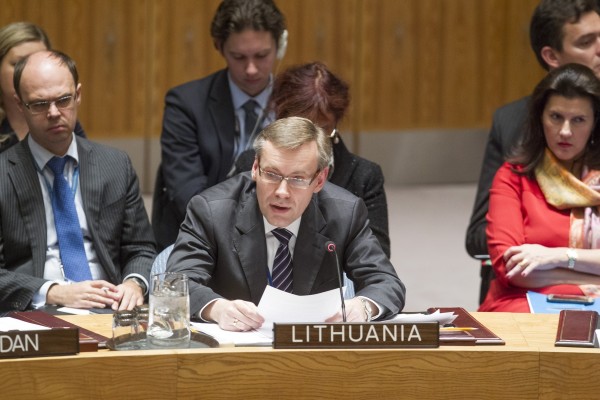
At high-level United Nations Security Council debate, Lithuania’s Vice-Minister of Foreign Affairs Andrius Krivas called on the international community to implement counter-terrorism measures more effectively. The United Nations Security Council held an open debate on international cooperation in combating terrorism and violent extremism on 19 November.
“Significant gaps in the implementation of legal frameworks to tackle the threat of terrorism persist due to lack of capacities, resources, or political will,” said A.Krivas.
According to Lithuania’s Foreign Vice-Minister, concrete means and measures need to be updated and adapted to match the level of dynamics of terrorists themselves. The local community, religious leaders, women and victims of terrorism can make a difference on the ground also through educational measures aimed at preventing the extremist activity and radicalisation. In order to prevent the movement of foreign terrorist fighters, States should more actively share relevant information and analytical capability at border crossings; enhance monitoring of foreign terrorist fighters’ travel by making use of INTERPOL databases. It is also essential to step up efforts aimed at disrupting terrorist financing. Many of the activities of terrorist organizations, such as looting, illicit trade in antiquities and protected species, poaching, kidnapping for ransom, human trafficking, and drug trafficking have links with international organized crime networks.
A. Krivas highlighted the efforts of the United Nations to address violent extremism. He said that States’ ability to detect and prevent terrorism was a crucial component of counter-terrorism efforts.
Ambassador Raimonda Murmokaitė, Lithuania’s Permanent Representative to the United Nations, Chair of the Counter-Terrorism Committee, said that while implementing its mandate, the Committee, had prepared a preliminary analysis of the principal implementation gaps. Key findings revealed that some States did not have adequate legislation to meet the challenge of foreign terrorist fighters. Many States lacked the capacity to ensure that individuals participating in foreign terrorist fighting activities were brought to justice through effective prosecution. A lack of relevant information and analytical capability at border crossings hampered States’ abilities to detect and prevent the movement of foreign terrorist fighters. In many States there was also a lack of effective strategies and programmes for the reintegration of returning foreign terrorist fighters.
UN Secretary General Ban Ki-moon noted that the number of foreign terrorist fighters in Syria and Iraq had grown to over 15,000 from more than 80 countries. He stressed that violent extremism had to be addressed at the grass-roots level, looking at these challenges solely through a military lens had shown its limits.
During the visit to New York, A. Krivas also met with Jens Anders Toyberg-Frandzen, Interim Assistant Secretary-General for Political Affairs, to discuss the situation in Ukraine. The Vice-Minister stressed that the UN must continue to play an active role in addressing this crisis. He underlined the need to ensure continued monitoring of the human rights situation in Ukraine, including Crimea.
Photos: A. Krivas, R. Murmokaitė (UN /Loey Felipe).

Social media