


Lithuania's Foreign Minister Landsbergis at a meeting with the Croatian Foreign Minister: The EU's external borders must be protected
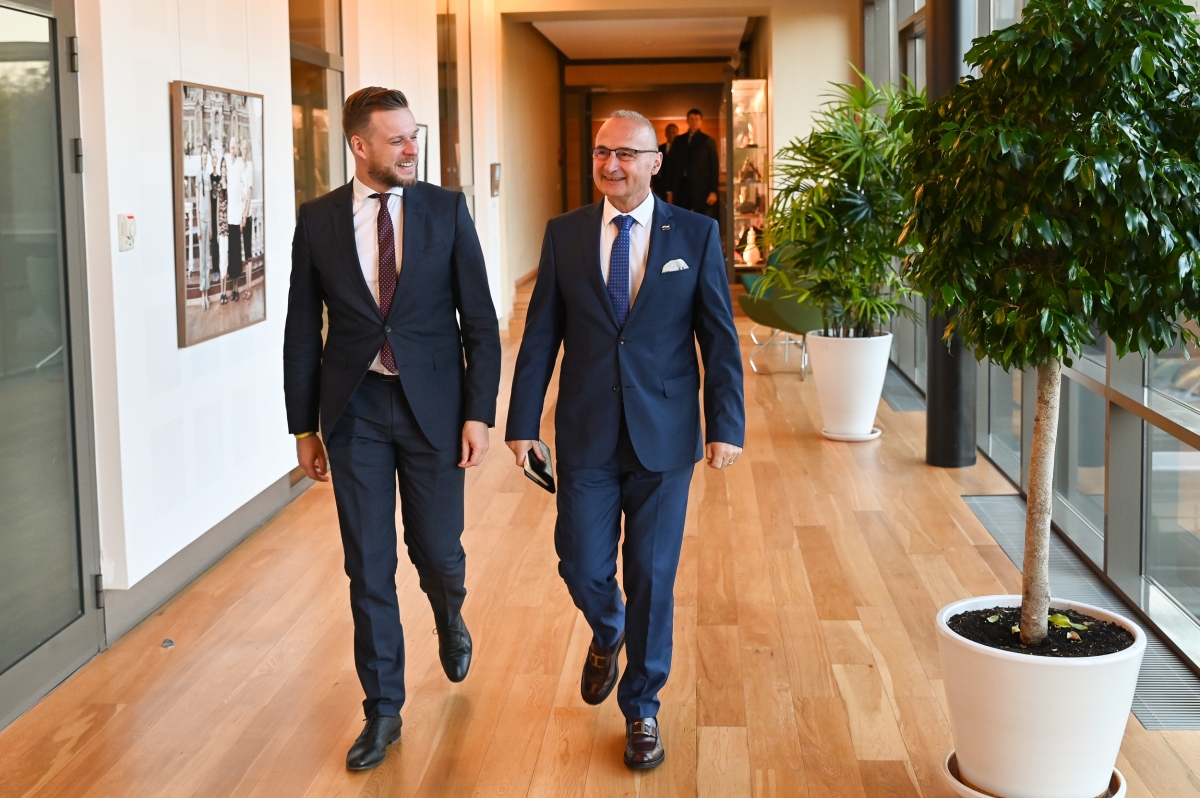
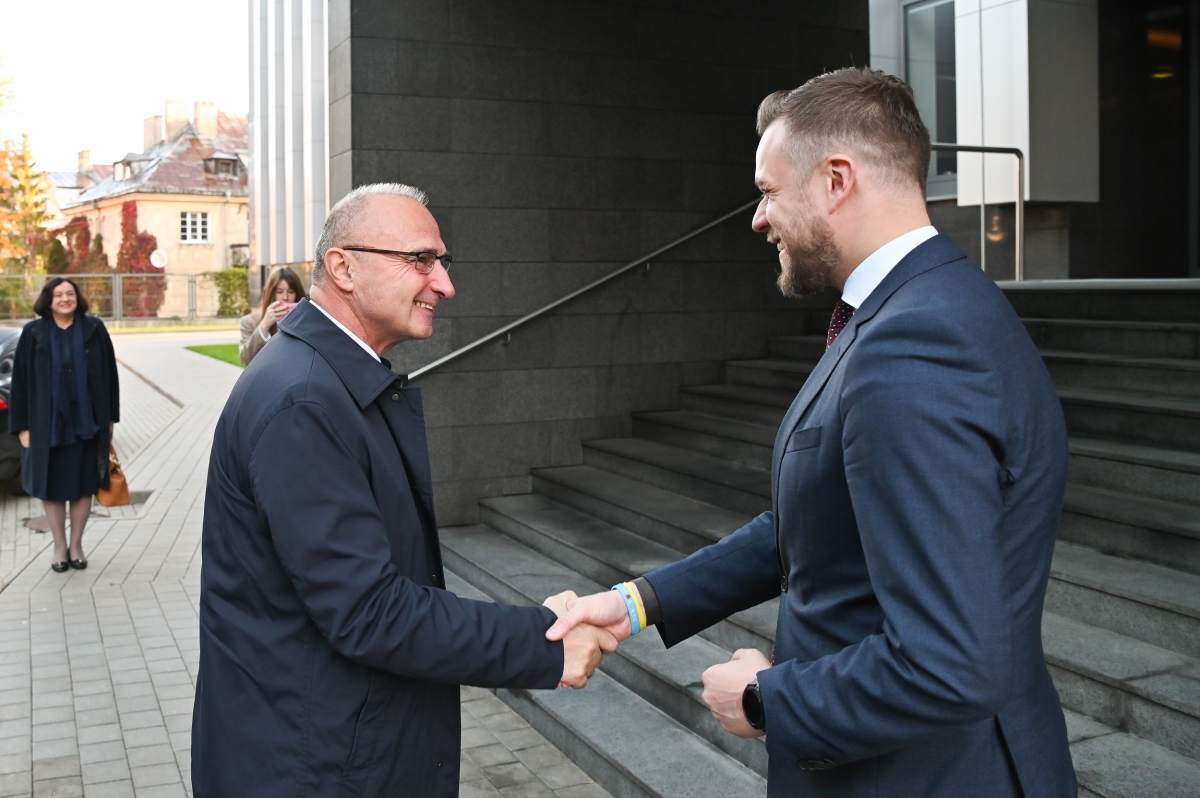
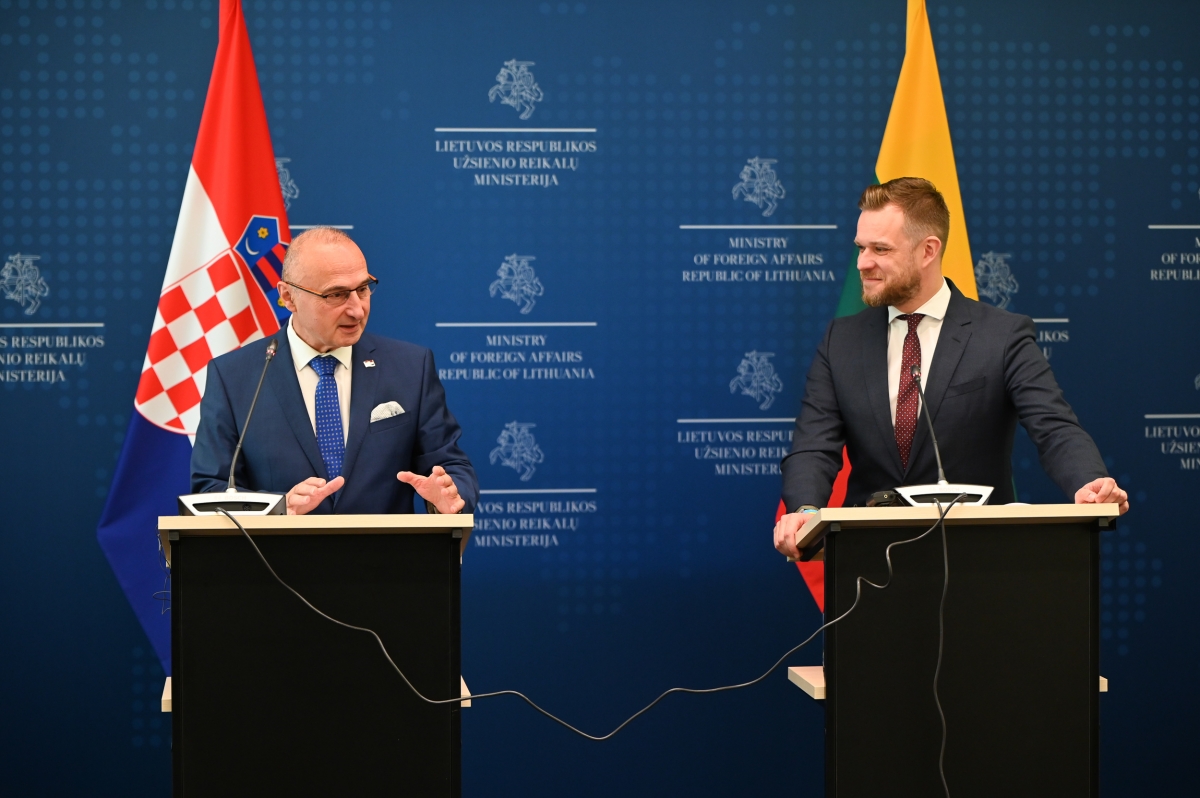
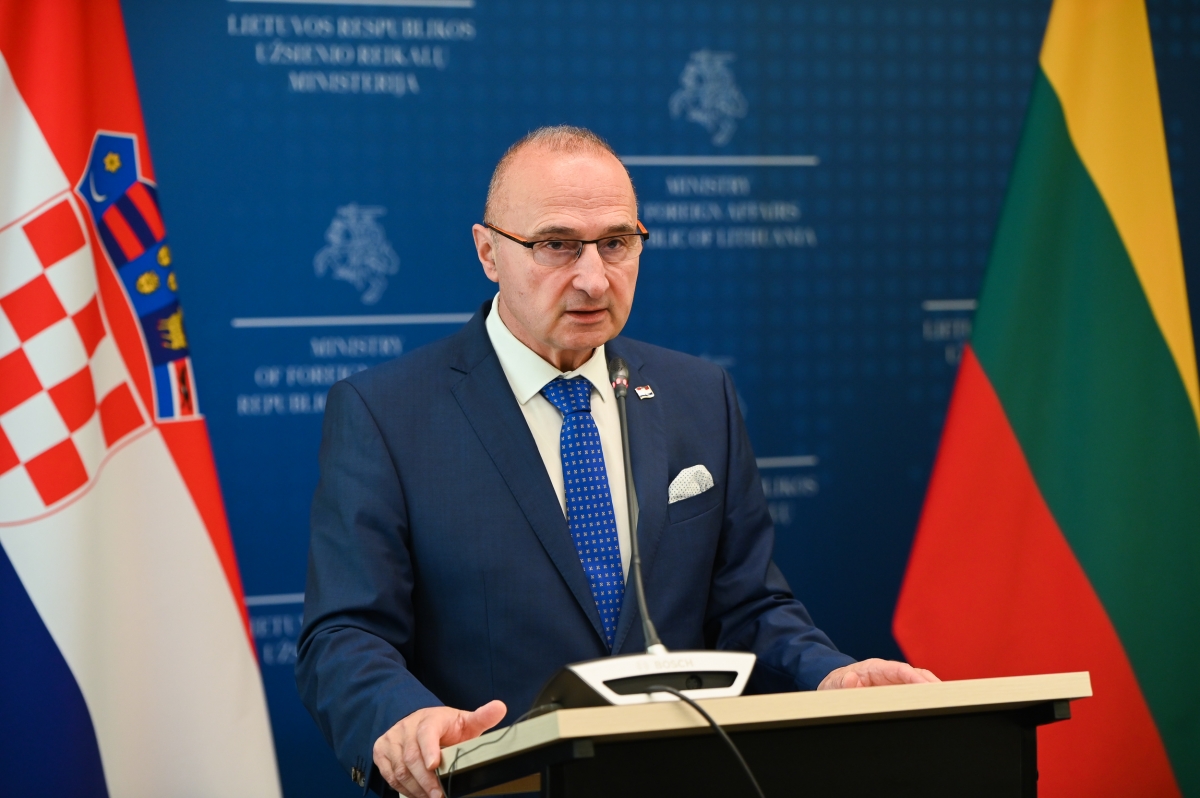
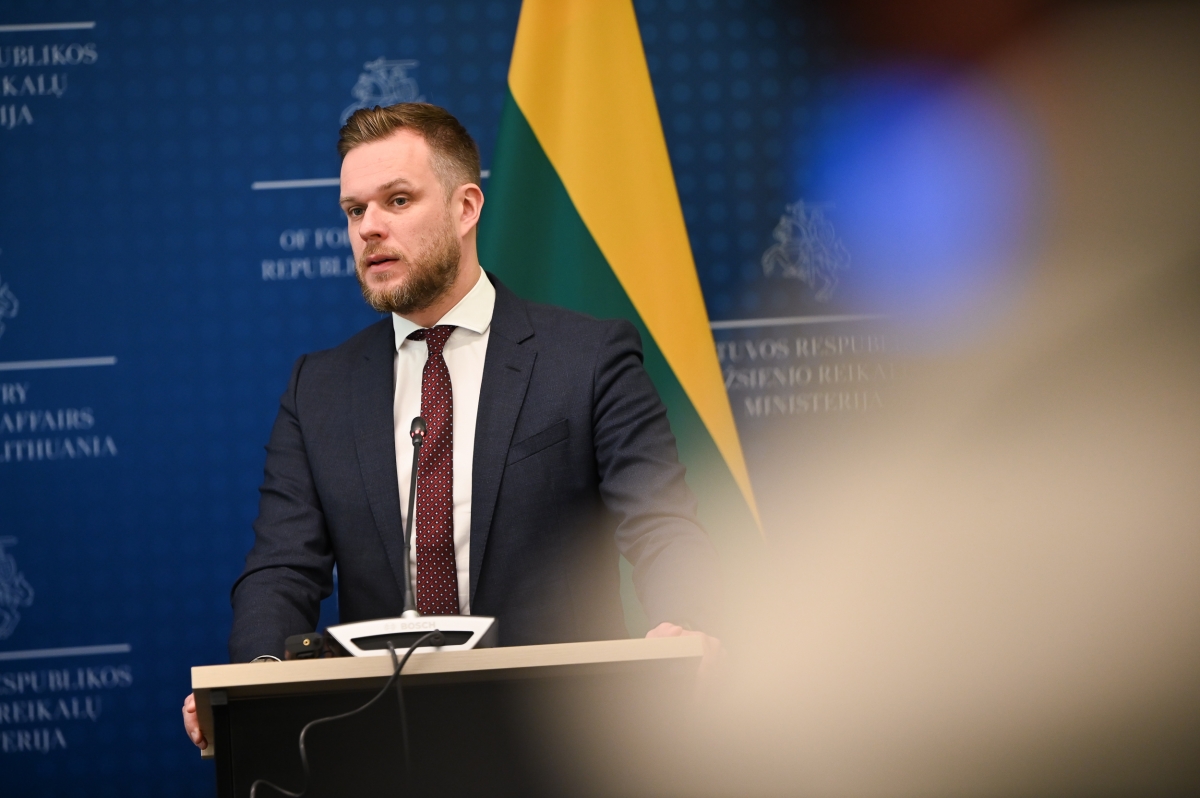
On 7 October, the Minister of Foreign Affairs of Lithuania Gabrielius Landsbergis met with the Croatian Foreign Minister Gordan Grlić Radman. The Foreign Ministers discussed ways to strengthen support for Ukraine in the fight against Russia's brutal aggression, to mobilise the effort by European countries and the international community to counter the Kremlin’s aggressive policies, the situation in the Western Balkans region, the relationship between the European Union and China, and bilateral cooperation.
“Russia’s brutal war against Ukraine shows how fragile the security situation in Europe really is, and how urgent the need is for our countries to stand united and to support, by all possible means, the people of Ukraine in their fight for freedom and their European future,” Landsbergis said.
During the meeting, the Foreign Ministers strongly condemned the Russian President's decision of 30 September to illegally annex the Ukrainian regions of Donetsk, Luhansk, Kherson, and Zaporizhzhia, parts of which were temporarily occupied by Russia. Landsbergis stressed the need not only to continue our military assistance to Ukraine, but also to strengthen it, as well as to tighten sanctions on Russia in response to the annexation of the Ukrainian territories, Russia’s "partial mobilisation", and other plans to escalate the conflict.
“Ukraine urgently needs our long-term financial support for its recovery, reconstruction and modernisation. Ukraine now is the EU candidate country. We should keep up the momentum and start the accession negotiations with concrete results already in 2023,” Landsbergis said.
The Foreign Ministers also discussed the importance of strengthening the protection of the EU’s external border, common challenges facing both countries, as well as highlighted the need for sustainable solutions to respond effectively to the instrumentalisation of migration and to increasing pressures at the borders.
The interlocutors also noted that the implementation of infrastructure projects necessary for energy independence was the most effective way to create an effective European Energy Union and to overcome attempts to "weaponise" energy.
In addition, the Foreign Ministers welcomed the fruitful bilateral cooperation, strengthening educational, scientific and economic ties between the countries, and emphasized that there was still considerable room for improvement, especially in the sectors of life sciences and Fintech.
Lithuania congratulated Croatia on its upcoming membership of Eurozone and wished the country to join the Schengen area smoothly, as well as a successful accession to the OECD.
During the meeting, the Foreign Ministers of Lithuania and Croatia also discussed ways to further strengthen cooperation between the two countries within NATO. Landsbergis welcomed Croatia’s decision to send its military contingent to NATO's enhanced Forward Presence battalion in Lithuania in 2023 and thanked the country for its contribution to our region's security.
This year marks the 30th anniversary of the establishment of diplomatic relations between Lithuania and Croatia.
Social media


