


Lithuania’s Foreign Minister Gabrielius Landsbergis: We need and can do more — support Ukraine with weapons, tighten sanctions on Russia, including on gas and oil
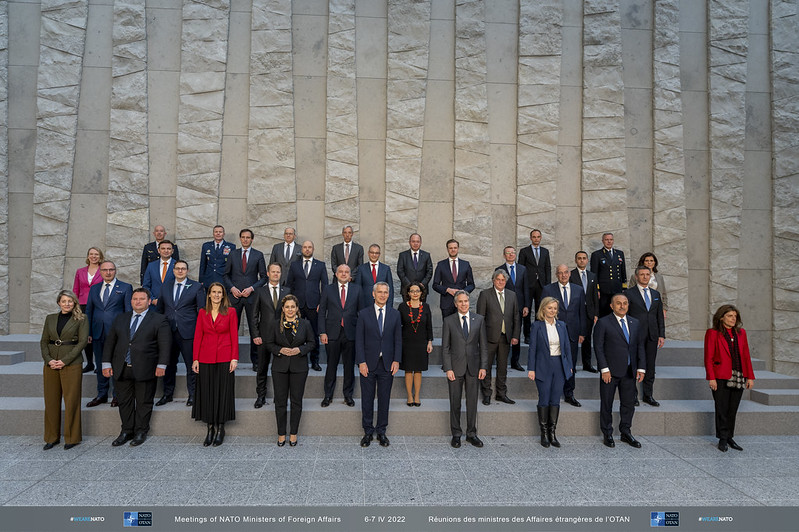
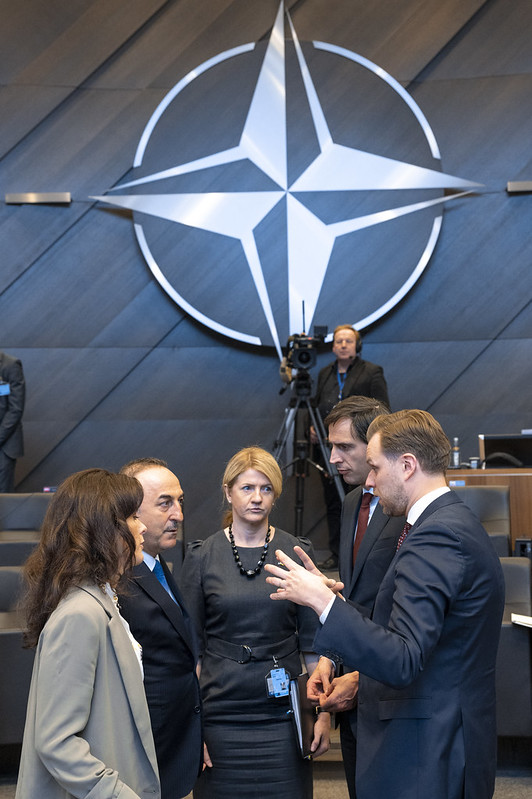
On 6-7 April, the Minister of Foreign Affairs of Lithuania Gabrielius Landsbergis attended a meeting of the North Atlantic Council at the level of Ministers of Foreign Affairs in Brussels, Belgium. Allied Foreign Ministers discussed their support to Ukraine, response to Russian aggression and ongoing war crimes, the development of NATO’s next Strategic Concept, to guide the Alliance’s adaptation to the new global security reality and coordination with partners regarding challenges posed by China.
Foreign Ministers unanimously agreed that NATO’s next Strategic Concept should adequately reflect the fundamentally changed security environment and that Russia unilaterally violated the NATO-Russia Founding Act and was responsible for all related consequences. Foreign Ministers also noted that the threat posed by Russia to the Alliance would be long-lasting, so preparations must be made already. NATO’s defence and deterrence capabilities have to be strengthened substantially.
“NATO must invest in defence and be ready to defend allies from the first minute of a conflict. Its forward defence strategy and the permanent deployment of forces must become a new norm for the Alliance’s eastern flank. We will seek appropriate solutions in Madrid", Landsbergis said.
Foreign Ministers noted that Russia could further escalate the situation in Ukraine in the near future. They agreed to continue and to increase military, humanitarian, financial and political support to Ukraine, as well as to adopt a package of proposals to step up additional support to other NATO partners at risk from Russian pressure, namely Bosnia and Herzegovina, Moldova and Georgia.
“Our main goal is to help Ukraine win the war. We need and can do more — support Ukraine with weapons, tighten sanctions on Russia, including on gas and oil,” Lithuania’s Foreign Minister said.
Foreign Ministers, together with representatives of partners — Australia, Finland, Georgia, Japan, the Republic of Korea, New Zealand, Sweden, Ukraine, and the European Union —discussed Russia's aggression and challenges posed by China.
The participants committed themselves to a joint effort to counter the attempts by authoritarian countries to destroy the rules-based international order. The community of democratic countries will seek to send a clear message to China that the price of supporting Russia will be high. Foreign Ministers also agreed on a roadmap for cooperation with NATO’s Asia-Pacific partners.
During his visit, Landsbergis will also meet with Australia’s Minister for Foreign Affairs Marise Payne and will attend a joint meeting of the Foreign Ministers of the Baltic states and Benelux countries. The meetings will focus on the most pressing issues of bilateral cooperation, security policy and support to Ukraine.
Photos: The NATO
Social media


