


Lithuania’s Foreign Minister Gabrielius Landsbergis: We have less and less time to tighten sanctions
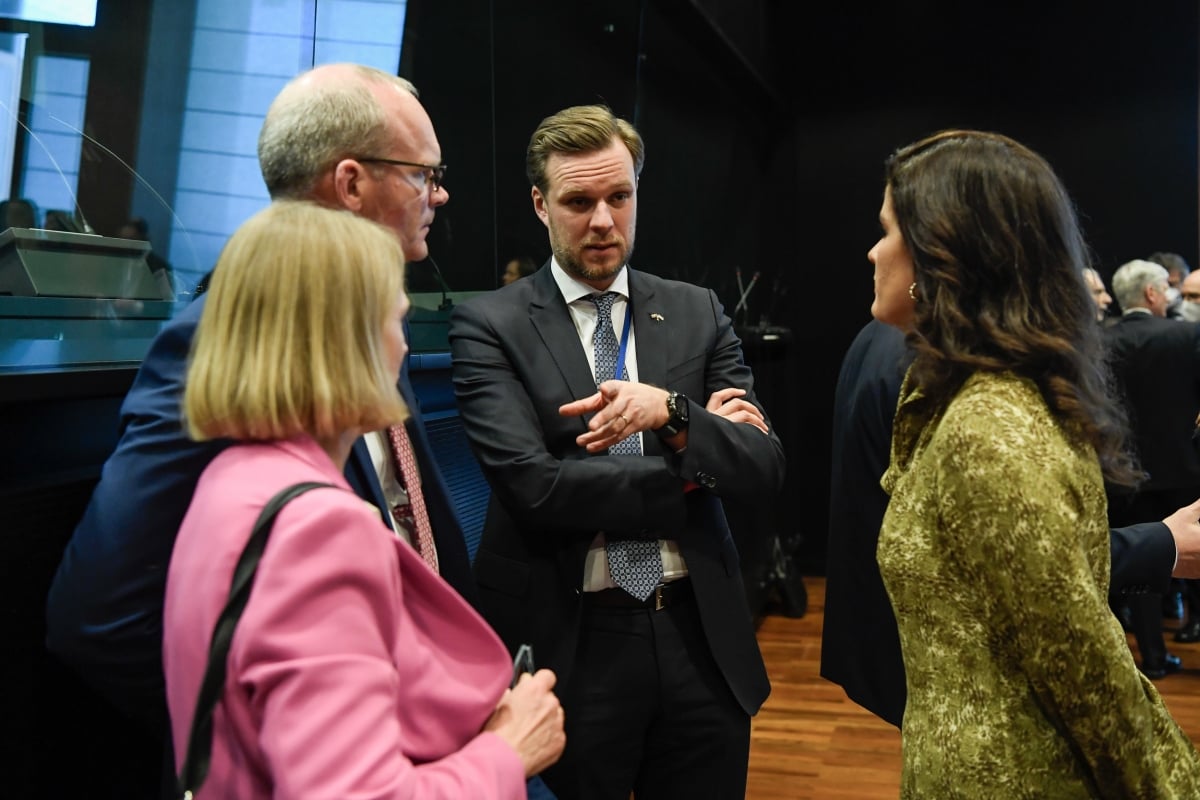
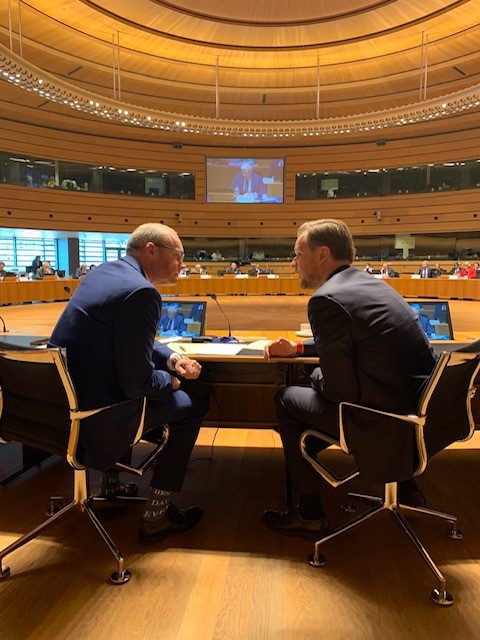
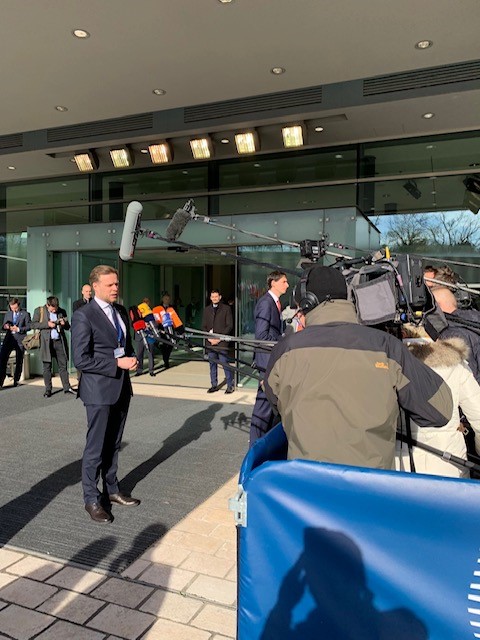
On 11 April, the Minister of Foreign Affairs of Lithuania Gabrielius Landsbergis attended the Foreign Affairs Council in Luxembourg, which focused on the Russian military aggression against Ukraine, the European Union's further response measures, impacts on the region's stability, and geopolitical consequences of Russia's war.
According to Landsbergis, foreign affairs ministers established the basis of political support for the sixth sanctions package for Russia, which would include oil sanctions.
“Russia has been attacking Ukraine for 47 days already. We will never forget the images of brutally devastated cities. Thus, Europe is becoming more aware of the need to tighten sanctions, as well as to include new sanctions on energy, firstly, on oil. We know what needs to be done, and we are willing to do whatever it takes. However, it needs to be done very quickly. We must stop Russia’s war, or we will all lose", Landsbergis said in Luxembourg.
According to the Foreign Minister, the impact of sanctions will be felt by everyone, but there is no other way — Ukraine cannot be allowed to lose.
“Lithuania has always been a leader in demanding the toughest and all-encompassing sanctions. We will not stop or slow down our pace. If you do not know why we should rush, go to Bucha or Borodianka. It’s too late for the victims in these towns. How long can we delay?" said Landsbergis.
According to the Minister of Foreign Affairs, as Russia regroups for new attacks in the east and south of the country, the EU can and must do more to help Ukraine defeat Putin and his army, and start the process of de-putinisation. It is therefore important to continue providing military support.
The Foreign Minister also thanked the European Commission for the accession questionnaire for Ukraine as an EU candidate that would help to assess the country's readiness to join the bloc and called for putting in place specific measures to rebuild and reconstruct the country after the end of the war.
On the margins of the meeting, foreign affairs ministers and Karim Khan, Chief Prosecutor of the International Criminal Court, discussed the opening of an investigation into the situation in Ukraine. This is crucial after the terrible events in Bucha and other settlements liberated from Russian troops. Foreign affairs ministers voiced strong support for the ongoing investigation of the Court and their readiness to help collect and preserve evidence of war crimes and crimes against humanity.
According to Landsbergis, it is important to ensure accountability for crimes committed in Ukraine. Thus, not only the proceedings initiated by the International Criminal Court are significant, but also investigations by national authorities of states that are allowed under the principle of universal jurisdiction. It is also necessary to consider setting up a special tribunal to hold Russia to account for the crime of aggression.
Foreign affairs ministers also exchanged views on the Global Gateway, the new European strategy to develop infrastructure projects across the world.
“The Russian war against Ukraine not only revealed Europe’s dependence on Russian natural resources, but also highlighted the importance of a global infrastructure security dimension. The EU must focus more on ensuring the security of supply chains and energy, further development of transport links both in the EU and with neighbouring regions, particularly with eastern partners and the Western Balkans,” Landsbergis said, stressing the need to consider how the Global Gateway initiative could contribute to the reconstruction of Ukraine’s infrastructure and increase its connectivity with the EU’s transport and energy networks.
Photos: The European Union and the MFA.
Social media


