


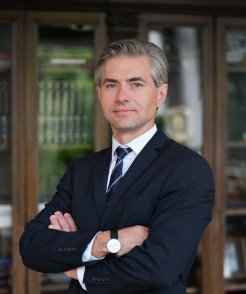
Lithuania's Foreign Minister Gabrielius Landsbergis in Brussels: We always respond reactively to Russia’s actions, but this time the EU may behave differently
On 22 March, the Minister of Foreign Affairs of Lithuania Gabrielius Landsbergis took part in the Foreign Affairs Council, which focused on EU-Turkey relations, the Southern Neighbourhood, the situation in Russia, Georgia, the Western Balkans, human rights and democracy in Venezuela, Myanmar, and Hong Kong.
The head of Lithuania's diplomacy drew attention to the ongoing repression of civil society, the crackdown on the opposition by the Kremlin, and called for maintaining a values-based policy towards Russia.
“The Kremlin continues to show total disrespect for democratic values and principles. As the State Duma election approaches, the authorities engage in more severe repression of those whom the Kremlin sees as a threat. About 200 municipal deputies have been detained. I believe that the EU’s relationship with Russia will be based primarily on values and principles, such as respect for democracy and human rights, and sovereignty of other states, rather than on economic interests. So far, Europe has always responded reactively to Russia’s actions, but this time the EU may behave differently," said Landsbergis.
According to the Foreign Minister, there is no possibility to propose a broader dialogue with Russia until the Kremlin begins to respect international law and sovereignty of other nations.
As regards Georgia's political crisis, the Foreign Minister highlighted the importance of the EU’s mediation efforts and stressed that this was an extremely timely geopolitical step taken by the EU. It has opened up new opportunities for dialogue between different political forces.
“The EU partners are fully aware of our concerns over Georgia's political crisis, as I heard very clearly from lots of my colleagues today,” said the Foreign Minister.
In an exchange of views with the United Nations High Commissioner for Human Rights Michelle Bachelet on the state of human rights around the world, and recent development in this regard, Landsbergis also expressed concerns about the deteriorating human rights situation in many regions of the world, including in the EU’s neighbourhood: Russia, Belarus, as well as the occupied territories of Ukraine and Georgia.
"Impunity for serious human rights violations enables the spread of such crimes and further repression by the regimes. The international community must take concrete steps to punish the perpetrators. It is necessary to strengthen international accountability mechanisms, record and document the extent of the violations," said the Foreign Minister said.
The Council decided to impose restrictive measures on eleven individuals and four entities responsible for serious human rights violations and abuses in China, North Korea, Libya, South Sudan, Eritrea and Russia. In addition, the Council also decided to sanction 11 individuals responsible for the military coup staged in Myanmar and the subsequent military and police repression against peaceful demonstrators.
Social media


