


Lithuania’s Foreign Minister Gabrielius Landsbergis: I hope the day will come when we will not have to talk about the release of political prisoners to our neighbours, but today is not that day
Created 2021-06-02
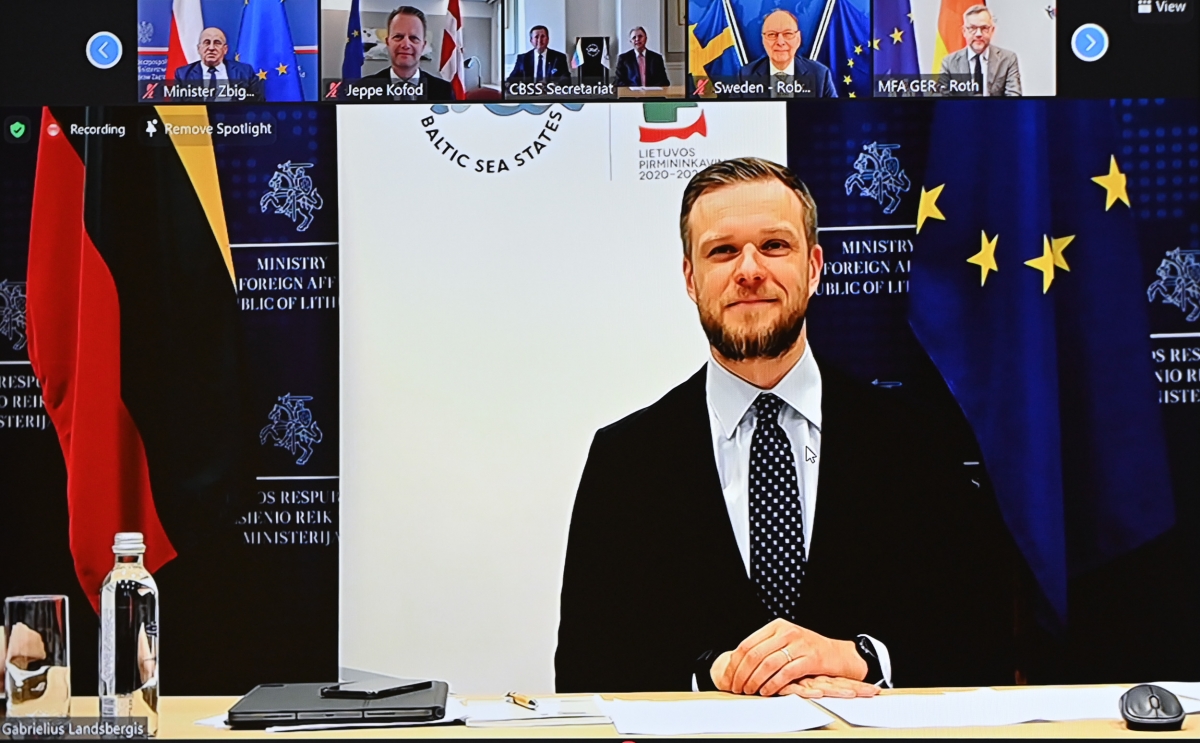
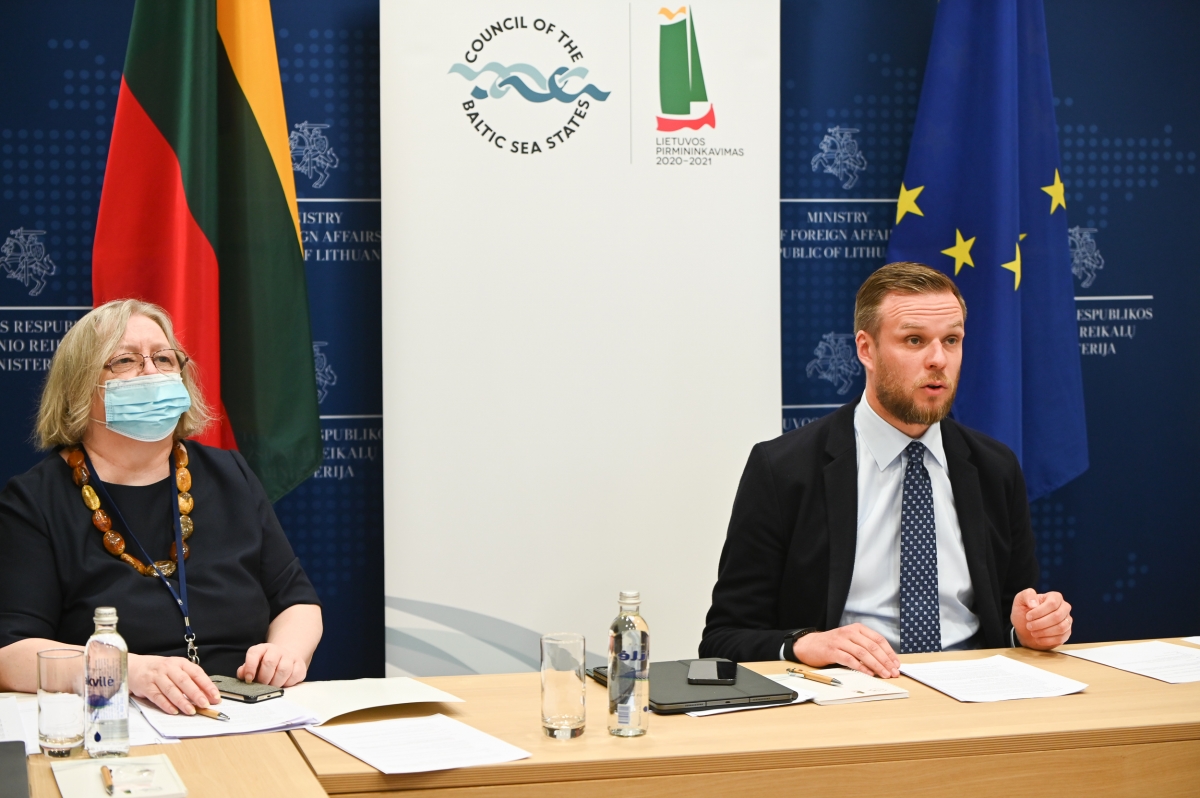
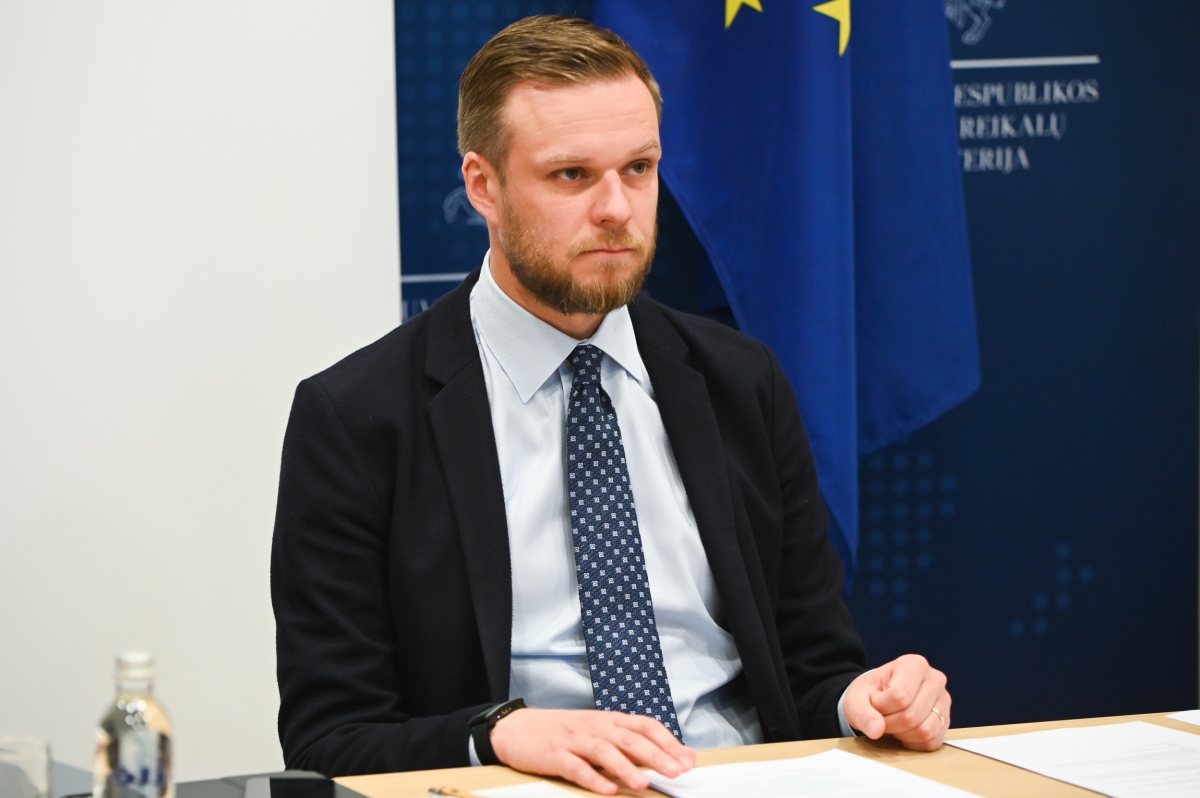
On 1 June in Vilnius, the Foreign Ministers and high-level representatives of the Council of the Baltic Sea States (CBSS) met in a video conference to conclude Lithuania's Presidency of the organisation.
Participants discussed the future of the Baltic Sea Region. The current President of the CBSS, Minister of Foreign Affairs of Lithuania Gabrielius Landsbergis quoted the Nobel Peace Prize winner Andrei Sakharov in his speech: “Peace, progress, human rights – these three goals are indissolubly linked; it is impossible to achieve one of them if the others are ignored”. These thoughtful words are still relevant to people's lives today.
Almost all heads of delegations expressed their political position, condemning the last week's terrorist actions by the Belarusian regime, violence against journalists, and efforts to undermine freedom of expression.
“I hope the day will come when we will not have to talk about the release of political prisoners to our neighbours, but today is not that day,” said Landsbergis.
Participants adopted a renewed strategic vision for the Baltic Sea Region by 2030 (the Vilnius II Declaration), which will guide the CBSS and other regional organisations in the coming decade in their efforts to build collaboration and trust in the Baltic Sea Region. It will continue the tradition of the Vilnius I Declaration that was adopted in 2010. The new Declaration calls for joint efforts not only of the CBSS, but also of other regional organisations, in order to achieve the region’s perspective development.
Almost all heads of delegations expressed their political position, condemning the last week's terrorist actions by the Belarusian regime, violence against journalists, and efforts to undermine freedom of expression.
“I hope the day will come when we will not have to talk about the release of political prisoners to our neighbours, but today is not that day,” said Landsbergis.
Participants adopted a renewed strategic vision for the Baltic Sea Region by 2030 (the Vilnius II Declaration), which will guide the CBSS and other regional organisations in the coming decade in their efforts to build collaboration and trust in the Baltic Sea Region. It will continue the tradition of the Vilnius I Declaration that was adopted in 2010. The new Declaration calls for joint efforts not only of the CBSS, but also of other regional organisations, in order to achieve the region’s perspective development.
The Declaration covers many areas of regional development. It is planned that by 2030 all countries in the region will uphold the rule of law, democracy, as well as respect for human rights and fundamental freedoms. The region will have a strong and well-functioning multi-level governance structure for political dialogue, practical cooperation, and people-to-people contacts. It will also have a coherent system of cooperation networks leading to better synergies between them and thus enabling a swift adaptation to new circumstances and effective assistance to regional stakeholders in tackling old and new challenges. Young people will participate and be represented in a meaningful way in institutions and decision-making processes giving impetus to efforts to reach a more resilient, gender equal and safe region.
The ecological health of the Baltic Sea will have been restored and the ecosystem will be thriving. The region will have taken resolute steps towards climate neutrality and to climate resilience of the key economic sectors. The introduction of circular economy and increased generation, exchange and the use of clean and renewable energy will have significantly reduced the negative ecological foot-print in the region.
Moreover, a high level of digitalization and a cohesive digital infrastructure will allow all parts of society to profit from digital solutions that adhere to high ethical standards. The region will be well protected against cyber threats and will have strengthened its defence against wilful distortion of information and factual data. The AI and other new and emerging technologies will play an important role in industry, public administration and the provision of services. The region will experienced significant progress in regional cooperation in civil protection, especially the prevention, preparedness and response against emergencies, as well as in education, science, research and innovation.
The ecological health of the Baltic Sea will have been restored and the ecosystem will be thriving. The region will have taken resolute steps towards climate neutrality and to climate resilience of the key economic sectors. The introduction of circular economy and increased generation, exchange and the use of clean and renewable energy will have significantly reduced the negative ecological foot-print in the region.
Moreover, a high level of digitalization and a cohesive digital infrastructure will allow all parts of society to profit from digital solutions that adhere to high ethical standards. The region will be well protected against cyber threats and will have strengthened its defence against wilful distortion of information and factual data. The AI and other new and emerging technologies will play an important role in industry, public administration and the provision of services. The region will experienced significant progress in regional cooperation in civil protection, especially the prevention, preparedness and response against emergencies, as well as in education, science, research and innovation.
The Foreign Ministers and high-level representatives also voiced their gratitude to Lithuania for its Presidency of the CBSS during 2020-2021, and welcomed Norway as the incoming Presidency for 2021-2022.
Lithuania's Presidency of the CBSS has focused on four priorities: 1) sustainable development, especially in the field of developing green industry; 2) green and maritime tourism as an important sector in reviving regional economy, increasing the region's visibility, giving employment opportunities to young people; 3) civil protection in the region, strengthening resilience in the region against major emergencies and disasters; and 4) combating trafficking in human beings for labour exploitation in the region, as well as preventing violence against children.
The meeting was attended by Foreign Ministers and high-level representatives of Denmark, Estonia, Finland, Germany, Iceland, Latvia, Lithuania, Norway, Poland, Russia, Sweden and the European Union.
Social media


