


Lithuania’s Foreign Minister: Chernobyl catastrophe reminds us of importance of nuclear safety standards
On 26 April, the world commemorates the 30th anniversary of the disaster at the Chernobyl nuclear power plant in Ukraine. The Chernobyl disaster has been rated 7 (a major nuclear accident) on the International Nuclear and Radiological Event Scale (INES) introduced by the International Atomic Energy Agency (IAEA).
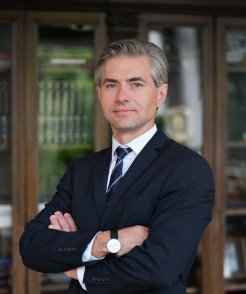
“The Ukrainian and Belarusian people, other neighbours, nature and the whole of Europe have suffered the consequences of the Chernobyl disaster. A radioactive cloud drifted over most of European countries, including Lithuania. The exclusion zone was established around the Chernobyl nuclear power plant after the disaster. It is still considered to be one of the world’s most polluted places. And today, even 30 years later, we feel humanitarian, ecological and economic consequences,” said Lithuania’s Foreign Minister Linas Linkevičius. “Bearing in mind the scale of the tragedy and aiming to prevent it from happening again, we call on governments around the world to ensuring that nuclear activities are carried out in strict adherence to international standards on nuclear safety and to environmental requirements.”
“We propose tightening nuclear safety regulations and making them mandatory, because today they are only recommended, as well as strengthening the IAEA’s global role in ensuring nuclear security,” said Linkevičius.
Lithuania is seriously concerned with the nuclear safety situation in Belarus. Belarus has its first nuclear power plant under construction in Astravets, just 50 km from Lithuania’s capital city of Vilnius. The first reactor is now expected online by 2018. We seek adherence to international standards on nuclear safety and to environmental requirements by Belarus.
According to Lithuania’s Foreign Minister, countries, especially the ones that are just starting to carry out nuclear activities, should dedicate particular attention to transparency and cooperation, assume responsibility to protect the health and safety of their people, and for the potential impact on neighbouring states.
In a meeting in Vilnius on 26 April with the Deputy Minister of Foreign Affairs of Belarus Alena Kupchina, Linkevičius expressed concerns over the Astravets nuclear power plant project and noted that when implementing the nuclear project near the capital of the neighbouring state, Belarus had to ensure maximum transparency and openness. Lithuania’s Foreign Minister also called on Belarus to take constructive steps toward compliance with international standards on nuclear safety and environmental protection.
“We urge Belarus to immediately request the IAEA’s Site and External Events Design Review Service (SEED) to provide an independent review of the site evaluation and the designed safety of the nuclear installation against the demands of natural and human induced external and internal hazards as well as to carry out stress tests and accept international experts’ assistance with the evaluation of the Belarusian nuclear power plant project, as proposed by the Implementation Committee (Espoo Convention). A strict adherence to nuclear safety standards must become an integral part of any nuclear power plant construction.”
Lithuania highly appreciates attention that is being dedicated to the Astravets nuclear power plant by the IAEA, the European Union and other international organizations and believes that this focus will be maintained in the future to encourage Belarus to comply with international standards on nuclear safety and environmental protection.
The consistent compliance with the requirements for nuclear safety and environmental protection set out by the IAEA and in the Espoo Convention as well as by other international organisations is of a major importance for each country that carries out or starts to carry out nuclear activities.
Social media


