LITHUANIA’S DEVELOPMENT POLICY LOOKS EAST (The Courier, September/October 2009)
Evaldas Ignatavičius, Lithuania’s Deputy Minister of Foreign Affairs in charge of development cooperation policy, says his small country has a limited bilateral development budget and a global reach is difficult. Rather, it is targeting such aid to areas where it can be most effective in line with political objectives, such as its immediate neighbours and Afghanistan.
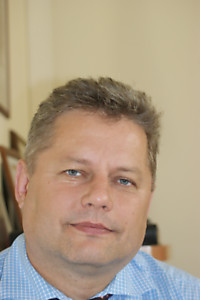 In an interview with ‘The Courier’ in Vilnius, the Deputy Minister spoke of “adjusting our development policies to our foreign policy goals and our priorities on enlargement of the European Union.” “We have integration experience and try to use these instruments and mechanisms for other countries which have future membership of the European Union as a goal,” he said.
The country’s Development Cooperation and Democracy Promotion programme, where bilateral aid is concentrated, is hence focussed on countries which are part of the EC’s ‘European Neighbourhood Policy’: Belarus, Ukraine, Moldova, Georgia, Armenia and Azerbaijan and also Afghanistan – where 50 per cent of funds go.
The Deputy Minister explained that, it’s also a question of not spreading funds too thinly and being effective. The country’s 2009 bilateral aid budget is some €2.5M. “Last year it was a bit more but we have had cuts – next year I do not know yet,” he said (see: www.orangeprojects.lt).
Overall, he said that Lithuania’s official Overseas Development Assistance (ODA) would be around 0.1 per cent of Gross National Income (GNI) this year: “It is not a huge amount, but it is still not bad”. This sum includes international commitments. For example, from next year, Lithuania will be required to contribute for the first time to the European Development Fund (2008-2013) for ACP nations, with a €27.2M commitment.
We asked the Minister why part of the budget is not being used to alleviate poverty in Africa: “In the past, we had some projects and we hope to come back to these. Now, we want to achieve the best possible results with the relatively few resources we have and this is not possible in African or Caribbean countries: there are big transport costs and we do not have well-prepared experts to work in Africa. For Central Europe and Eastern Asia, we have people who can speak Russian and can communicate and we have the skills that these countries need for transformation,” he said. Projects being funded in these regions include classical social and small clean water projects and building small power stations.
Afghanistan
“We are funding more of these classic development projects in Afghanistan: this is the centre of our development cooperation - combating poverty and illiteracy, helping transform agriculture, or building small schools and hydro-power plants. We also have a small project in Palestine,” added the Deputy Minister. Why political focus on Afghanistan? “We are responsible for a provincial reconstruction team there and see the added value of civil and military cooperation. We can control our projects - this is difficult to do in very distant countries on the African continent,” he said.
Whereas fellow Baltic state, Estonia, channels all its funding for development through international organisations and agencies, the Deputy Minister said: “Our policy is one of visibility and using continuation of our development policy as foreign policy.” Lithuania currently has only one embassy in Africa - Cairo. Technical experts in the Foreign Affairs department are currently in training for Lithuania’s EU Presidency in 2013. The country currently holds the presidency of the 140-nation Community of Democracies, set up in 2000 by then Polish Minister of Foreign Affairs, Bronislaw Geremek and former US Secretary of State, Madeleine Albright, to promote global democratic rules and norms. “Many African countries are active in this,” he said.
By Debra Percival

Social media