


LITHUANIAN MINISTER OF FOREIGN AFFAIRS: EUROPEAN UNION MUST ASSESS THE PROGRESS OF MOLDOVA IN IMPLEMENTING REFORMS
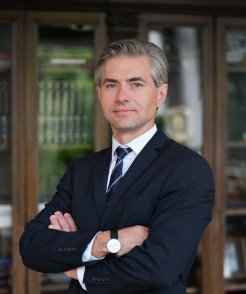
At the meeting of the General Affairs and External Relations Council of the European Union on 18 February in Brussels, Lithuanian Minister of Foreign Affairs Petras Vaitiekūnas discussed the European Neighbourhood Policy and the issues relating to Moldova.
Speaking about the European Neighbourhood Policy, the head of Lithuanian diplomacy emphasised the necessity to further seek efficient results in specific areas: the development of free trade, more efficient solutions to frozen conflicts, and the facilitation of visa regime. P.Vaitiekūnas also drew his colleagues’ attention to the issue of visas to the citizens of Georgia and urged the Council to adopt a separate political decision in March concerning a visa facilitation agreement.
“We cannot close our eyes and forget Georgia’s problems. Expediting the dialogue on visas is an issue that should become a political priority of the Council”, the head of Lithuanian diplomacy said.
The Lithuanian foreign minister also spoke about the necessity to create an appropriate format for regional cooperation among the European Neighbourhood Policy countries in the East.
“The EU must take a step forward and provide the European Neighbourhood Policy countries in the East with a possibility to cooperate among themselves and with the European Union", P.Vaitiekūnas noted.
During the meeting, the Council welcomed the progress in relations between Moldova and the EU: the visa facilitation and readmission agreements that have come into force, the opening of a joint centre for visa applications in Chişinău, and the Autonomous Trade Preferences that will come into force on 1 March 2008.
In the opinion of the Lithuanian Minister of Foreign Affairs, Moldova has indeed made considerable progress in implementing reforms, and therefore it is now necessary to start negotiations regarding a more comprehensive cooperation agreement as soon as possible.
The heads of diplomacy of the EU Member States also discussed preparations for the European Council meeting on 13 and 14 March. The meeting will mainly be devoted to the guidelines of the new implementation cycle of the Lisbon Strategy and issues of climate change. Minister P.Vaitiekūnas suggested that the Spring European Council could also pay attention to the EU external energy policy.
The Lithuanian foreign minister also noted that the EU must strengthen the common EU energy policy and be capable of competing in energy supply projects, particularly in the Caspian region.
“The EU must be able to talk unanimously with its key energy suppliers and monopolies”, the head of Lithuanian diplomacy said. The minister also made specific suggestions about how to strengthen the EU as a global energy player.
It was noted in the suggestions made by Lithuania that the EU must establish itself appropriately in the competition for strategic projects concerning the supply of energy resources and thus increase the security of the EU countries in the energy sector. Lithuania suggests that specific decisions must be made in order to implement the EU energy solidarity that is fixed in the Treaty of Lisbon. It provides for a unanimous EU reaction whenever energy supply problems arise in any EU country.
Social media


