


LITHUANIAN FOREIGN VICE-MINISTER WELCOMES EUROPEAN UNION’S DETERMINATION TO PROMOTE HUMAN RIGHTS THROUGHOUT THE WORLD
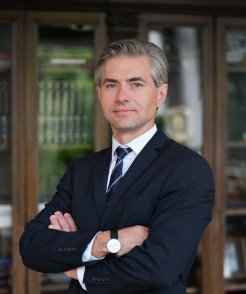
At the meeting of EU foreign ministers in Luxembourg on June 25, Lithuanian Vice-Minister of Foreign Affairs Vytautas Leškevičius noted that the adopted EU strategic framework for human rights and democracy would provide EU with a visibility, but determination to promote human rights throughout the world required a long-term engagement and commitment. “Human rights must be an overarching element throughout the EU’s external action. Member states and EU bodies, including the soon to be appointed EU Special Representative for Human Rights, should work hand in hand to turn the documents into practice,” Leškevičius said.
On 25 June, the Foreign Affairs Council adopted the EU strategic framework for human rights and democracy and an EU action plan for human rights and democracy. Lithuanian Vice-Minister Foreign stressed that it set out a clear list of priorities, including greater involvement of women and ensuring equal opportunities for them, also the promotion of freedom of religion or belief and of freedom of expression, and provision of effective support for human rights defenders around the world.
The EU High Representative for Foreign Affairs and Security Policy Catherine Ashton is expected to make a decision regarding the appointment of a high-level envoy, tasked with raising the EU’s human rights profile worldwide, to the new post of EU Special Representative for Human Rights.
“The EU Special Representative for Human Rights should be the one who would be able to help to win hearts and minds in EU bodies, our partner countries, multilateral organisations and, most importantly, in civil society,” Leškevičius noted.
The Vice-Minister called on the EU to more effectively combat violence, arising out of religion and religious beliefs, and to pay more attention to the issues of freedom of religion or belief in the EU’s external relations. This would allow for a more prompt response to such disturbing incidents like the recent outburst of religious violence in Nigeria.
At the meeting in Luxembourg, the European Commission also called on the EU member states to take full advantage of some of the EU Visa Code rules by offering more favourable conditions to Belarusian citizens. In June 2010, the Commission invited Belarus to start negotiations for visa facilitation. So far, the EU has received no formal answer from the Belarusian authorities.
Lithuania is already applying the EU Visa Code rules, allowing for an issuance of Schengen visas to certain categories of Belarusian citizens free of charge. Lithuania believes that there is a necessity to continue to explore possibilities to open EU borders for ordinary Belarusians. “This would increase possibilities of the country’s citizens to travel, learn more about the European Union and would contribute to the democratisation of Belarus,” Leškevičius said.
The Foreign Affairs Council also discussed the situation in the EU’s southern neighbourhood, focusing on Syria and Egypt, relations with Pakistan, and the EU policy towards Bosnia and Herzegovina. The ministers also exchanged views on the talks with Iran on its nuclear programme.
On the eve during the meeting of senior diplomats from the Baltic States and Benelux countries, Leškevičius emphasized that the EU had to pay appropriate attention to its Eastern neighbourhood. The meeting focused on the EU policy towards Russia, Ukraine and Moldova. Participants were also preparing for the annual meeting of foreign ministers from Lithuania, Latvia, Estonia, Belgium, the Netherlands and Luxembourg, which is due this September in Brussels.
Social media


