


LITHUANIAN FOREIGN VICE-MINISTER: THE EU-RUSSIA RELATIONSHIP HAS TO BE DEVELOPED IN A CONSISTENT MANNER
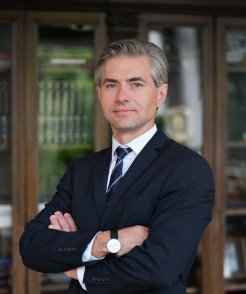
At the meeting of European Affairs Ministers in Brussels on December 10, Lithuanian Vice-Minister of Foreign Affairs Vytautas Leškevičius stressed that if the EU aimed at a really equitable strategic partnership with Russia, the relationship had to be developed in a consistent manner.
“The European Union should first of all assess the progress towards pre-agreed objectives and targets and in implementing existing commitments, and then the time will come to set new goals,” Leškevičius said.
At the Foreign Affairs Council, the ministers exchanged views on EU relations with Russia, ahead of the EU-Russia summit. Lithuanian Foreign Vice-Minister said that the EU had to encourage Russia to take into account the interests of its partners when negotiating and implement the existing commitments embraced in acceding to the World Trade Organization in order to promote a further constructive dialogue.
The representative of Lithuania said that further steps towards visa liberalisation had to be negotiated with Russia, as the country undertakes all the “Common steps” reforms. The Vice-Minister also noted that it was necessary to find new ways to talk with Russia about the civil society situation in this country.
“Both sides think that energy is very important. Russia has to respect the EU rules and not to hinder the diversification of energy resources supply. We aim to promote cooperation based on credible, transparent and robust rules,” Leškevičius said.
The Council reaffirmed the EU’s engagement with Ukraine, if the country would continue to carry out reforms. The Council reaffirmed its commitment to the signing of the Association Agreement, including a Deep and Comprehensive Free Trade Area as soon as the Ukrainian authorities demonstrate determined action and tangible progress, possibly by the time of the Eastern Partnership Summit in Vilnius on 28–29 November 2013.
When discussing relations with the Western Balkans, Leškevičius acknowledged the latest positive developments in the Belgrade-Pristina Dialogue, but noted that prior to opening accession negotiations with the EU, Serbia should make sustainable progress with respect to all the accession criteria, including the rule of law, fight against corruption, business environment, etc.
Ministers discussed recent developments in the Middle East, following the vote on the status of Palestine at the UN, expressed concerns about a new possible wave of escalation, and called on Palestine and Israel to achieve a peaceful and lasting solution to the Israeli-Palestinian conflict. The Council also debated the situation in Libya and took stock of the latest developments in Egypt.
When debating the latest developments in Syria, ministers exchanged views with Ahmed Moaz Al-Khatib, President of the National Coalition for Syrian Revolutionary and Opposition Forces. The EU ministers recognised the newly united Syrian opposition as the “sole legitimate representative” of the Syrian people.
Social media


