


LITHUANIAN FOREIGN MINISTER STRESSES THE IMPORTANCE OF FAIR ALLOCATION FROM THE EU BUDGET
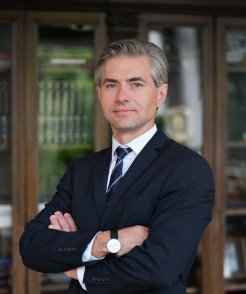
On April 24 at the meeting of the EU Ministers of European Affairs in Luxembourg, Lithuanian Minister of Foreign Affairs Audronius Ažubalis commended the proposal of the Danish EU Presidency to take into account the impact of the economic crisis while allocating the future structural support as an important step forward, but called on the participants not to stop at this point.
“I would like to thank the Danish Presidency for considering the issue that is raised by the three Baltic States. If the rule proposed by the European Commission (EC) - to fix at 2.5 % of GDP the capping rates for cohesion allocations – were to be uniformly applied to all, the EU support would be reduced most of all to the countries that were strongly affected by the crisis. The Danish proposal is a step forward, but we hope for more ambitious steps in the future,” Ažubalis said at the General Affairs Council meeting.The Council discussed such important for Lithuania areas of the multiannual financial framework as the Cohesion Policy and the Common Agricultural Policy, and the new instrument aimed at accelerating infrastructure development. Denmark summarised earlier discussions and came up with an updated negotiating package.
Lithuania stressed that the direct payments for the Common Agricultural Policy for the 2014-2020 period should be fairly and equally allocated between the member states, so that farmers would not be discriminated in the least-developed countries.
The European Commission has proposed to reduce the gap between the existing direct payments for these farmers and the EU average by nearly one-third in 2014-2020. Lithuanian Foreign Minister stressed that this proposal was not sufficiently ambitious and would still discriminate against farmers in Lithuania and in the other Baltic states.
“We have to aim at a fair and equal allocation of structural support and equalize these payments as quickly as possible. Would it be right, if payments for Lithuania were almost two times smaller than for the countries that benefit from maximally high payments and would even not reach the EU average in 2020?” Ažubalis asked when discussing the joint proposal of Lithuania, Latvia and Estonia to equalize direct payments as soon as possible.
The Minister also stressed the need for greater support for rural development in less developed regions and the necessity to finance the cross-border energy and transport projects under the proposed instrument for accelerating infrastructure development in Europe.
Social media


