


LITHUANIAN FOREIGN MINISTER: EU HAS ТО ASSESS ALL CONSEQUENCES WHEN ENDING ARMS EMBARGO ON SYRIA
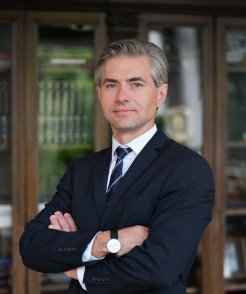
At the European Union’s Foreign Affairs Council meeting on 27 May in Brussels, the Minister of Foreign Affairs of Lithuania Linas Linkevičius called for support to finding a political solution to the crisis in Syria. The Foreign Affairs Council meeting discussed the possible export of arms to Syria and the adoption of restrictive measures at the expiry of the current sanctions against Syria until June 1. “The Council agreed to adopt restrictive measures on Syria. When deciding to supply military equipment to the opposition, member states shall proceed in their national policies, assessing the export licence applications on a case-by-case basis, taking full account of the criteria set out in Council Common Position 2008/944/CFSP of 8 December 2008 defining common rules governing control of exports of military technology and equipment. Member states will not proceed at this stage with the delivery of military equipment. The Council will review its position before 1 August 2013 on the basis of a report on developments,” Linkevičius said.
At the Foreign Affairs Council, the head of the Lithuanian diplomacy called on the EU to support the initiative by the United States Secretary of State John Kerry and the Russian Foreign Minister Sergey Lavrov to hold an international conference on Syria as a follow up to the Geneva Conference. The Minister reminded the participants about his visit to the Middle East the previous week and that all the stakeholders were very cautious about the possibility to lift arms embargo.
“We must ensure that these arms do not fall in the hands of many different terrorist groups. As a result, there will be casualties among civil population, what we would like to avoid,” Linkevičius said.
The Lithuanian Foreign Minister also called on the EU to make sure that its position was clear with regard to all terrorist groups in the region, including Hezbollah, because some information was really alarming. The European Union recognizes Hamas as a terrorist organization, while the military wing of Hezbollah has not been labelled as such.
The Foreign Affairs Council also discussed the Common Security and Defence Policy, in preparation for the European Council on defence in December 2013. The head of the Lithuanian diplomacy advocated for including issues related to energy security, cyber security, nuclear security and safety, also called for strengthening cooperation with partners, i.e. international organisations, such as NATO and Eastern Partnership countries.
Social media


