


LITHUANIAN FOREIGN MINISTER CALLS ON ARMENIA TO TAKE ADVANTAGE OF LITHUANIA’S FORTHCOMING EU PRESIDENCY
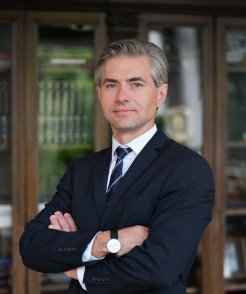
On his official visit to Yerevan, Lithuanian Minister of Foreign Affairs Audronius Ažubalis called on Armenia to take advantage of Lithuania’s forthcoming Presidency the Council of the EU and to establish closer relations with the EU, which would accelerate Armenia’s progress and open up new possibilities for cooperation.
During the meetings with President of Armenia Serzh Sargsyan and Foreign Minister Edward Nalbandian on 5 April, Lithuanian Minister of Foreign Affairs stressed that Lithuania is ready to share its reform experience with Armenia and that Lithuania’s EU Council Presidency in the second half of 2013 and would help Armenia to complete its on-going negotiations with Brussels on agreements engraining the EU-Armenian Partnership.On 6 March, Armenia and the EU launched negotiations on the deep and comprehensive free trade agreement. On 27 February, the parties started negotiations on visa facilitation and readmission agreements. The negotiations on the EU-Armenia Association Agreement have been progressing at a good pace and 24 negotiating chapters out of 28 are already closed.
“Doubtlessly travel simplification and intensified people-to-people contacts will provide a fresh impetus for overall reform process in the country,” Ažubalis said.
Lithuanian institutions were selected to implement three EU Twinning projects on competition, consumer rights and customs, thus sharing the experience of implementing EU norms with Armenian institutions. The Minister underlined that Lithuania is ready to continue to share its experience of EU integration.
According to Ažubalis, intensifying relations of Armenia and Azerbaijan with the EU also open up opportunities for settling the conflict of Nagorno-Karabakh. “Civil society dialogue is particularly important for the reconciliation. The EU is ready to support the implementation of confidence-building measures,” the Minister said.
According to him, Lithuania’s EU Council Presidency will also be a good opportunity for outlining the EU’s Eastern partnership agenda (Armenia is engaged in its activities), as Vilnius is to host the Eastern partnership summit in the second half of 2013.
In Yerevan, among other topics Ažubalis discussed the preparation for the summit. “The meeting should have an ambitious programme, which we could implement,” the Minister said.
During the meetings, considerable attention was dedicated to economic cooperation. According to Ažubalis, even though economic cooperation is intensifying, its potential has not been fully exploited. “Close political ties of the countries provide a good platform for furthering economic ties,” he stressed.
Current dynamics of bilateral trade shows an increasing interest of Lithuanian businesses in the Armenian market. In 2011, the Lithuanian and Armenian trade turnover was 17.2 million Litas, and had increased by 15.7% since 2010. Balance of trade was positive and amounted to 13.63 million Litas.
Ažubalis began his visit to Yerevan by paying tribute to the victims of the Armenian genocide at the Armenian Genocide Museum.
Last time, Lithuanian Foreign Minister paid a visit to Armenia as the OSCE Chairperson-in-Office on 17-18 March 2011.
Social media


