


LITHUANIA GOES AHEAD WITH THE NORDIC BALTIC COOPERATION (Best in Lithuania, No. 17/2012, p. 10-11)
Lithuania’s relations with Nordic countries go way back into centuries. The Baltic Sea always was crisscrossed by shipping routes widely travelled by adventurers and traders, in a long run creating a bond between the nations of shared values and similar traditions. This bond turned to be most precious in contemporary history during the last 20 years of transformation of our country into the modern democracy and economy during which we had a full support of our Nordic neighbours. The Nordic countries were the first ones to recognize the restored independence of Lithuania and the very first mission opened in Vilnius was the Office of the Nordic Council of Ministers. Nordic countries had consistently supported political and economic reform process of the Baltic States since 1990’s. They were instrumental in our preparations to becoming members of the NATO and the European Union. During the last 20 years our cooperation has transformed into the partner and ally relationship.
This year is special for us, because Lithuania coordinates agenda of Nordic-Baltic co-operation format called Nordic-Baltic Eight (NB8), which includes Sweden, Norway, Finland, Iceland, Denmark, Lithuania, Latvia and Estonia. NB8 deals with various regional issues, common challenges as well as political matters and is turning into a very strong and rapidly expanding economic player.Being a host of the Nordic-Baltic meetings, we take particular efforts to boost the region’s business relations, strengthen its visibility and competitiveness. We will set the ground for closer discussions of the Baltic countries with the Nordic Council of Ministers, encourage the exchange of information within and about our countries, further our energy sector integration, and explore possibilities in developing some issues of single digital market.
Over the last decade NB8 became highly integrated financially as well as economically, which is confirmed by the increase in trade and investment flows. Today our eight Nordic and Baltic countries constitute 11th largest global economy. As for accumulated foreign direct investments, by 2010 NB8 region has attracted more than 4 per cent of the world’s total investment, significantly outrunning such major economies like India, China, Japan and Russia. A clearly positive perspective is also determined by the region’s export performance – NB8 exports accounted for more than 3 per cent of total world’s exports.
In the face of recent global economic recession it turned out that this strategic direction towards stronger integration with Northern partners worked well: our economy, modelled to the northern type economies, and Nordic-Baltic region as a whole proved to be resilient, responsible and flexible. Lithuania, as well as other Baltic countries being hardly hit by global economic turmoil in 2008, was among the first to get back on the track of recovery already since 2010. In 2010 Nordic-Baltic countries agreed on common rules for financial stability and joint crisis prevention and management measures; Nordic-Baltic stability group was created. No wonder NB8 countries were probably the most efficient in coping with the recent economic and financial difficulties in Europe.
Given the geographical proximity of Nordic and Baltic countries, our close integration is far from surprising. Common regional branding as North-Baltic region gives very attractive commercial impression of a region, covering eight countries with high and reliable corporate culture, innovative approach to the economy, daring ideas, new business opportunities and niches as well as qualified and hardworking people. Being eight, instead of one or even Baltic three, gives us more relative power in global perspective.
Nordic-Baltic region is a priority market for Lithuanian exports. About a quarter of Lithuania’s total export and 23% of our foreign investments go to the Baltic and the Nordic countries. At the end of 2011, FDI from our Nordic-Baltic neighbours made up 40.5% of total FDI in Lithuania, Sweden being in the first position.
The importance of the Nordic countries to the Lithuanian economy is clearly demonstrated by their investments into our financial system. Our banking sector - the largest member of the financial system, is dominated by the Nordic capital. Our mutually beneficial success in this field is also encouraged by long-term development opportunities which Lithuania could offer. Nordic banks profiting from favourable Lithuanian investment climate are developing banking services provided to our customers, as well as transfer some of business functions from their countries to Lithuania, as for example a recent move of SEB Operation Center to Vilnius. Successful economic cooperation and investment projects could be also traced in across representative sectors of economy.
Today we are working consistently with our Nordic and Baltic neighbours towards the creation of a common EU energy market and elimination of remaining energy islands by 2015. For instance, with Sweden Lithuania is constructing an electricity cable link NordBalt which should be finished by 2015 and which should ensure an integration of Baltic and Nordic energy markets.
Lithuania together with Sweden is developing a very promising mutual transport project - East-West Transport Corridor. The idea of this corridor is to connect Asian and European markets by an alternative inland transport route, to develop efficient, safe and environmentally friendly handling of the increasing amount of goods going east-west.
Finland plays an active part in improving north–south land connections to central Europe, promoting further utilization of the railway project „Rail Baltica“. “Rail Baltica” project is important in terms of better connection of the rail system of the Baltic States with Poland and the rest of single European Market. Connecting Finland to the corridor is a logical extension, because it would increase the potential passenger and freight volumes and offer new alternatives for international logistics in line with the EU strategies of promoting sustainable transportation modes.
Together with other Nordic- Baltic countries we are actively involved in the implementation of the Baltic Sea Region (BSR) Stars Programme aimed at development of the innovation, clusters and SMEs networks in the region. We have also excellent examples of bilateral cooperation between our countries’ science institutions, the recent one being the agreement between Lithuanian Kaunas and Finish Aalto Universities in establishing an innovation and entrepreneurship centre aimed at strengthening of the scientific and business cooperation and innovation development in the Baltic Sea region.
Nordic countries are one of the most innovative regions in the world. Being a part of the Nordic-Baltic region means to be aligned with the most advanced countries. We are interested to adopt best practices in innovation, science and technology, as well as creation of favourable conditions for cooperation in science, business and government in high value added sectors. From the Nordic countries we draw our inspiration, among other things, towards environmental protection, climate change and economic development based on innovations and “green” technologies.
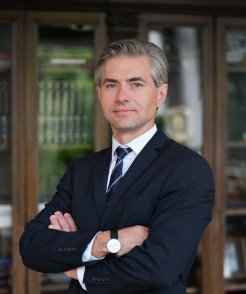
By Audronius Ažubalis, Lithuania’s Minister of Foreign Affairs
Social media


