


LISTENING TO AND PERPETUATING TESTIMONIES OF TOTALITARIAN TRAGEDY SURVIVORS IS THE DUTY OF ALL OF US, SAYS LITHUANIAN FOREIGN MINISTER
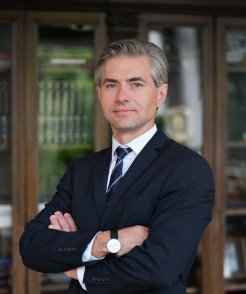
Preservation of painful memory of totalitarian regimes should not be limited to dry theoretical details in textbooks or official statistics. The duty of all of us is to listen to and to perpetuate testimonies of people who have themselves survived the tragedy and to do everything possible in order to prevent this inhumane history from repeating itself, says Lithuanian Minister of Foreign Affairs Audronius Ažubalis. On 16 November, Lithuanian Minister of Foreign Affairs Audronius Ažubalis took part in the international conference “Tolerance and Totalitarianism. Challenges to Freedom” that was held at the Tolerance Centre of the Vilna Gaon State Jewish Museum.
“As today we are teaching our children how to overcome new challenges to freedom and conflict temptations, let us not limit ourselves to dry theoretical details in textbooks or official statistics. Let us better make use of life experience and testimonies of defenders of freedom, such as Viktoras Petkus. Because it is not the history of liberation of just Lithuanians, Poles, Jews or Russian, but it is a shared history of all of us,” said A.Ažubalis.According to the Minister, last traces of existence of the Jewish community of Lithuania were being removed during the decades of Soviet occupation.
“We have traced the history back only after censorship was abolished in Lithuania and people started saying what they were thinking. Right after the restoration of independence, the Seimas (Parliament) of Lithuania adopted a declaration “Regarding the Genocide of the Jewish Nation in Lithuania during the Nazi Occupation”. Since that time, many scholarly books on the subject have been published, Holocaust memorial sites have been put in order, museum expositions have been created, lectures have been given and public debates gave been organized. But our main duty is to listen to and to perpetuate testimonies of people who have themselves survived the tragedy and to do everything possible in order to prevent this inhumane history from repeating itself,” said the Minister.
The Minster believes that the need of tolerance remains relevant also today, when due to the rapid dissemination of information every piece of news can spark discord.
“Because of that, sometimes we now hear proposals to restrict the freedom of speech for the sake of order. However, I believe that this would be a big mistake. According to the Freedom of the Press index of the Freedom House organization that is opening its representation in our country, Lithuania has reached the highest possible assessment and I would really dislike it if we returned to where we once were,” said A.Ažubalis.
The Minister added that not only good legislation was necessary for the promotion of tolerance and freedom, but also people of good will who would want and would be able to implement them.
On the occasion of the International Day for Tolerance on 16 November, Vilnius hosts an international conference “Tolerance and Totalitarianism. Challenges to Freedom” with a focus on the activities of the Lithuanian Helsinki Group in defending human rights.
Participants of the conference are discussing tolerance situation in today’s world, background of anti-Semitism, xenophobia and other hate-motivated incidences, and how to overcome their manifestations. At the same time, the event also marks the 35th anniversary of the establishment of the Helsinki Groups, which led to democratic changes in Central and Eastern Europe
The event is attended by Chairman of the Committee on Foreign Affairs of the Seimas (Parliament) of Lithuania Emanuelis Zingeris, the U.S. State Department’s Special Envoy to Monitor and Combat Anti-Semitism (U.S.A.) Hannah Rosenthal, Chairman of the Lithuanian Jewish Community Simonas Alperavičius, representatives from the academic community of various countries, members of minorities and other public organizations, clergy and journalists.
The conference is organized as part of the programme of the Year of Remembrance for the Victims of the Holocaust in Lithuania. Its sponsors: the Ministry of Foreign Affairs, the Office of the Prime Minister and the Tolerance Centre of the Vilna Gaon State Jewish Museum.
Social media


