


IN BRUSSELS, LITHUANIAN FOREIGN VICE-MINISTER STRESSES NEED FOR OPENNESS, COOPERATION AND TRANSPARENCY IN RUSSIA’S SECURITY POLICY
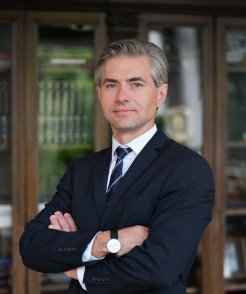
At the NATO Foreign Ministers meeting that concluded on 8 December, Lithuania’s Vice-Minister of Foreign Affairs Evaldas Ignatavičius stressed that Lithuania and many other allies believed that Russia would ensure the country’s security best if it could grant the implementation of means facilitating openness, cooperation, transparency and trust rather than increase its military capabilities vis-a-vis the West.
The NATO-Russia Council meeting exchanged opinions on the atmosphere of cooperation, NATO’s missile defense system, discussed cooperation in Afghanistan, the fight against narcotic drugs, terrorism and piracy, developments in North Africa and the Middle East. The Ministers adopted the NATO-Russia Council work programme for 2012 and a number of other documents.NATO Ministers stated that the Alliance’s missile defense system was being designed according to a plan and reiterated their commitment to pursue cooperation and openness with Russia in this area. The NATO meeting expressed regret over Moscow’s recent statements regarding the countermeasures to NATO’s ballistic missile defense system.
At the meeting, E.Ignatavičius noted that NATO had to continue to focus on collective defense needs in the Baltic region and to ensure adequate defense planning, exercises and the continuation of the air police mission. It is also important to prepare a response to new threats in the modern world, especially in the areas of cyber security and energy security. Lithuania’s contribution in this field is the Vilnius-based Energy Security Centre, which aims to attain the status of the NATO’s Center of Excellence.
The Ministerial meeting also discussed preparation for the forthcoming NATO Summit in Chicago, exchanged opinions on a number of important security policy issues. Participants discussed the situation in Kosovo and affirmed their support to the operation of the Kosovo Force (KFOR). They evaluated the progress of the process of transfer of responsibility for security in Afghanistan and discussed follow-up measures enabling NATO to contribute to peace and stability in this country.
In Brussels, Ministers also discussed partnerships, what kinds of cooperation instruments the Alliance could propose to Libya and other North African countries, ways to strengthen cooperation with the countries that are contributing to the Alliance’s operations the most. Ministers exchanged opinions on how to ensure a coherent and reliable open-door policy to NATO aspirant countries – Macedonia, Bosnia and Herzegovina, Montenegro and Georgia. The meeting accentuated that Lithuania had always consistently supported and sponsored NATO’s open door policy.
The meeting of the countries contributing to the International Security Assistance Force (ISAF) evaluated the process of transfer of responsibility for security to the Afghan authorities, discussed a long-term partnership between NATO and Afghanistan, the establishment of the Afghan forces needed to bring security and the need for the international community to provide assistance to Afghanistan.
E.Ignatavičius stressed that the engagement of Chaghcharan, the capital of Ghor province, in the second stage of the process of responsibility transfer was also the achievement that showed the efficiency of our efforts. According to him, Lithuania will continue the training process of Afghan National Security Forces and the implementation of the development cooperation projects in Ghor province.
Social media


