


In Berlin, Minister Linkevičius warns against hazards of Russian propaganda
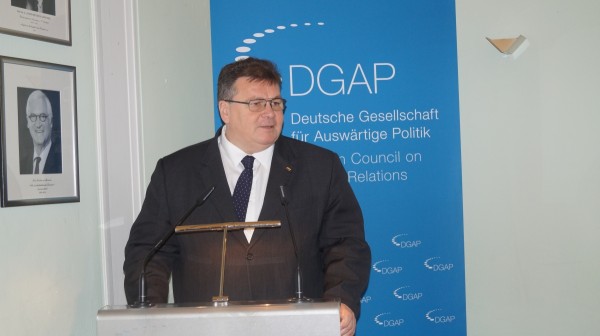
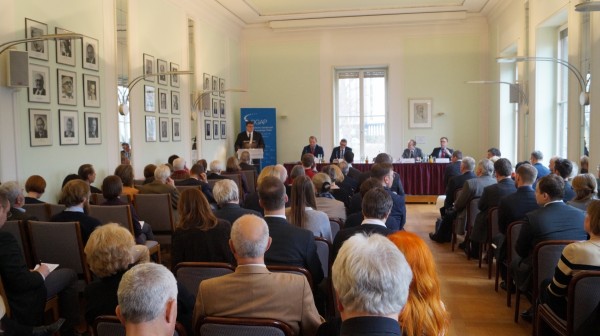
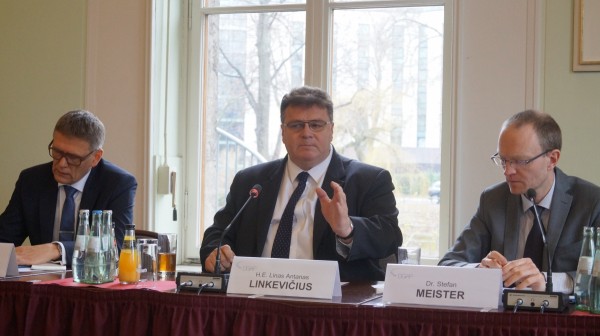
At the discussion “Media, Propaganda, and Politics: Russia’s Role in the European Information Sphere” on 18 March in Berlin, the Minister of Foreign Affairs of Lithuania Linas Linkevičius stressed the need for a strong response to propaganda.
“We cannot stand by and watch while propaganda and disinformation negatively influences society in our countries,” said Linkevičius.
Already in January 2015, Lithuania together with the United Kingdom, Denmark, and Estonia called on the EU to boost strategic communications activities in response to Russia’s propaganda campaign in the European Union. Last year, the European External Action Service (EEAS) launched a rapid-response communications unit called the East StratCom Team. Moreover, NATO’s Strategic Communications Centre has been operating in Riga since 2016.
Lithuania’s Foreign Minister called for a closer coordination between NATO and the European Union’s strategic communications activities. “Alternative sources of information contribute to the enhancement of society’s resilience in our countries,” said Linkevičius.
He drew attention to the fact that the target audience for propaganda were not only Russian speakers. Strengthening Russia’s international media channels and using the Kremlin-controlled small groups as a stimulus can lead to confusion also in a mature Western society.
The discussion was organised by the German Council on Foreign Relations in cooperation with the Embassy of Lithuania in Berlin. The Deputy Director of NATO’s Strategic Communications Centre of Excellence in Riga, Colonel Aivar Jaeski, the expert of the European External Action Service Jakub Kalenský, and the Head of the Division of Russia, Belarus, Ukraine, Moldova and the Eastern Partnership at the German Federal Foreign Office Hans-Peter Hinrichsen also gave speeches at the event.
The hazard of Russia’s propaganda was discussed a lot in Germany after the story of the alleged rape by refugees of a girl identified as ‘Lisa’ in January 2016. The scandal arose after the dissemination of disinformation through Russian state-run news outlets.
Social media


