


Foreign Vice-Minister Mitkus: trust and resilience are cornerstones of security in the Nordic-Baltic region
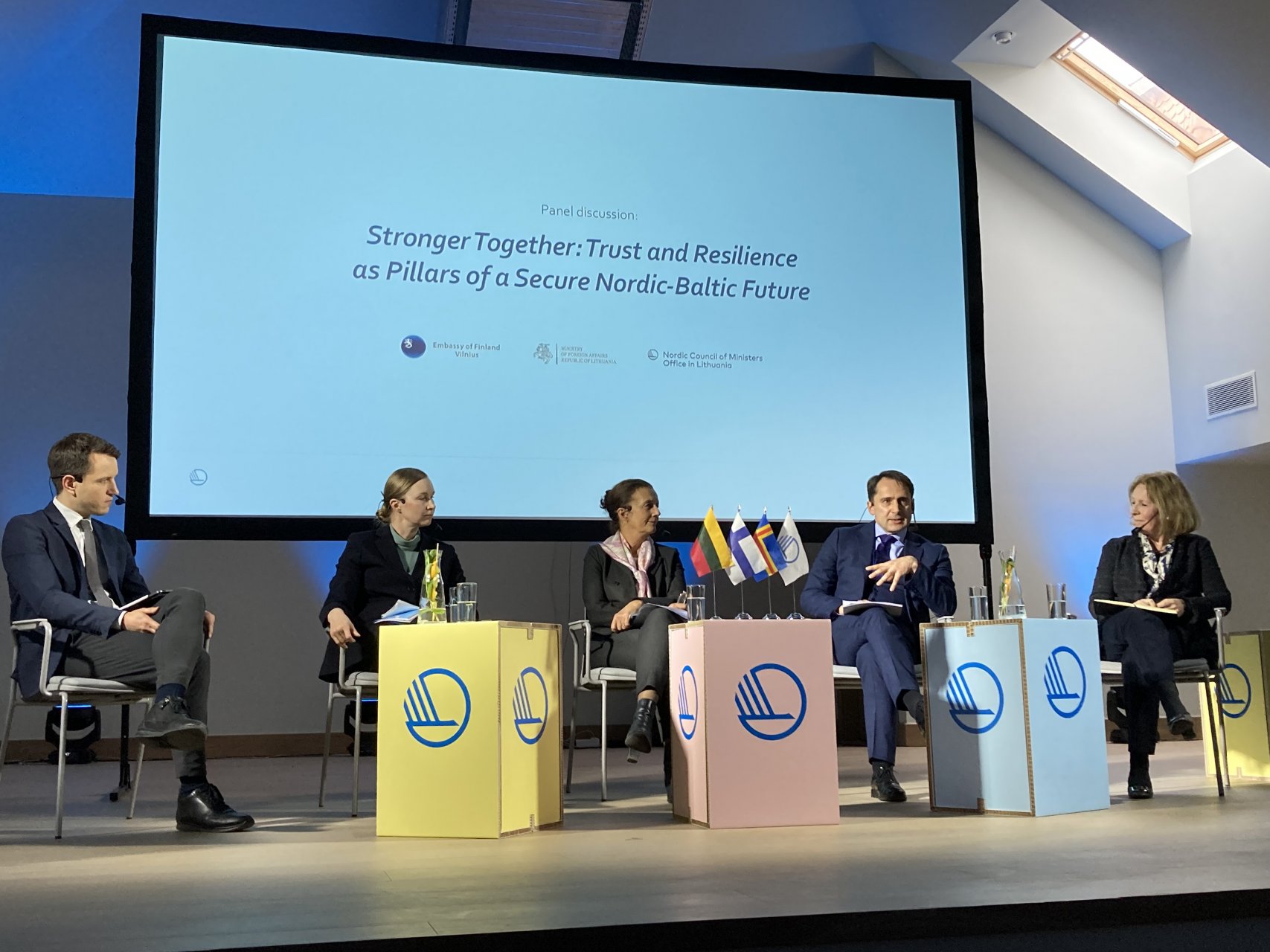
On 13 March, the Vice-Minister of Foreign Affairs of Lithuania, Sigitas Mitkus, participated in the panel discussion "Stronger Together: Trust and Resilience as Pillars of a Secure Nordic-Baltic Future". The event was organized by the Nordic Council of Ministers Office in Lithuania in cooperation with the Embassy of Finland in Vilnius. In the discussion, Lithuania's Foreign Vice-Minister spoke about strengthening Nordic-Baltic cooperation and resilience to crises.
“Trust and resilience are cornerstones of the security of the Nordic-Baltic region. The Nordic and Baltic countries are in the same security environment characterized by constantly evolving threats – military, cyber, and hybrid. Our strength lies in our unity, our shared values, and our commitment to strengthen regional cooperation. It is important to further develop a common security culture, and strengthen collective resilience, coordination with each other, and crisis response capacities,” Mitkus said.
Mitkus emphasized that cooperation in the NATO, EU and NB8 formats strengthened our ability to respond to crises. Close Nordic-Baltic cooperation is now more necessary than ever to make our region safer in the face of growing instability and the ongoing Russian aggression against Ukraine.
The Foreign Vice-Minister also took note of the recent report by the former Finnish President Sauli Niinistö, commissioned by European Commission President Ursula von der Leyen, on strengthening Europe's civilian and military preparedness and readiness, highlighting the involvement of the non-governmental sector, civil society and the general public in this regard.
The Foreign Vice-Minister shared Lithuania's best practices in the fight against disinformation, underlining that our country applies a comprehensive public inclusive approach to monitoring, analysing and neutralising disinformation. This process involves not only state institutions, but also non-governmental organisations, the media and business. Mitkus also noted that “in emergencies, municipalities are usually the first ones to act, so we consistently strengthen and support them.”
Social media


