Foreign Affairs Council evaluates progress in talks on Free Trade Agreements with the U.S., Canada and Japan
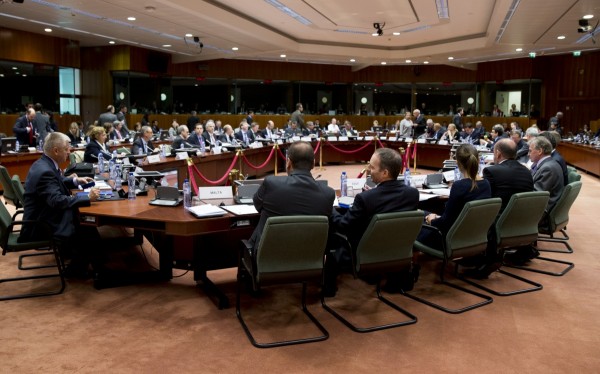
On 8 May in Brussels, the Lithuanian Vice-Minister of Foreign Affairs Rolandas Kriščiūnas participated in the meeting of the Foreign Affairs Council (trade issues).
When discussing a key issue at the Foreign Affairs Council – the EU-Canada negotiations for a Comprehensive Economic and Trade Agreement (CETA), the Vice-Minister R.Kriščiūnas congratulated the European Commission on rapidly approaching the completion of the negotiations.
“We realize the strategic and economic importance of this agreement, because the CETA is so far the most ambitious EU free trade agreement, which will help pave the way for significant advancement of the EU-Canada trade relations and will boost the EU’s economic growth,” R.Kriščiūnas underlined.
The political agreement on the most difficult issues that had come up during the EU-Canada negotiations was concluded during Lithuania’s Presidency of the EU Council on 18 October 2013.
The Trade Ministers discussed the trade talks between the European Union and the United States on the Transatlantic Trade and Investment Partnership, as well as preparations for the fifth round of the talks.
According to the Vice-Minister R.Kriščiūnas, Lithuania speaks up for concluding as ambitious transatlantic agreement as possible for the reciprocal opening of markets in three areas: trade, services and public procurement.
“The part of the agreement relating to energy issues and allowing for the export of liquefied natural gas (LNG) from the United States to Europe is of particular relevance in today’s geopolitical situation. It will help us diversify our energy resources, significantly contributing to European energy security,” the Vice-Minister R.Kriščiūnas said.
The Trade Ministers also discussed the situation one year after the start of the EU-Japan Free Trade Agreement negotiations. Japan’s progress on the elimination of non-tariff barriers to trade was evaluated positively.
The Foreign Affairs Council discussed an agenda for the World Trade Organization’s (WTO) future activities. The Trade Ministers agreed that the EU must take part in negotiations in the WTO format in order to conclude a multilateral agreement on the liberalization of environmental goods.

Social media