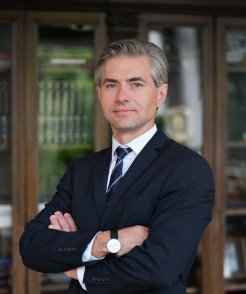
On 3 October, political consultations between Lithuania and Montenegro on the issues of the European Union were held in Podgorica, the capital of Montenegro.
Director of the European Union Department of the Ministry of Foreign Affairs Vidmantas Purlys, who took part in the consultations, was pleased with the progress that was achieved after the declaration of independence of Montenegro and assured that Lithuania was ready to support Montenegro on its path to the EU and NATO.
‘The speed of your integration into the EU and NATO depends on your efforts to implement the necessary reforms,’ stated V.Purlys.
The Lithuanian delegation presented concrete suggestions regarding the possibilities to share Lithuania’s experience in the areas of the EU’s assistance management, public administration and civil society dialogue.
During the meetings with deputy foreign ministers of Montenegro who deal with the EU, NATO and bilateral issues, the interlocutors agreed to initiate bilateral visits, to strengthen economic cooperation and to seek to establish closer relations between the Ministries. .
Officials from Lithuania and Montenegro discussed the situation in the West Balkans and the issue of Kosovo. Representatives from the Ministry of Foreign Affairs of Montenegro expressed their concern regarding the events in Georgia and shared the EU position on this issue.
On 2 October, political consultations between Lithuania and Macedonia were held in Skopje, the capital of the Republic of Macedonia.
During the meetings with Minister of Foreign Affairs of Macedonia Antonio Milososki and other officials, possibilities of closer bilateral cooperation, relations between the Republic of Macedonia and the EU, preparation of Macedonia to enter into EU membership negotiations , and situation in the West Balkans were discussed.
Director of the European Union Department of the Ministry of Foreign Affairs V.Purlys expressed Lithuania’s support to the Macedonian goals of -integration into the European structures. V.Purlys indicated that while preparing for the EU membership negotiations, it was necessary to seek further progress in order to meet the requirements that were set by the EU. The Lithuanian delegation also presented suggestions regarding the possibilities to share Lithuania’s experience in the areas of the EU assistance management, public administration and the organising of the EU membership negotiations.