EU development cooperation in Eastern Partnership countries must help to implement Association Agreements efficiently
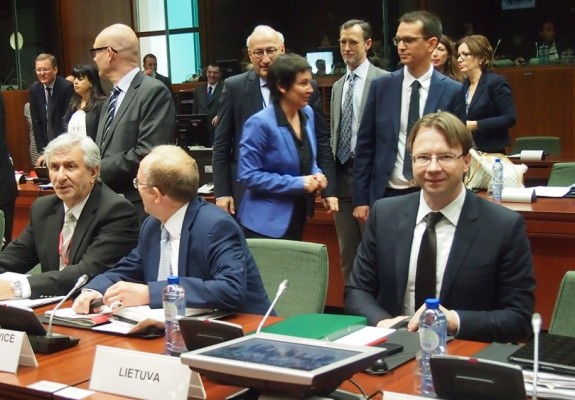
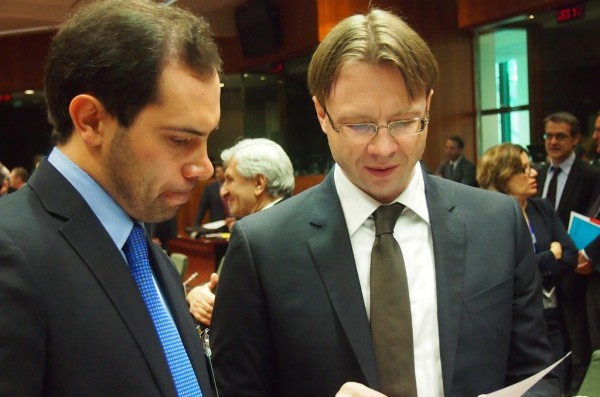
During the Foreign Affairs (Development) Council meeting on 19 May in Brussels, the Lithuanian Vice-Minister of Foreign Affairs Rolandas Kriščiūnas stressed that the EU’s effective political and practical support to Eastern Partnership countries was more important than ever.
“Shortly after the signature of the Association and free trade agreements with Moldova and Georgia, and of the second section of the Association Agreement with Ukraine, it will be important to ensure effective and coordinated use of EU development cooperation and other instruments in the region to help properly prepare for the implementation of these agreements and in support of the ongoing reforms,” R.Kriščiūnas said.
According to the Lithuanian Foreign Vice-Minister, the implementation of the Association Agreements has enormous potential to promote beneficial changes in those countries and their societies; we mustn’t waste this historic chance. In the current geopolitical situation it is also very important that the European Union’s Eastern neighbourhood should be more visible. Therefore, it is necessary to increase public awareness, to strengthen institutional capacity, to help achieve visa liberalisation and support civil society activities.
When speaking about the post-2015 Development Agenda, the Vice-Minister R.Kriščiūnas stressed that more attention had to be dedicated to good governance, the rule of law, effective institutions building and human rights. According to the Vice-Minister, the EU must share its knowledge and experience to that end.
“The partner countries have more than once mentioned their need for knowledge and experience in the implementation of reforms and strengthening institutions. Bearing in mind the reform experience of many EU member states, we really have a lot to offer. Furthermore, the instruments of the new EU financial perspective for 2014-2020 – the Development Co-operation Instrument (DCI) and the European Development Fund (EDF) – will help us to share our experience effectively,” R.Kriščiūnas said.
When speaking about the post-2015 Development Agenda, Lithuania’s Foreign Vice-Minister urged the EU to aim to achieve greater inclusion of science, technology and innovation. He highlighted the importance of gender equality, as well as of creating a favourable environment for socially responsible business, which would also use natural resources sustainably.
The European Commission’s new Communication setting out the role of private sector at the forefront of international development was presented among other issues at the Foreign Affairs (Development) Council meeting. The participants of the meeting were briefed on the implementation of Agenda for Change, Policy Coherence for Development and a comprehensive approach to development.

Social media