ECONOMICAL EXPANSION OF LITHUANIA IN THE EAST: RELATIONS WITH GUAM COUNTRIES (Lithuanian Business Review, 2008 No. 4 July-August, p. 12-15)
According to the majority of analytics, in 2007, and in the first quarters of 2008 as well, markets of Eastern Europe have only became open to Lithuanian goods, however, Lithuanian business make first firm steps in the Ukraine. Economic, political relations with other countries of GUAM union have been still growing.
What is GUAM?
GUAM includes energy-producing (Azerbaijan) and energy-transit (Azerbaijan, Georgia and potentially the Ukraine) countries. Additionally, the geographical locations of GUAM states increase their energetic potential and possibilities to realize ambitious plans. The development of GUAM as an organization consists of three main stages. The meeting of the presidents of Azerbaijan, Georgia, the Ukraine and Moldova on 10 October 1997 in Strasbourg shall be marked as the beginning of the organization. Then it operated as an advice forum and started gaining its shape as a regional block after the meeting in Yalta on 7 June 2001. At that date, Uzbekistan also had participated in the activity of this association but in 2005 this country terminated its membership. The Kiev summit on 23 May 2006 started the third stage when the statute of GUAM organization was enacted. 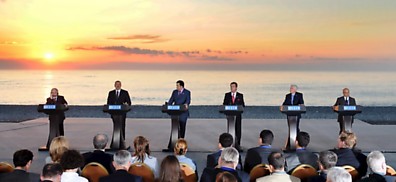
Of late years, on of the aims of GUAM has been “European integration“, this way it expressed their objective of wider and deeper cooperation with European Union (EU). Appearance of European integration in the agenda of GUAM is a natural phenomenon as after political changes in some member-states of the organization these countries declared their intention to join NATO and to integrate in EU.
Acording to Undersecretary of Minister of Foreign Affairs Laimonas Talat-Kelpša.: „a security situation in the region is important not only for Lithuania, the Baltic States, but, I would say, for the security of the whole Europe. That is the reason why we stand for greater involvement of the EU in the settlement of the so called “frozen” conflicts. Recent tensions in the breakaway regions of Georgia have raised concern among our European partners and we are ready to support proposed measures for the resolution of the conflicts“.
It took ten long years for GUAM to become the organization functionally acting in the international arena. Nonetheless, GUAM was, first of all, the project driven by geopolitical factors. This made the organization sensitive to political changes inside their member-states and influence of external players, Russia, in particular.
Energetic safety – top priority
The importance of the GUAM and especially states of the South Caucasus has dramatically risen when we talk about the energy security in Europe. „Many of our goals in the area of transport and energy coincide with those of GUAM states, and we see particularly transport and energy as those two main pillars which will constitute the basis of the future development of GUAM. Namely, transport and energy are the basic components of our vision“, maintains Laimonas Talat-Kelpša.
GUAM countries, having rich energy resources and being transit countries, are important in providing a possibility for the transit of the energy resources from the Central Asian and Middle East countries states to Europe and diversification of the energy resources – it is particularly important for such countries as Lithuania being heavily dependent on Russian energy recourses.
The development of bilateral/multilateral economic relations, growing economies of the South Caucasus region also evokes the need of additional transport interconnections.
Much work was done in this field in 2007. The title of the cardinal event should be given to the international conference in Vilnius in October where Lithuania officially joined the implementation of the pipeline Odessa–Brody–Plock–Gdansk project. Lithuanian (AB “Klaipėdos nafta”), as well as Georgian and Azerbaijani companies accessed the Ukrainian-Polish concern „Sarmatia“.
During the GUAM summit of 30 June – 1 July, 2007, in Batumi (Georgian city) the Presidents of Georgia, Azerbaijan and the Ukraine confirmed the further plans of Euro-Asian energy and its transportation development. Together with Lithuanian and Polish Presidents, the declaration “GUAM-Uniting Europe's East” was signed. The declaration content was directed towards energetic safety and need to diversify suppliers of European energy sources.
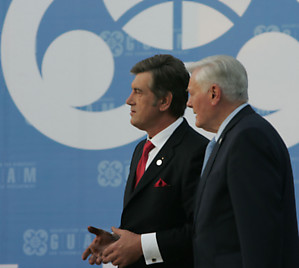 LITHUANIA vs. GEORGIA
Lithuanian and Georgian cooperation is considered as historical. Being a member of the Soviet Union, Georgia maintained close relations with “a brotherly country” at that time. When Lithuania joined EU and NATO, their relations got even closer. The increased interest is also expressed in figures: at the end of 2007 the investments in Georgia totalled 10 thousand litas meanwhile, according to the data of the Department of Statistics of the Republic of Lithuania for 1 October 2006 there were no direct investments of Lithuanian companies in Georgia.
Lithuanian export to Georgia in 2007 amounted EUR 4,84 million. In comparison to the data for January-June 2008, export totalled EUR 6,81 million or 27% already. Thus, mutual interest has been increasing. Lithuanian import (according to the country of origin of goods) from Georgia in 2007 was EUR 4,03 million. Whereas, the data of January – June 2008 showed EUR 1,75 million.
Speaking about Lithuanian trade with Georgia in agricultural and food products, this makes only a small part of Lithuanian foreign trade. The export of January – June 2008 to Georgia amounted 0,01% of the total export of agricultural and food products, and import – 0,35%.
In April 2008, during the visit of the ambassador extraordinary and plenipotentiary of Georgia in Lithuania, His Excellency Mr. David Aptsiauri he expressed the official attitude of national leaders towards the further mutual cooperation in the field of agriculture. Mr. David Aptsiauri stated that was a time for closer relations. "Georgia is interested in regaining previous positions it had in agriculture", - emphasized the ambassador. For this purpose, according to him, the non visa regime between those two countries that came into force recently would serve. The guest named the following food products grown and produced in Georgia as of greater interest from the Lithuanian side. First and foremost – wine and mineral water, citrus fruit, natural juice, and tea. "If the aforesaid products comply with EU standards, we are ready to discuss possibilities of their export to Lithuania", - declared Mr. David Aptsiauri. Discussing export possibilities of Lithuanian food and agriculture products to Georgia, the ambassador offered Lithuanian businessmen to be more ambitious in expansion to the Georgian market, establish shopping centres where they could supply and realize Lithuanian products. According to Mr. David Aptsiauri, only a small part of food products of good quality reach Georgia now, therefore Lithuanian food products in compliance with EU standards will be at a great demand here for sure. One of the evidences of the high quality is a well-known brewer working there namely "Švyturys – Utenos alus".
LITHUANIA vs. THE UKRAINE
According to the data of the Department of Statistics, the amount of direct Lithuanian investments in the Ukraine throughout 2007 increased from EUR 77,8 million to EUR 109,86 million. This proves the fact that Lithuania and the Ukraine are related not only through economics and trade but also through their historical, cultural heritage. The Ukraine is one of the major partners of Lithuanian trade outside EU. Lithuanian export to the Ukraine is over 1 billion litas per annum.
Recently, the economic cooperation of Lithuania and the Ukraine has been growing. In 2007, Lithuanian export to the Ukraine showed the increase by even 113,2%, import from the Ukraine – by 117,4%. Now, particularly according to the data for the period of January-June 2008 provided by the Department of Statistics, Lithuanian export amounts EUR 189,57 million, and import - EUR 125,64 million.
Trade in mineral products prevails in Lithuanian export (“Mažeikių nafta“), machines and mechanical equipment (AB “Snaigė“). In the field of import – base metals, wood, and especially mineral products (petrol of various marks, oil bitumen) – 43,3% of overall Lithuanian export to the Ukraine, and the growth this year is still forecasted. The direct investments of Lithuania, at the last count, in the Ukraine total EUR 75,07 million (the forth position behind Latvia, Russia and Poland).
A new tendency has been observed – more and more shipments from the Ukraine in the Klaipėda port. According to the Klaipėda State Seaport Authority, the Ukrainian shipments made a small part of the total port loading scope of late yeas – last year it was 2,5% or half a million tons. However, within the first half-year this number increased by 16%. Most often, scrap metal, metalwork, food products and feed from the Ukraine are reloaded at the Klaipėda port. And to the Ukraine through the Klaipėda port food products and grain are transported.
LITHUANIA vs. AZERBAIJAN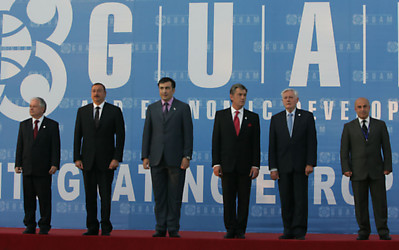
The Lithuania-Azerbaijan annual turnover in 2005 amounted only EUR 5,31 million. Thus, significant changes were made in their mutual relations, and already at the end of 2007 the trade turnover of Lithuania and Azarbaijan was EUR 10,21 million, and the trade balance was positive – EUR 3,73 million.
Speaking about the trade, it should be noted also that in 2007 Lithuanian export to Azerbaijan totalled EUR 6,97 million. In comparison, in 2006 export to Azerbaijan increased by 7,4%. The direct investments of Azerbaijan in Lithuania in January 2008 totalled EUR 73,9 thousand.LITHUANIA vs. MOLDOVA
“The Moldovan – Lithuanian cooperation is getting more and more intensive at the moment. The key areas of our partnership are relationship maintenance encouraging regional cooperation and sharing experience of such cooperation, transfer of good practice in public sector reforms, fight with corruption and organized crime. The Baltic States benefited much from the wide regional net of partnerships including representatives of national sector, business and non-governmental organizations. Implementing all this, Moldova and Lithuania should be close and reliable partners“ – the extract form the speech of Valdas Adamkus in the Moldovan Parliament in 2006.
Now we are able to enjoy the results of such speech as the export of Lithuanian goods to Moldova within this period, namely till June 2008, has increased from EUR 11,32 million to EUR 16,09 million. In the general context, anyway, only a very small part of Lithuanian export goes to this Eastern European country.
Lithuanian import (according to the origin of goods) from Moldova totalled EUR 4,63 million in 2007. If compare to 2006 it increased by 84,04 %. And now, January – June 2008, it already can be expressed with the figure EUR 2,74 million.
The trade turnover of Lithuania and Moldova in June 2008 amounted EUR 16,37 million, and the trade balance was positive - EUR 6,75 million.
The favourable legal basis has been established now for a successful mutual economic cooperation, however the Lithuania trade with Moldova is a bit slow: Lithuania exports mostly frozen fish and fish products to Moldova (it makes roughly 70% of all agricultural and food products exported to Moldova). And from Moldova, nuts, grape wine, dried fruit, non-denaturated ethyl alcohol products, mineral water and soda drinks, sunflower seeds, non-fermented fruit juice, canned vegetables and jams are brought.
By Kristina Puleikytė and Robertas Kasperavičius

Social media