CHINA – A NEW COUNTRY (Jūra●Mope●Sea, Nr.3 (50), 2008)
Confucius has taught the Chinese people to seek for the prosperity themselvesChina is an old country and a new one at the same time. Namely in this way I would define the fourth big country of the world, having spent there a year and a half.
It is like a paradox: on one hand it is one of the oldest civilizations of the world dating back 5000 years B.C. On the other hand it is a new country. This country permanently changes looking for the solutions suitable for it. Nevertheless China makes an impression of a new country: everywhere there are new buildings, cranes, new roads, new automobiles, motorways, overhead roads and bridges, everywhere you can see newly planted trees and bushes. Here you may not see old trees, unless at the old temples or in parks. Different historical cataclysms, wars, upheavals and revolutions have erased from the image of China its historical past. 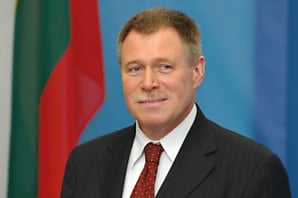
Chinese people are proud of the essential changes of their country. As the labour force is cheap there, foreign business investments flow to Chine for more than 30 years. Now this country – is a factory which has crowded the world with its production.
No wonder, because Chinese people are skilful and diligent. They have no holiday like Sunday by Christians or Friday by Muslims. Conversely, Chinese get low salary and poor social welfare and they work seven days per week and have holidays two-three times per year. And they are happy when they get a job because annually the number of employable people increases by ten million that will be jobless. In spite of great competition among provinces, cities and even separate people, Chinese manage to live together, be tolerant to each other and take pleasure in life.
Maybe in Chinese culture from the times of Confucius there has remained the need to study, a habit of social-political activity inducing to take care of the welfare of the country and at the same time seek for welfare and happiness in this earthy life. Chinese do not trust in divine goodwill but they trust in their personal efforts that in the conditions of liberal economics give good results. Though in China there is socialist system but in the economy of the country there prevails market economy.
Currency surplus in China
Cheap labour force and diligence of people induces the producers to transfer the production to China. Producing the goods in China their net cost decreases significantly. Then the competitors come. In this way the competing companies go to China one after another.
China itself gains pluses and minuses out of it.
From great concentration of production environment is polluted greatly. Unclean industrial wastes are simply discharged directly to water basins. It gives catastrophic consequences. They start to lack potable water. Half of ground waters are contaminated, 10 percent of big rivers are simply sewage. In the big cities there often is smog.
Recently in China they started to worry about ecology, more attention is paid to environment protection, reduce energy consumption, less pollute the nature. For the solution of these issues, the Environment Protection Department is reorganized to a Ministry.
Other consequence of intensive industry is rapid use of natural resources that has raised the world prices of raw materials in the global market.
And the third consequence is – that China has accumulated great stores of currency. Inflation inevitably increases. Though last year the goal of China authorities was to maintain 3 percent inflation, this year it exceeds 8 percent.
Chinese are to use the accumulated currency. Recently there was created Investment Corporation of China looking for objects where they might invest the accumulated surplus of currency. For example, a block of shares of the British company British Petroleum was bought. By investing together they do not seek to take the management of the companies and they are happy with the minority of shares too.
A glimpse of producers deviates to railways
About 70 percent of energy is produced from coal and China has got a lot of it. But the production process of this energy due to exhaust gas causing the effect of a greenhouse is one of important factors increasing global climate change.
European Union considers China its strategic partner and suggests cooperating in decreasing the emission of exhaust gas. EU is a source of new technologies for China and China is ready to negotiate for that. Recently the visit of EC Chairman J.M. Barros was devoted for the preparation of mechanism of a high-level dialogue between China and EU. A lot of problems are waiting for the participants of the dialogue. China exports much more goods to EU countries that imports. EU business, which intends to export more products to China or invest there – faces a lot of limitations.
For one of the biggest producers, transport is very much important to China.
Having a lot of well-developed ports at the shores, China faces transportation problems nevertheless. Traditional transportation by sea sailing along the congested Suez Canal or along unsafe Malacca strait, due to pirates, does not satisfy the growing demands of transportation. More and more often the glimpse deviates to railways and new transport routes are being looked for. But there are problems there too: different railway gauges, the goods transported by TransSib are not insured, complicated border crossing procedures etc.
Two years ago China, Mongolia, Russia, Belarus, Poland and Germany signed a Memorandum of Understanding to try transportation route of goods between Beijing and Hamburg by railways.
Other alternative ways are searched too. Last year a big Danish company Maersk, which invested in China several powerful terminals, opened a new container shipping line and railway route China – Romania.
A junction of the Silk Road and Amber Road is interesting for Lithuania
Lithuania, which lately pays a lot of attention to transport and logistics, aims to cooperate with China. Since the beginning of diplomatic relations, (1991.09.14.), fourteen agreements were signed including economic-trade cooperation (came into force 1994.06.29), concerning inducement of investments and bilateral security (came into force 1994.06.01.), concerning transit communications by air (came into force1998.06.30.), concerning cooperation in maritime transport (signed 2007. 04.23 and now is valid).
Until they reach Europe, the goods from China go by railways via Kazakhstan, Russia, Belarus and Baltic ports. Further on the shortest way is by ships from western China to Europe and Eastern coast of the USA. On this route Lithuania has its interests too, seeking to attract the attention of China business to use the possibilities of container trains Viking and Mercury.
For many people the connection of those routes to TRACECA seems attractive, because those possibilities are not used yet. Still more attractive for Lithuania might be TRACECA, i.e. the old Silk Road and Amber Road that passed via Lithuania, connection – China–Middle Asia–Caucasus– North Europe.
One might think that so quickly developing industry of China will support not only these but new transport corridors as well.
Rokas Bernotas
Ambassador Extraordinary and Plenipotentiary of Lithuania in
People’s Republic of China, Republic of Korea,
Socialist Republic of Vietnam and Mongolia

Social media