


Budrys: The resolve and courage of the Righteous Among the Nations to save human lives is an act of resistance against the occupation and the moral foundation of Lithuania
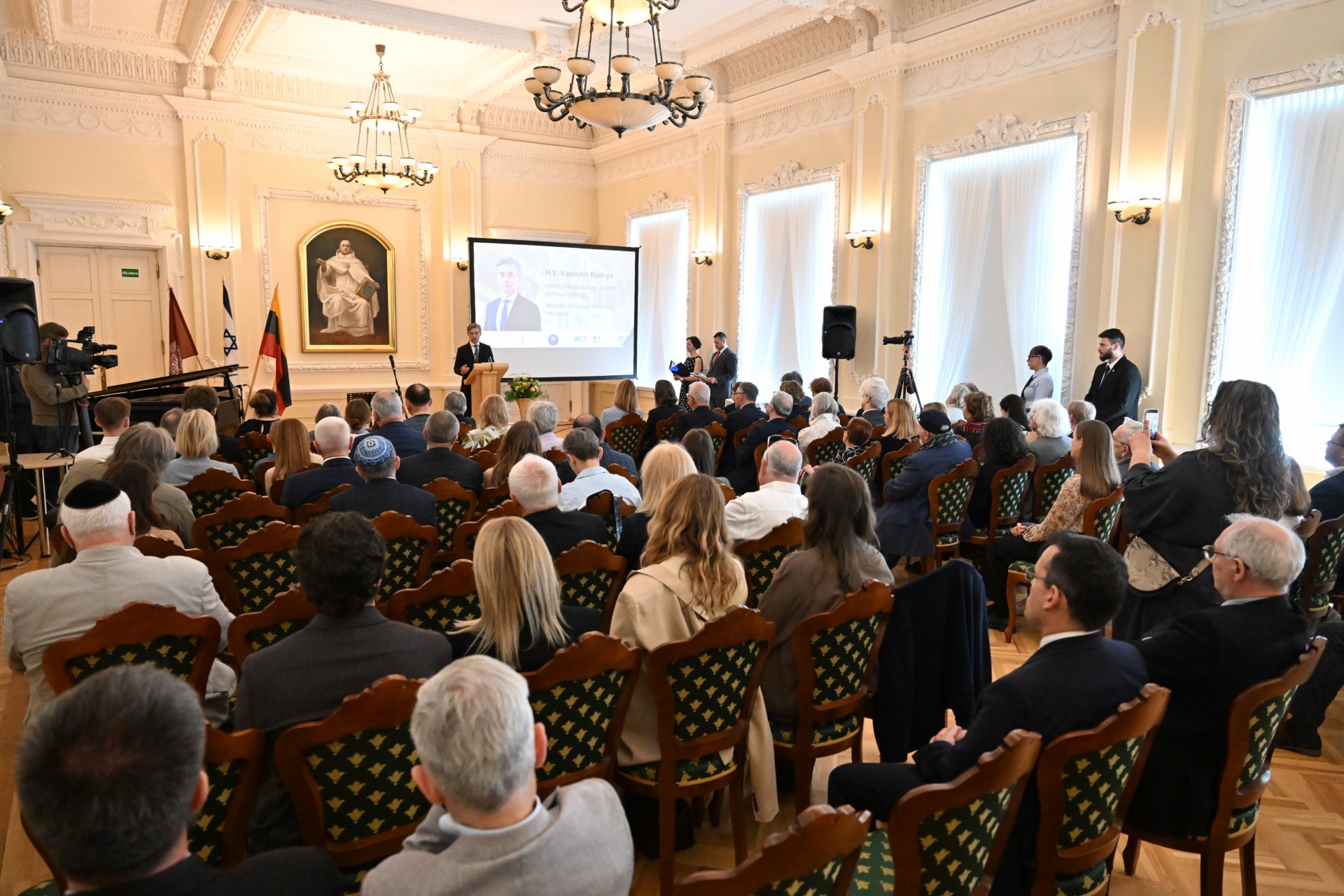
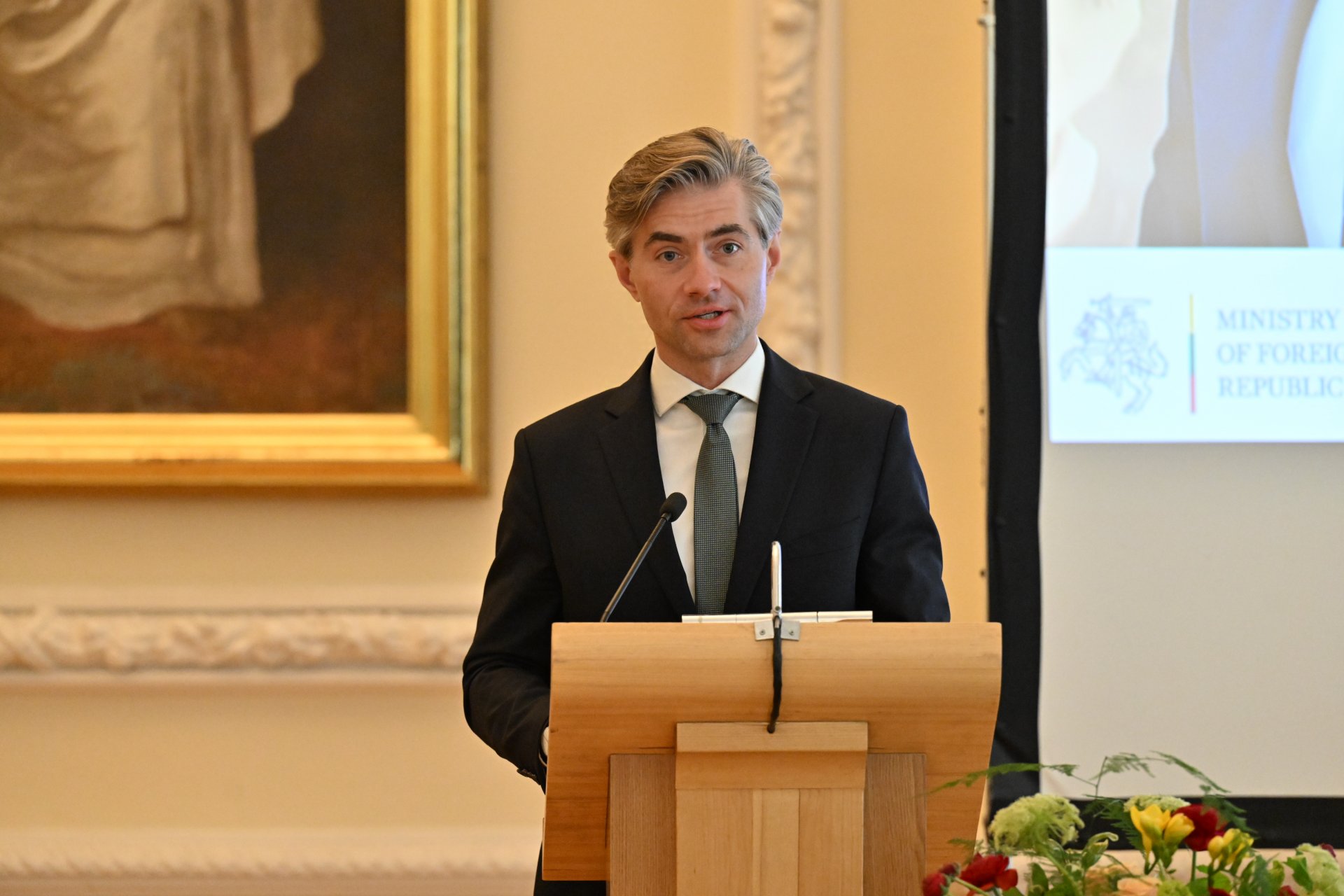
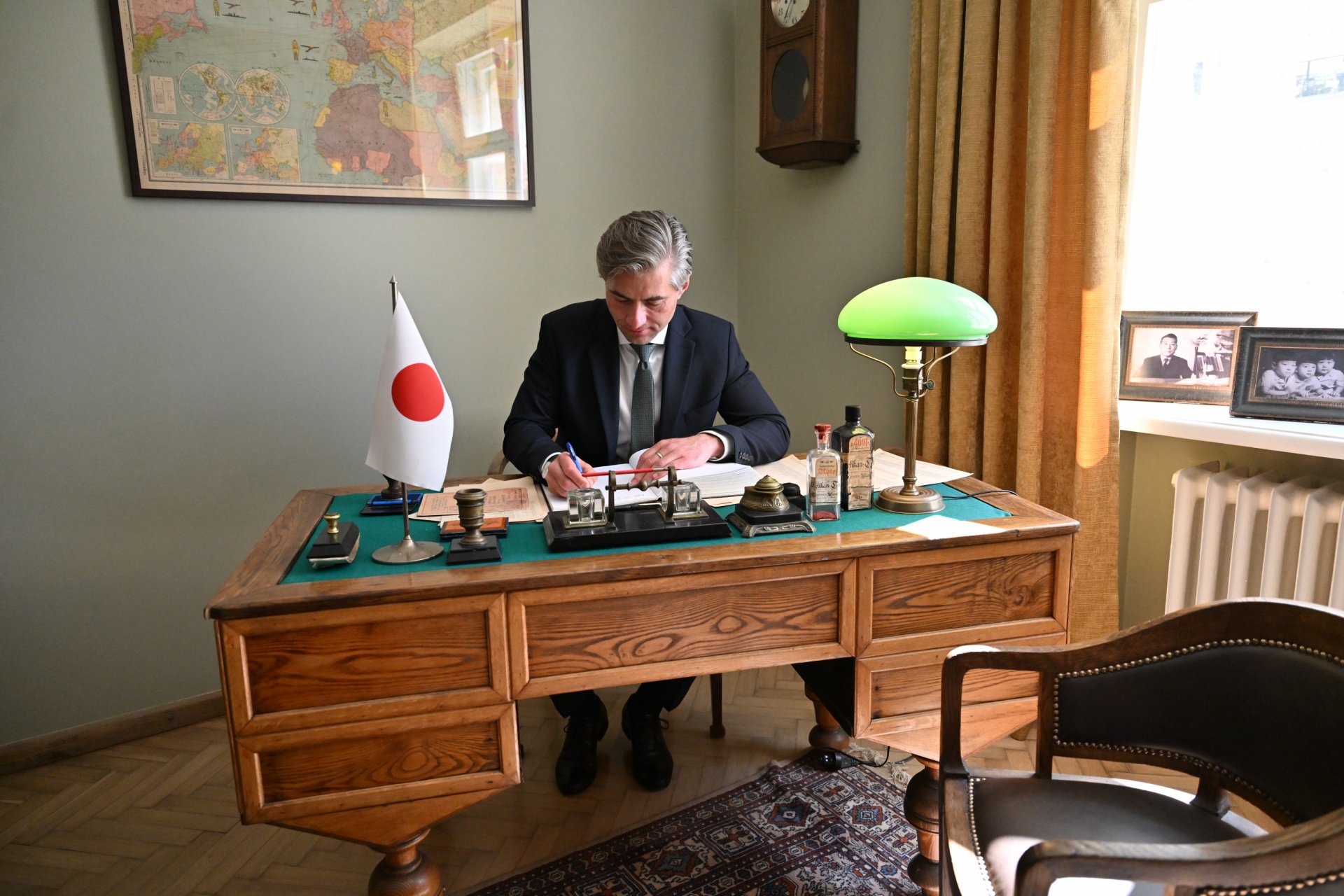
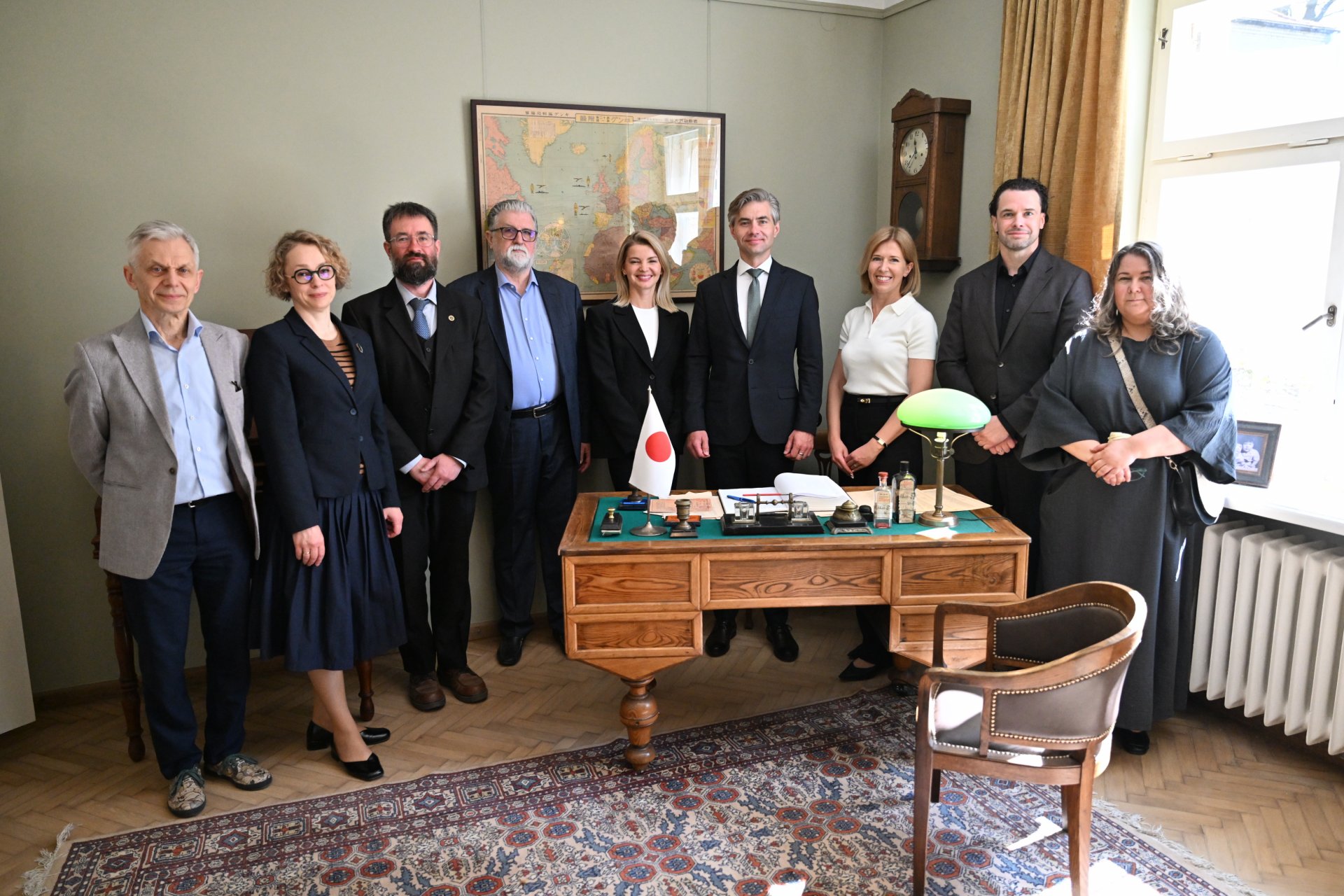
On 4 May at Vytautas Magnus University, the Minister of Foreign Affairs Kęstutis Budrys participated in the ceremony of honoring the Righteous Among the Nations, dedicated to commemorating and honouring the Lithuanian residents who rescued Jews during the Nazi occupation.
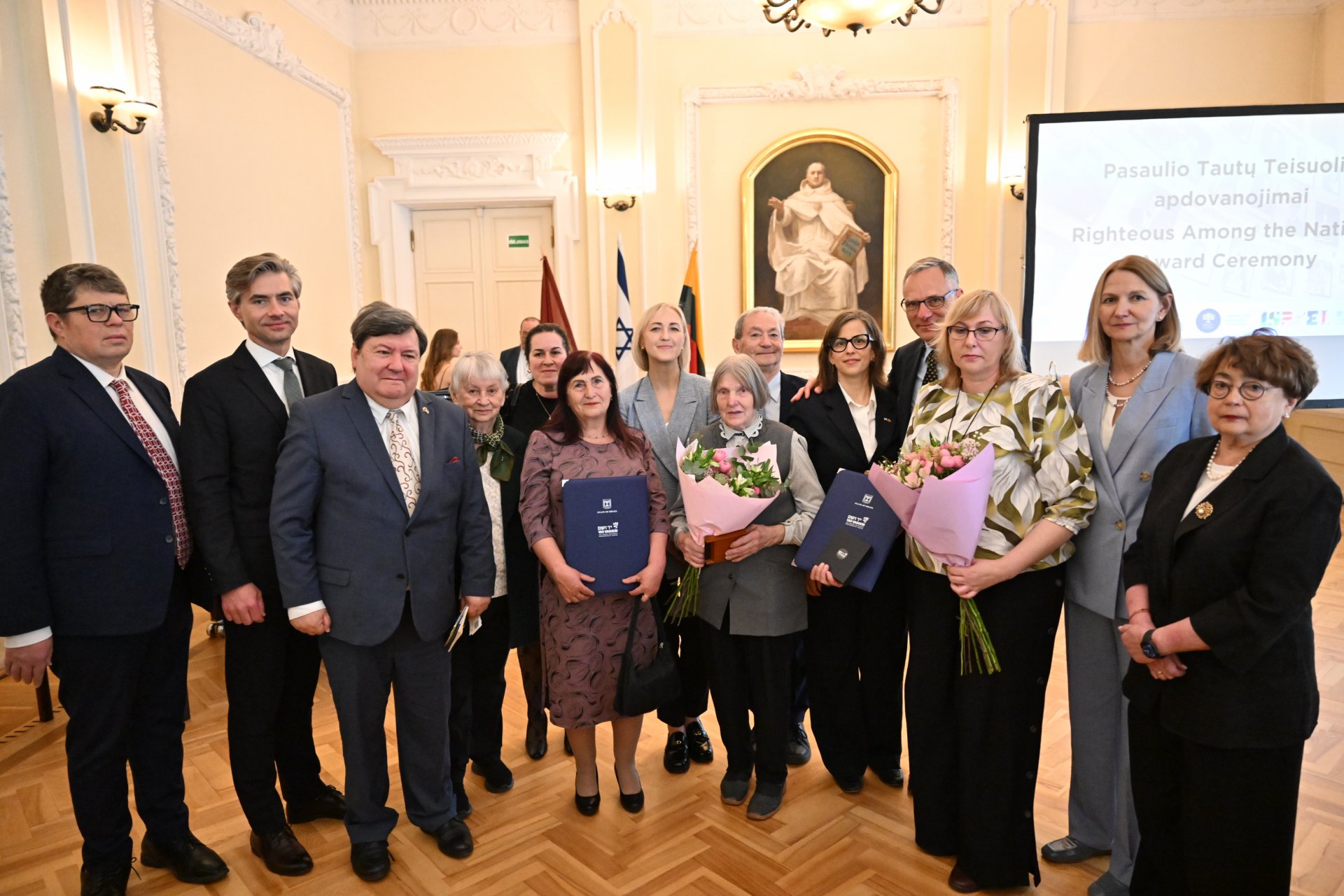
The ceremony honoured two families from the village of Karalgiris, Antanas and Stasė Volskis, and Tadas Pocius and Barbora Bacevičienė ‑Urbonavičiūtė (Pocienė), who saved Jews imprisoned in the Kovno (Kaunas) Ghetto during the Nazi occupation, despite the direct danger to their own lives. In 2021, they were recognized as the Righteous Among the Nations. During the ceremony today, the descendants of these families were awarded the Medals of the Righteous Among the Nations.
The head of Lithuania's diplomacy emphasized that the stories of the Righteous Among the Nations testify not only to the tragedy of the Holocaust but also to the human choice to defend life even in the darkest of circumstances. According to him, the courage and sacrifice of these people are an important part of Lithuania's historical memory and a moral foundation that the state must protect and pass on to future generations.
"Today we pay tribute to the Righteous Among the Nations, whose names are written not only in history but also in the conscience of humanity. During the Nazi occupation, the rescue of the Jews, our fellow citizens, was not only a risk to their lives but also an act of resistance. Driven by courage and unwillingness to adapt, they
knowingly put themselves in harm's way to save others. Their courage reminds us that humanity is always a choice, while compassion is its most courageous form," said Budrys.
Shelly Hugler Livne, Israel's Ambassador to Lithuania, Faina Kukliansky, Chair of the Lithuanian Jewish Community, Prof. Ineta Dabašinskienė, Rector at Vytautas Magnus University, and representatives of Jewish, University, and Kaunas communities also attended the solemn ceremony organised by the Embassy of Israel and Vytautas Magnus University.
After the painful tragedy of the Holocaust, around 8-9,000 Jews remained in Lithuania, representing only a small part of Lithuania’s long-lived and vibrant Jewish community.
During the Nazi occupation, six residents of the village of Karalgiris – Antanas and Stasė Volskiai, Tadas Pocius, and Barbora Bacevičienė ‑Urbonavičiūtė, Leonas and Stanislava Vaidotai – rescued eight Jewish people who fled the Kovno Ghetto. In October 1943, Tadas Pocius took the refugees on two night trips to his homestead, where they were kept in hiding and shelter until the Nazis left Lithuania, despite the constant danger, lack of food, and the threat of betrayal.
Antanas and Stasė Volskiai and Tadas Pocius and Barbora Bacevičienė ‑Urbonavičiūtė (Pocienė) are awarded the Life Saving Cross of the Republic of Lithuania.
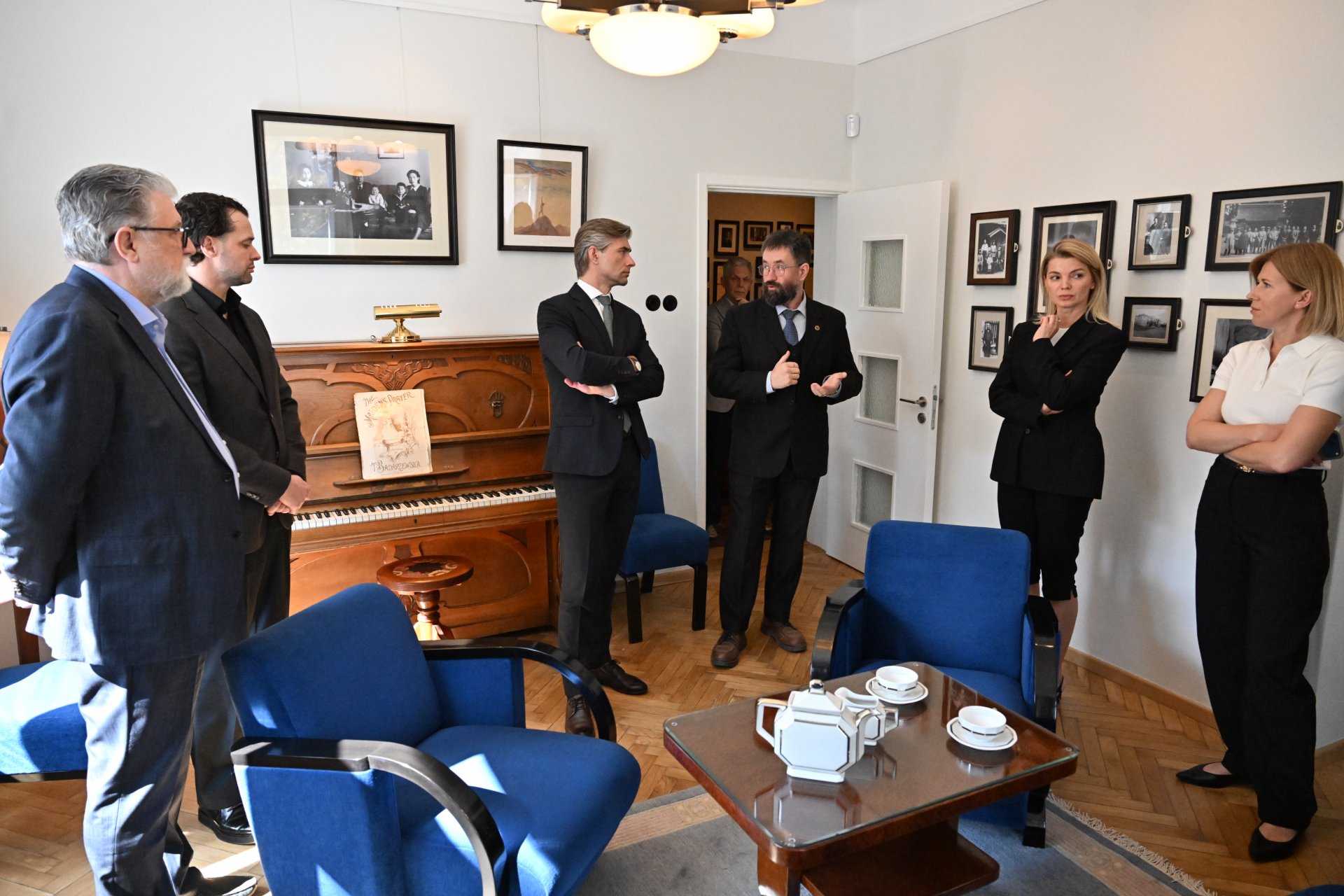
During his visit to Kaunas, the Minister also visited the Sugihara House in Kaunas and met with the leadership, founders, and historians of the Sugihara Foundation – Diplomats for Life. Chiune Sugihara, a Japanese diplomat in Lithuania, saved many Jews from Nazi persecution and destruction by issuing thousands of transit visas during World War II.
Social media


