


Budrys: Science, technology and innovation shape countries’ influence in today’s world
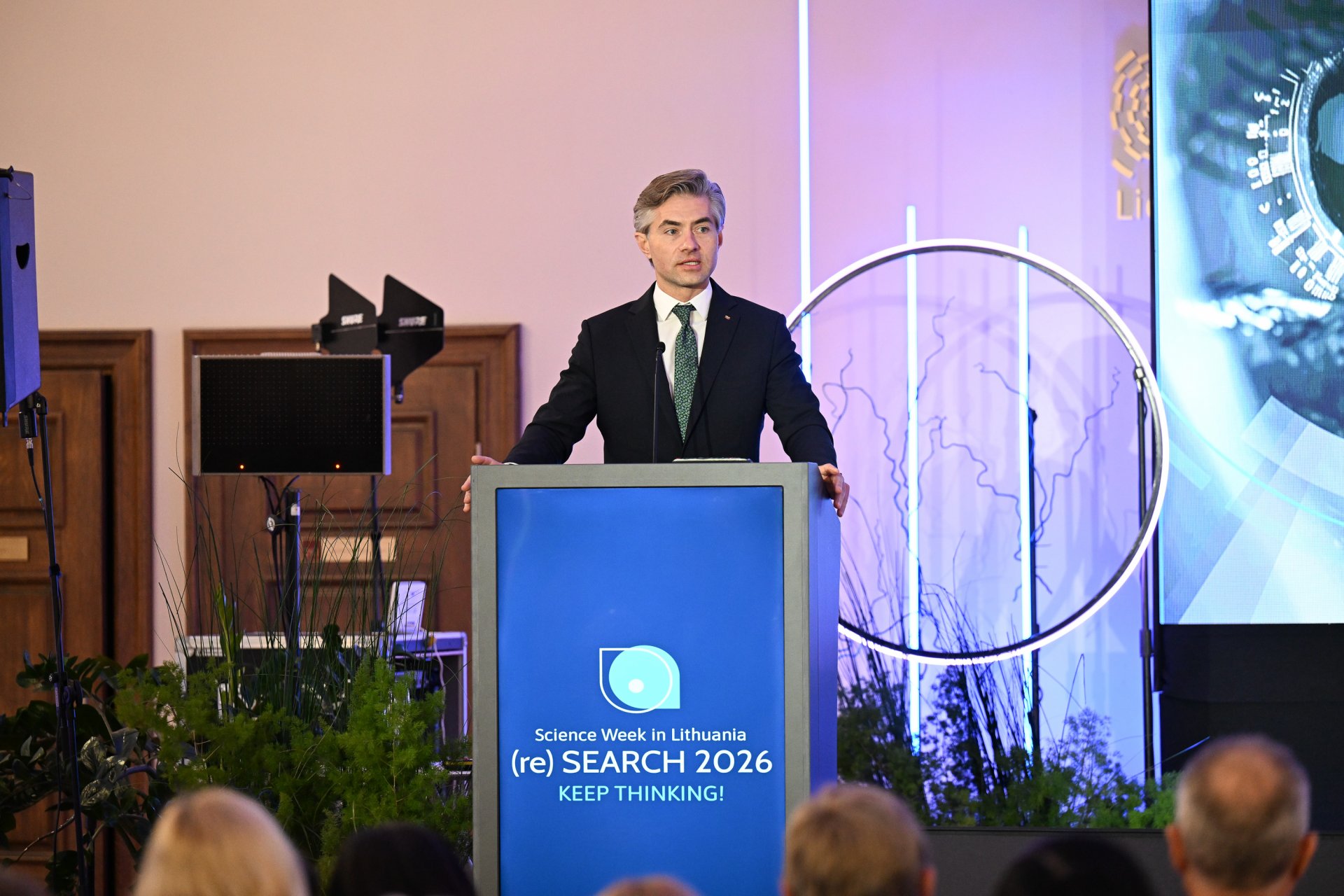
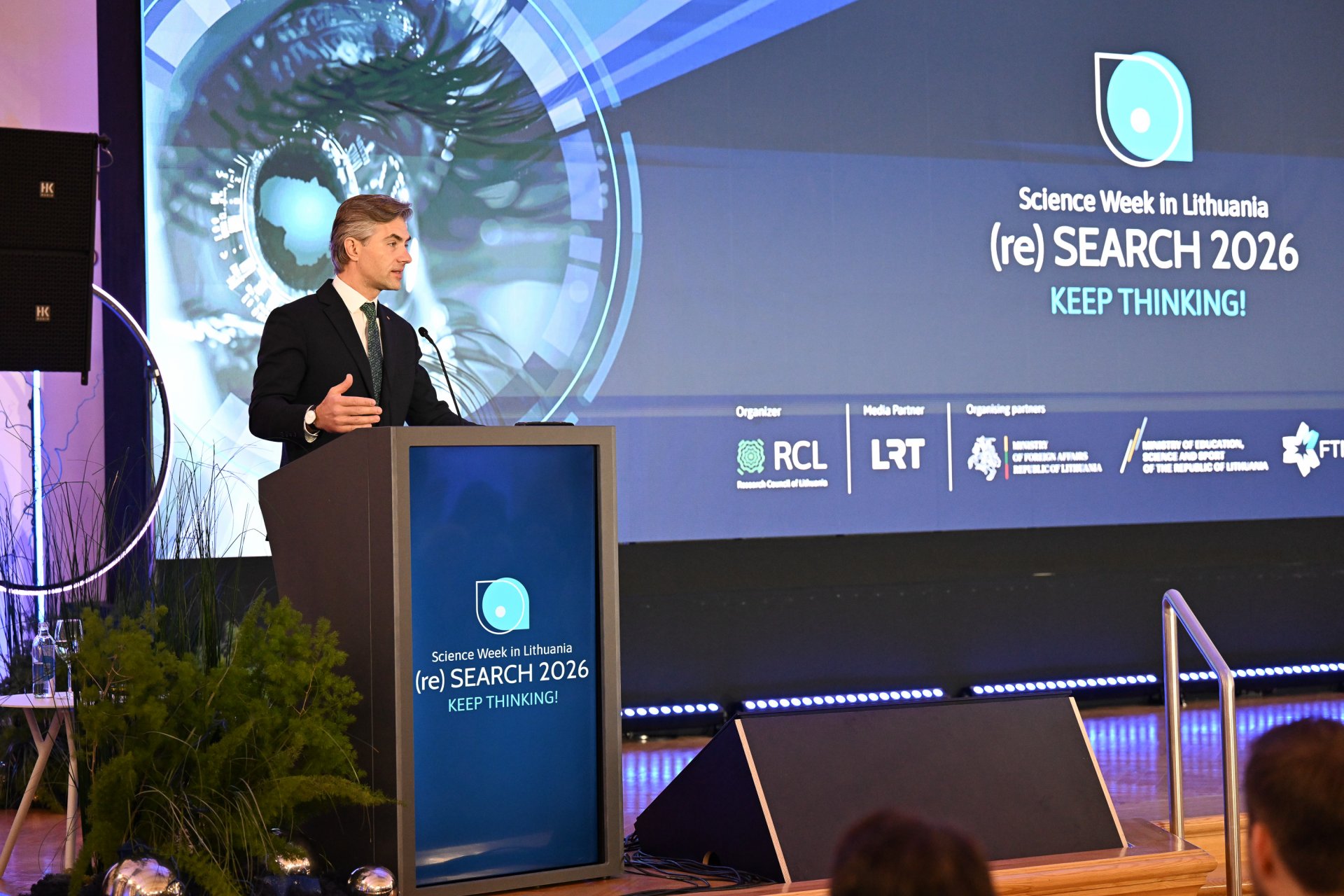
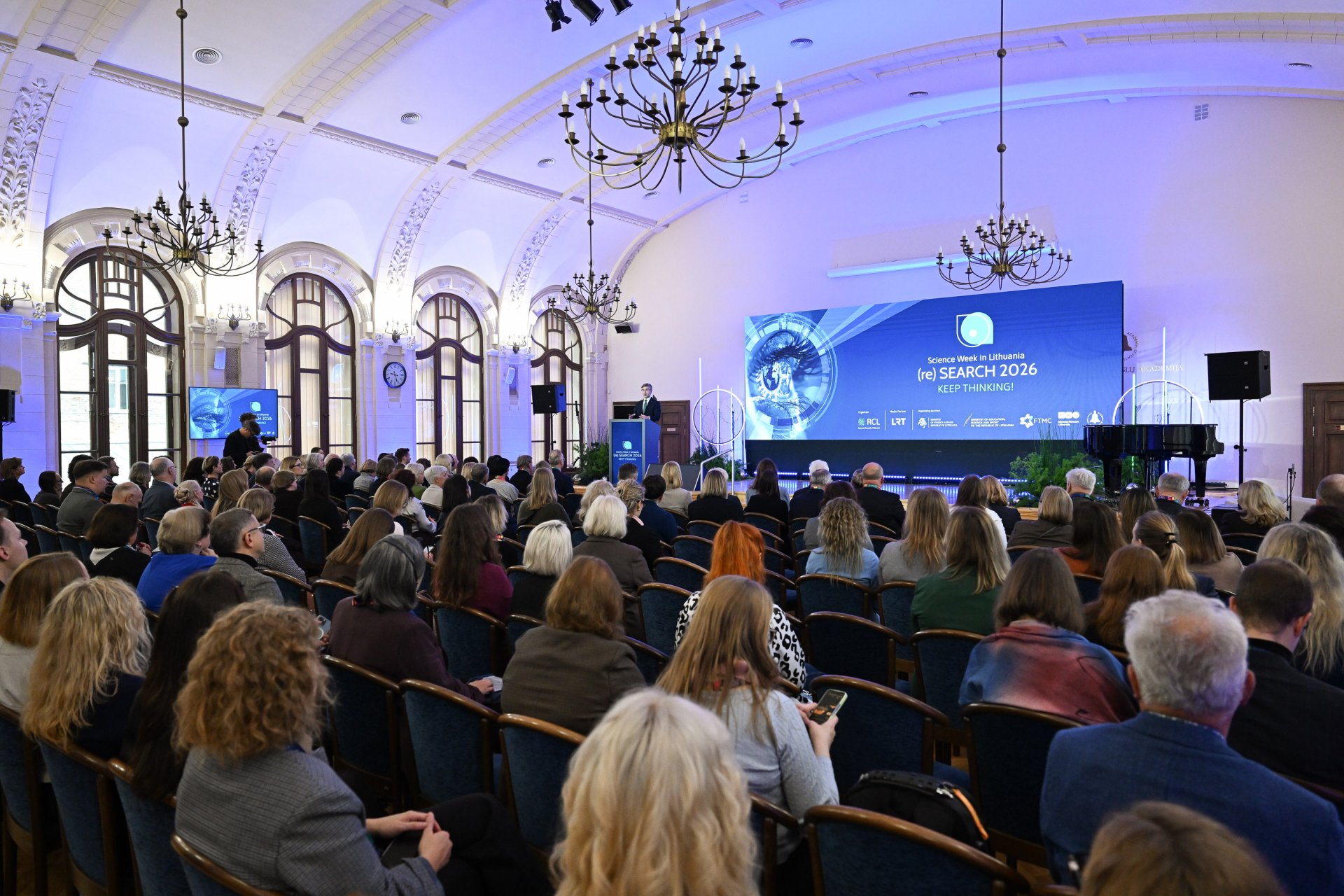
On 20 October, Minister of Foreign Affairs Kęstutis Budrys opened the Lithuanian Science Forum "When Science Builds Bridges," part of the international science week (re)SEARCH 2026. This year’s forum, bringing together representatives of the Lithuanian and international scientific, political and diplomatic communities, is dedicated to science diplomacy.
In his opening remarks, the Minister stressed that over the past year Lithuania had made significant progress in strengthening its science diplomacy framework and that science diplomacy was becoming an increasingly important tool for developing international partnerships, enhancing the country’s competitiveness and raising Lithuania’s profile globally.
“A year ago, we spoke about the need for a clear strategic direction, stronger institutional coordination and effective mechanisms for cooperation. Today, we can already point to tangible results: strategic guidelines for science diplomacy have been developed, the Interinstitutional Council for Science Diplomacy is operational, and Lithuania is becoming a model for other countries in the region,” said Budrys.
According to the Minister, what has been created over the past year is not a formal bureaucratic structure, but a dynamic model of cooperation involving public institutions, academia and business. This framework not only identifies priorities but also helps to implement them effectively.
The Minister highlighted the signing of a letter of intent with the European Commission’s Joint Research Centre (JRC) as one of the tangible achievements, opening up new opportunities for cooperation in research.
In his opening remarks, Budrys also emphasised the importance of international partnerships. Tomorrow, the Lithuania–United States Science and Innovation Forum will take place, aimed at strengthening cooperation in research, innovation and technology. According to the Minister, this is an important part of the broader strategic partnership between Lithuania and the United States, alongside cooperation in security, defence and energy.
“Our aim is not only to strengthen institutional ties, but also to promote talent mobility, business engagement and investment in innovation. Science diplomacy must create tangible value for the country and its economy,” said Budrys.
The Minister also mentioned the Lithuania–Germany Science Forum planned for next year, which will place particular emphasis on expanding bilateral cooperation in research and innovation. Another of Lithuania’s strategic goals is to become a full member of the European Organization for Nuclear Research (CERN), an objective that requires close cooperation between the scientific community, business and diplomacy.
In his remarks, Budrys also highlighted the opportunities that Lithuania’s forthcoming Presidency of the Council of the European Union will provide for raising the international profile of Lithuanian science. According to the Minister, a strong and competitive EU is inconceivable without leadership in science, technology and innovation.
“In today’s geoeconomic competition, those capable of developing and deploying the most advanced technologies will succeed. Europe must strengthen its innovation capacity, and Lithuania is determined to make an active contribution to this effort,” said the Minister.
Lithuania’s Foreign Minister thanked the scientific community, researchers, innovators and others contributing to the internationalisation of Lithuanian science.
“Science diplomacy is first and foremost about people: those who generate ideas, seek solutions and build connections. Lithuania’s success will depend on our ability to think ambitiously, work together and turn knowledge into a source of national strength,” said Budrys.
The Lithuanian Science Forum is organised by the Research Council of Lithuania together with Lithuania’s Ministry of Foreign Affairs and the Ministry of Education, Science and Sport. The forum brings together representatives of the European Commission, CERN, the European Molecular Biology Laboratory (EMBL), and institutions from the United States and Germany.
Social media


