


Budrys on the painful lessons of European history: the examples of Bucha and Irpin today once again prove that, as memory fades, mass graves return
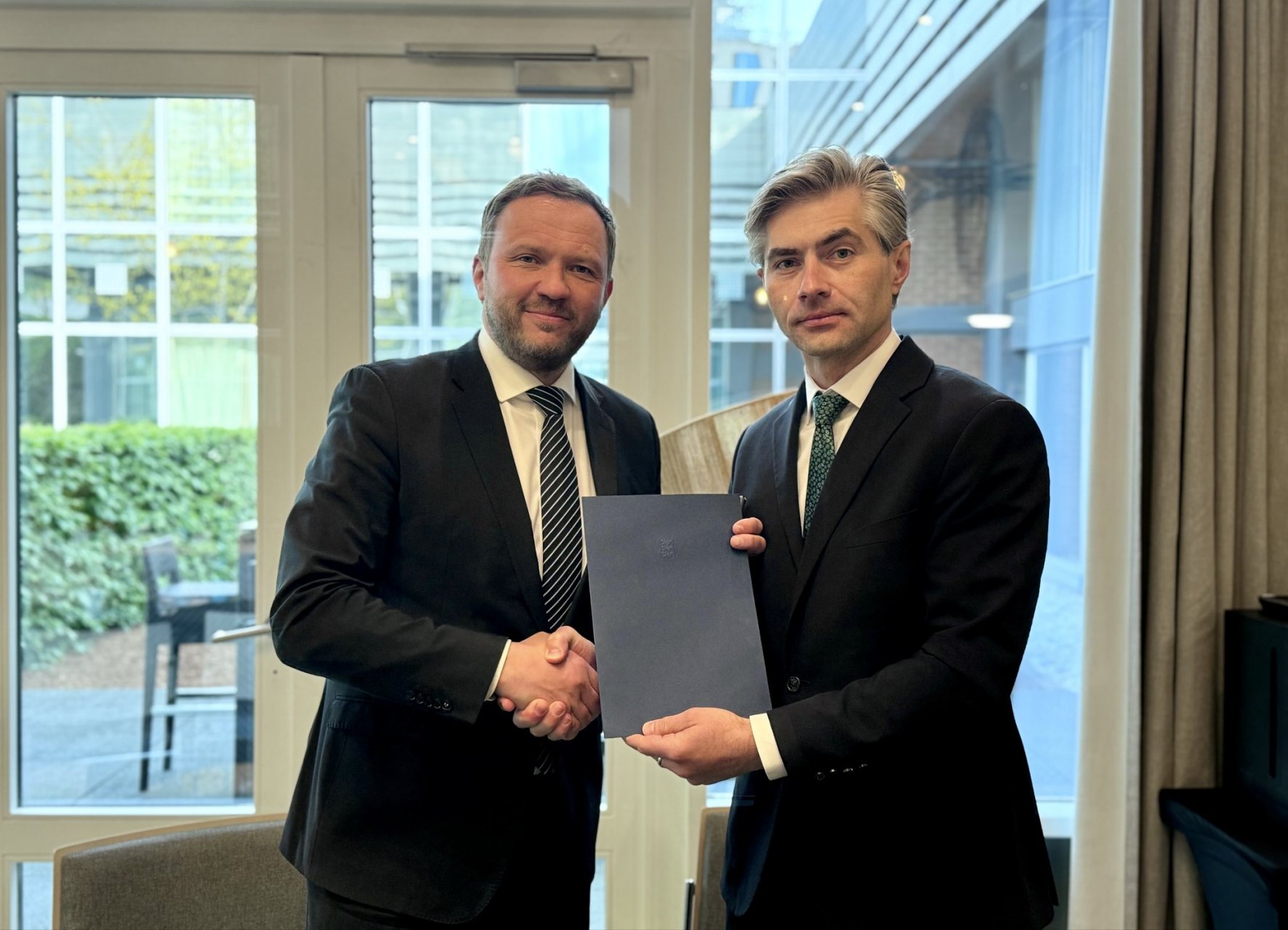
On 21 April, Estonia joined Lithuania's initiative in Brussels to inaugurate a European memorial for the victims of totalitarian regimes. The official letter, in which Estonia confirms its participation in this project and allocates financial support for its implementation, was presented today by Estonian Foreign Minister Margus Tsahkna to Lithuania’s Minister of Foreign Affairs Kęstutis Budrys.
The planned memorial in Brussels – in the heart of the European Union – will be dedicated to honoring the millions of victims of totalitarian regimes across the continent and strengthening Europe's historical memory. This joint initiative also aims to emphasize the solidarity among the Baltic states and underline their shared historical experience during the period of Nazi and Soviet totalitarianism.
According to the Minister, Soviet repression in the Baltic States was a systematic and deliberate war crime committed by the so-called "winner" of the Second World War – the Soviet Union, which was never held accountable for the Molotov-Ribbentrop Pact, neither for starting this war, nor for decades of terror and crimes against humanity.
"Almost every Lithuanian family experienced Soviet terror. Men, women, children, and the elderly were forcibly snatched from their homes, crammed into cattle wagons for deportation, tortured, imprisoned, or killed. Even newborn babies were accused of being "enemies of the people." Hundreds of thousands of people were deported to Siberia, and less than half of them have returned home," Budrys said.
According to him, as historical memory fades, mass graves return. This is once again demonstrated today by the examples of Bucha and Irpin.
The memorial for Victims of Totalitarian Regimes in Brussels will contribute to preserving historical memory, honor the victims, and strengthen the principle of justice. The memorial's location next to the European Parliament will serve as a reminder that democratic decisions must be based on historical responsibility and respect for human dignity.
The initiative was started in 2017 by the Platform of European Memory and Conscience (PEMC), and the memorial project has already received support from the European Parliament and other EU institutions.

Social media


