Budrys in the U.S.: we must strengthen the resilience of democratic societies to information threats together
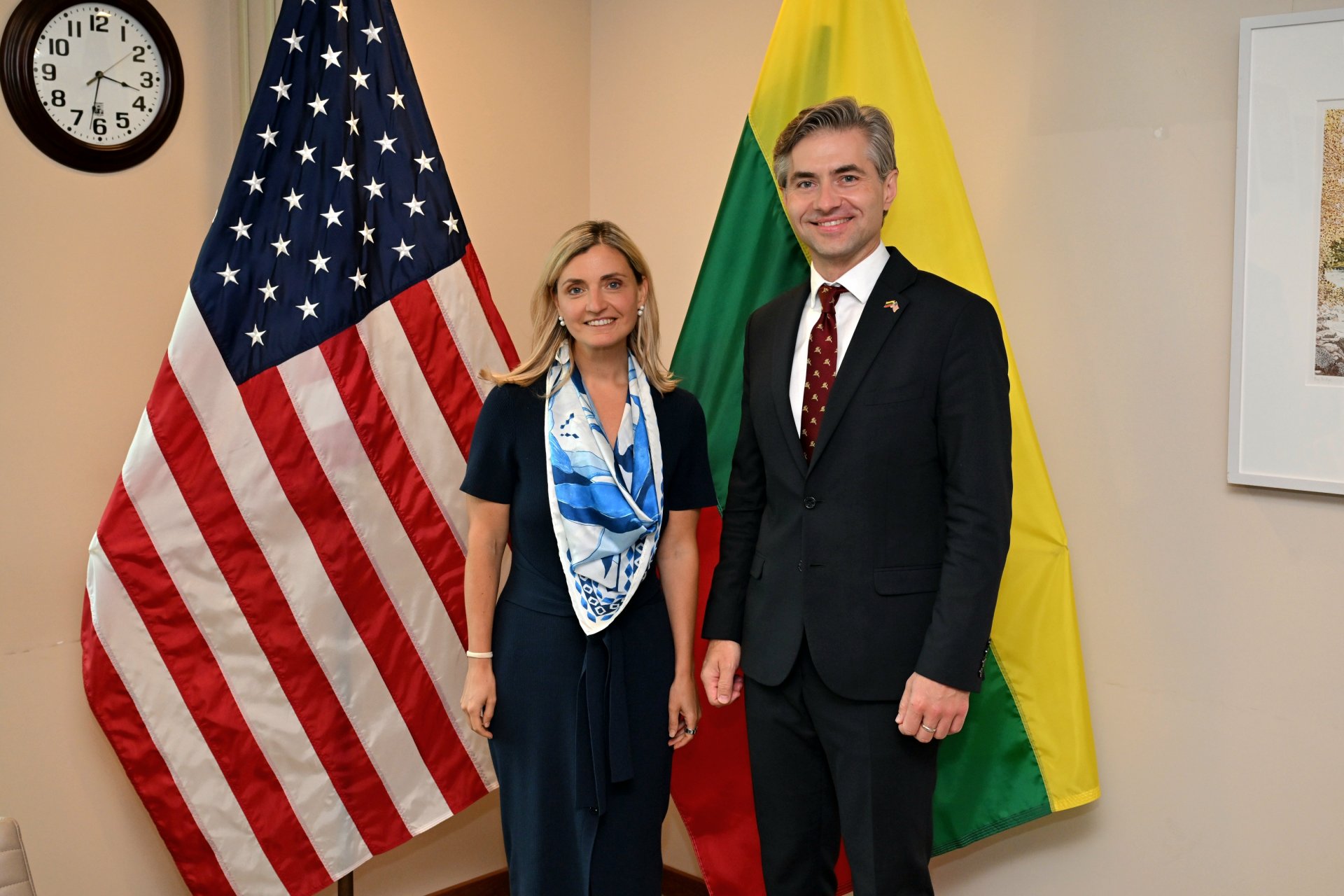
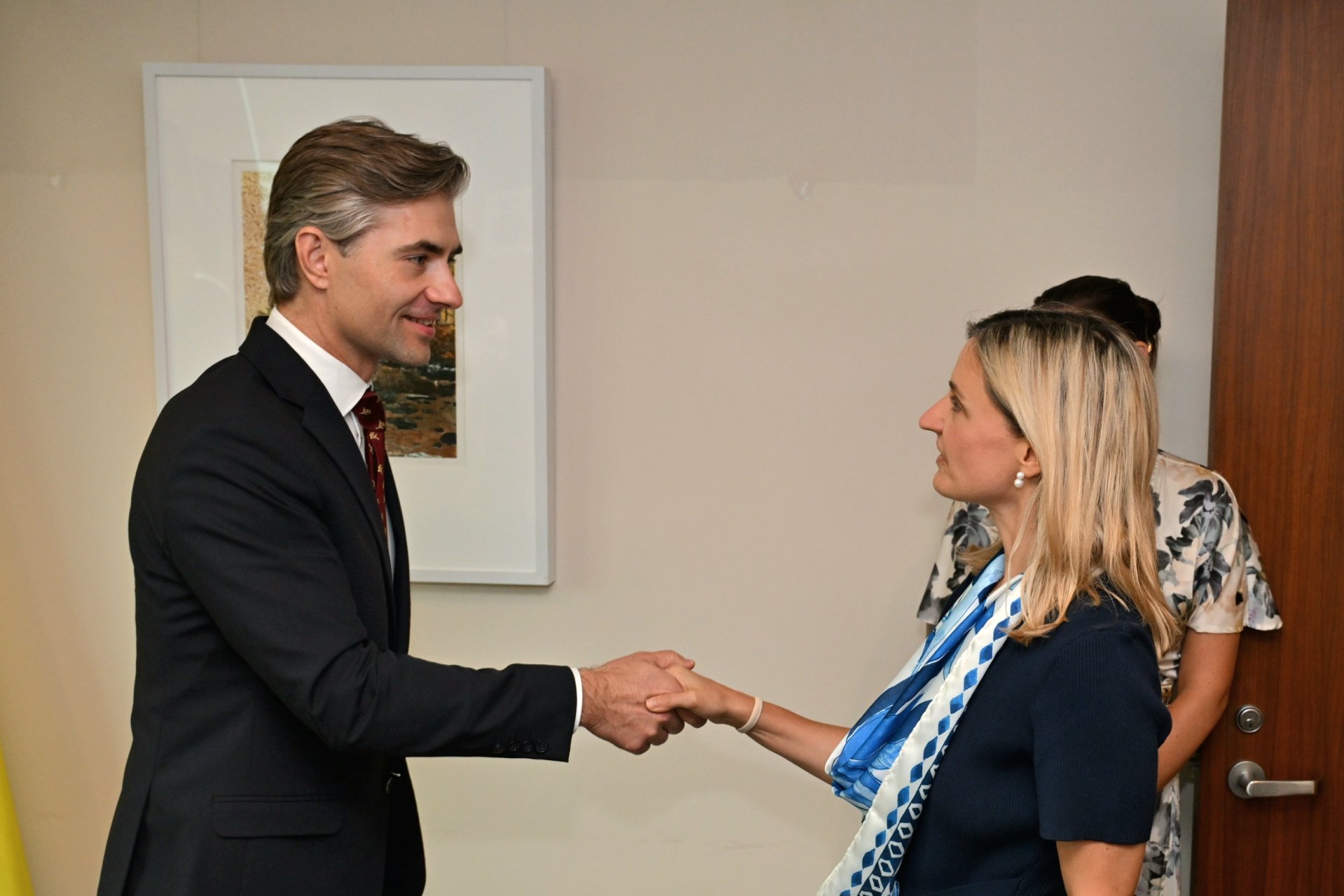
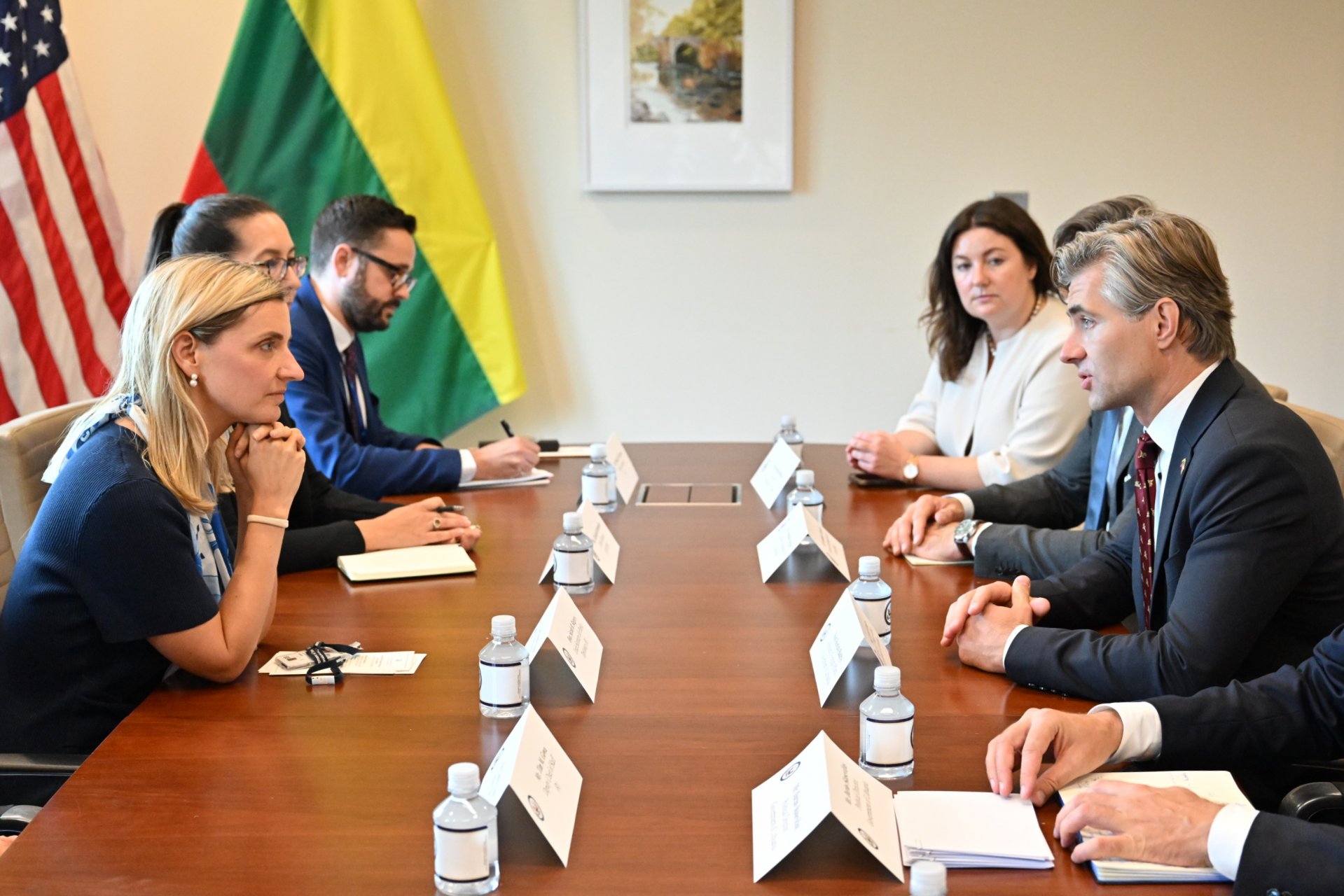
During his visit to Washington, the Minister of Foreign Affairs Kęstutis Budrys met with Sarah B. Rogers, Under Secretary of State for Public Diplomacy at the U.S. Department of State. During the meeting, Budrys and Rogers discussed the partnership between Lithuania and the United States in strengthening the resilience of democratic societies against information threats, supporting freedom of speech, and assisting societies suffering under the oppression of authoritarian regimes.
Budrys emphasized that Lithuania’s historical experience in fighting Soviet occupation and the communist regime offers unique lessons in the contemporary context of defending democracy and freedom.
“For five decades, Lithuania existed without freedom of speech. We experienced censorship, propaganda, and the systematic falsification of history, which is why we understand very clearly the value of free information and democratic debate. This experience allows us today to better recognize the methods used by authoritarian regimes,” said the Minister.
The Minister noted that Lithuania has kept a vivid memory of the consequences of totalitarianism and supports initiatives aimed at safeguarding historical truth and promoting the values of freedom.
The meeting focused heavily on information threats originating from authoritarian states. Budrys emphasized that Russia, Belarus, and China systematically seek to exploit the open information environments of democratic states for their own political ends.
“Countries that restrict their citizens’ freedom of speech actively exploit the open information spaces of democratic nations at the same time. Today, the vast majority of such operations are carried out on internet platforms, which make it possible to quickly and widely disseminate manipulative narratives,” the Minister said.
Budrys emphasized that Lithuania, as one of the world’s highest-ranked countries in terms of press freedom, strengthens its information resilience not through restrictions, but through democratic tools—by promoting media and information literacy, fostering critical thinking among the public, and collaborating with technology platforms.

Social media