


Budrys in Tallinn: Current air defence solutions are not sufficient - it is necessary to move towards systemic solutions that tmatch the scale of today's threats
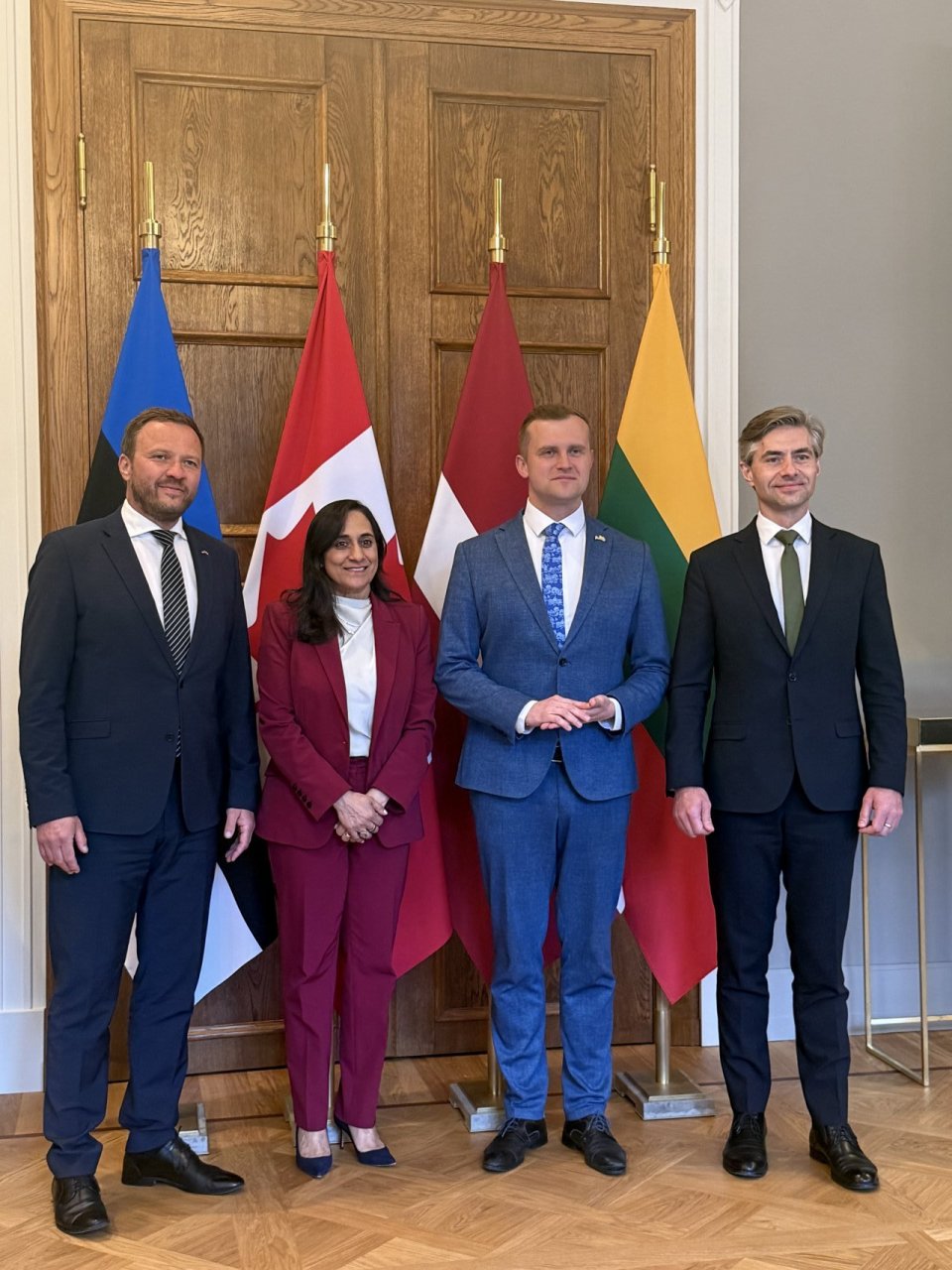
On 20 May, the Minister of Foreign Affairs Kęstutis Budrys attended a meeting of the Ministers of Foreign Affairs of the three Baltic states and Canada, which focused on the region's security situation, support for Ukraine, and further strengthening transatlantic cooperation.
The meeting underlined Canada's growing importance in strengthening NATO's eastern flank and ensuring overall regional security.
When discussing the security challenges facing the region, the head of Lithuania's diplomacy emphasized that the recent intensification of drone violations of Baltic airspace shows a clear trend: such actions are becoming more frequent and more coordinated.
"We see a deliberate Russian effort to spread misleading information about the origin of these incidents, combining military measures with disinformation campaigns," Budrys stressed.
The Minister also highlighted that these airspace violations are directly related to Russia’s ongoing aggression against Ukraine and a broader context of unconventional warfare. "These are not isolated cases, but part of a coherent hybrid activity involving the use of drones, cyber-attacks and information operations," the Minister said.
According to Budrys, such actions must not divert attention from the essential tasks of strengthening defence capabilities and the resilience of society.
The meeting focused on strengthening the air and missile defence of NATO frontline states. Budrys stressed that current solutions based on the rotational model are no longer sufficient. Therefore, it is necessary to expand capabilities and ensure the continuous and integrated operation of air defence.
"We need to move from a temporary to a systemic solution that is proportionate to the scale of today's threats," the Minister said.
According to Budrys, the second key priority is sustained pressure on Russia through a strict sanctions policy.
The Minister thanked Canada for its leadership in this area and underlined that the European Union is continuing to work on new packages of restrictive measures. "We will not stop until Russia stops its aggression. At the same time, we will seek to ensure that responsible parties are brought to justice," he said.
Cooperation on legal accountability for war crimes committed by Russia was also discussed. The Minister highlighted Canada's signing of the Council of Europe convention establishing an International Claims Commission for Ukraine, which is considered a significant step in ensuring justice and compensation mechanisms for Ukraine.
It was noted that the end of the war would have a lasting impact on the European security architecture.
The four-party meeting also highlighted the deepening cooperation between the Baltic states and Canada, especially in the fields of defence industry and economic relations.
Budrys stressed the importance of unity in the Alliance and the need to implement commitments with real solutions, increase defence funding, and strengthen support for Ukraine. "This is a shared responsibility that we can only achieve if we act together," he said.
Social media


