


Budrys in Helsinki: security in the Baltic Sea and the Arctic is closely interconnected
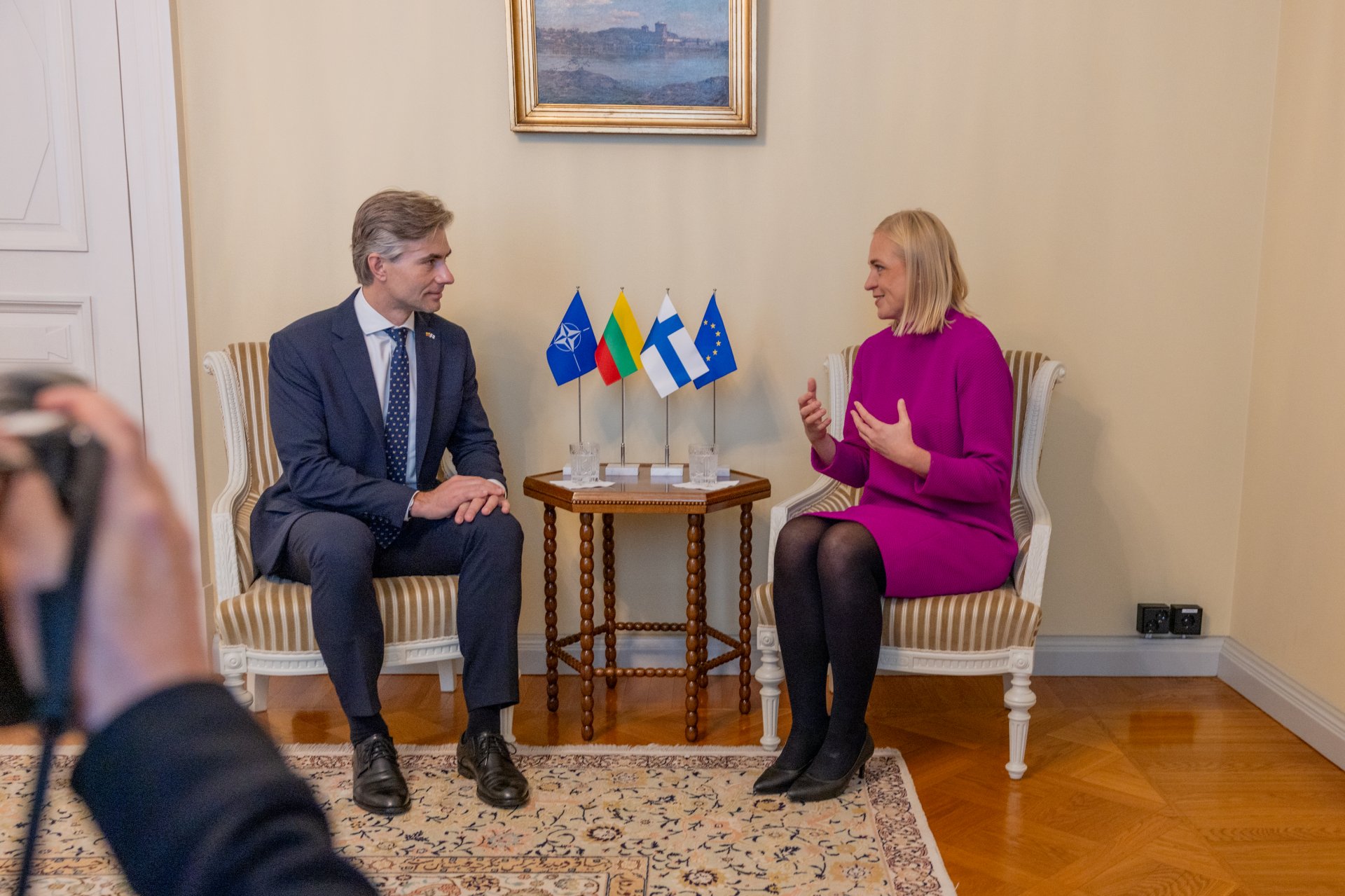
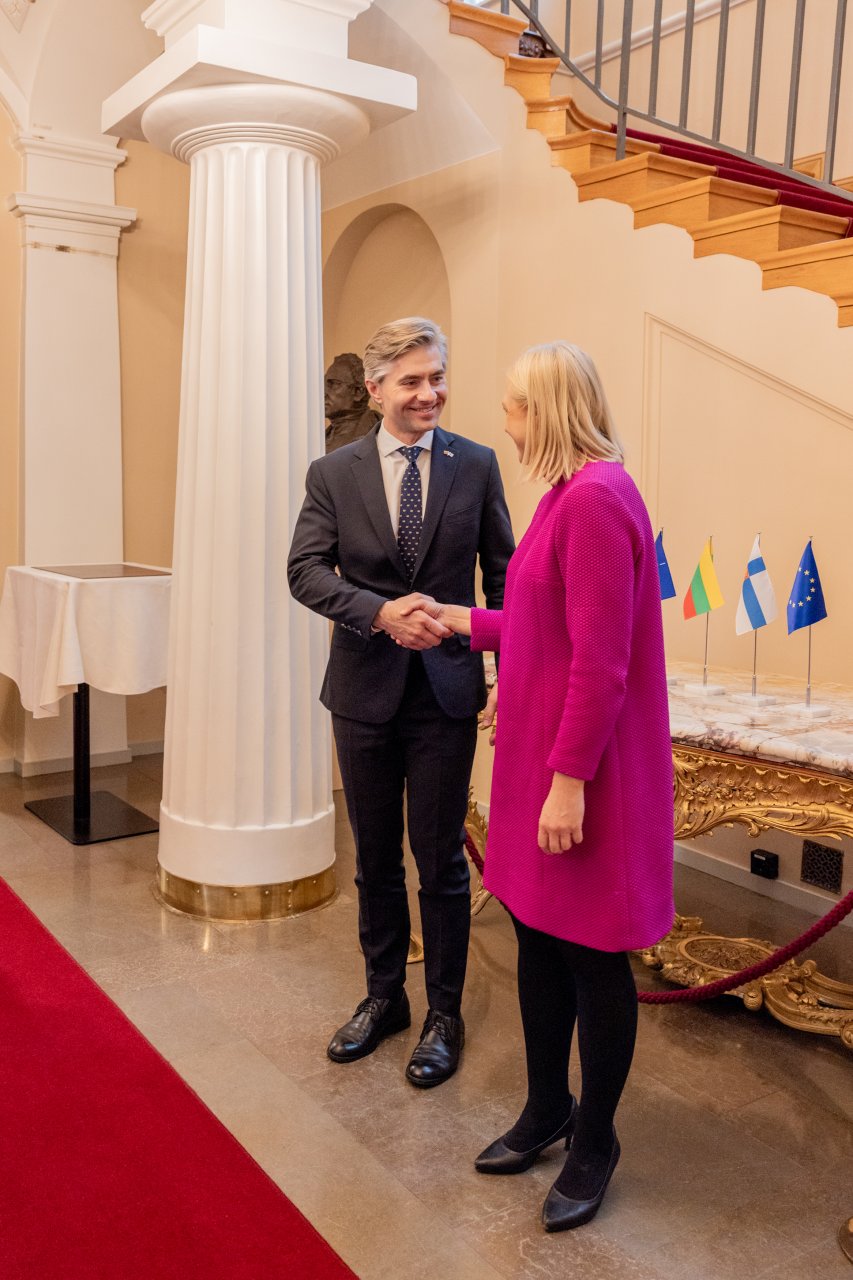
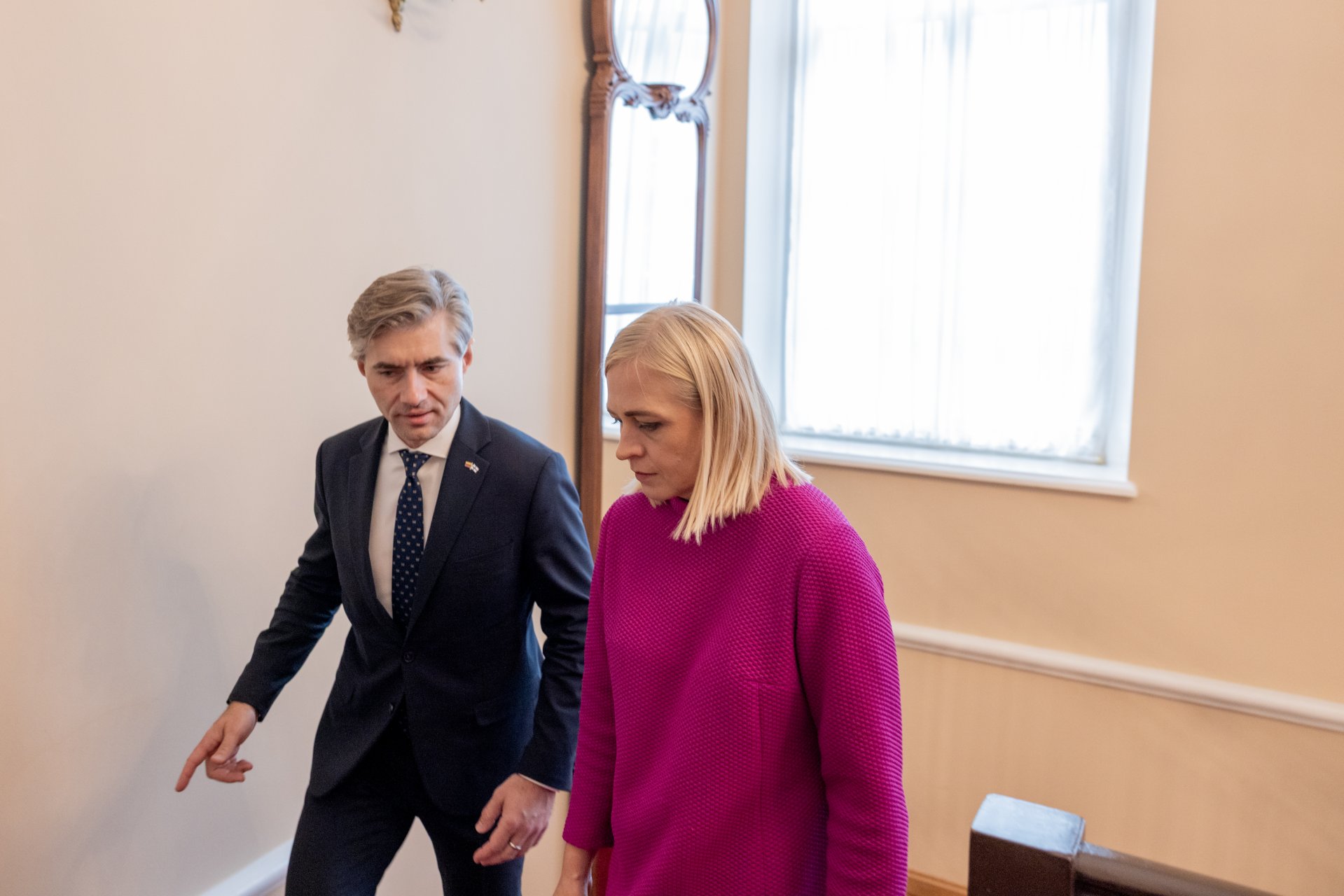
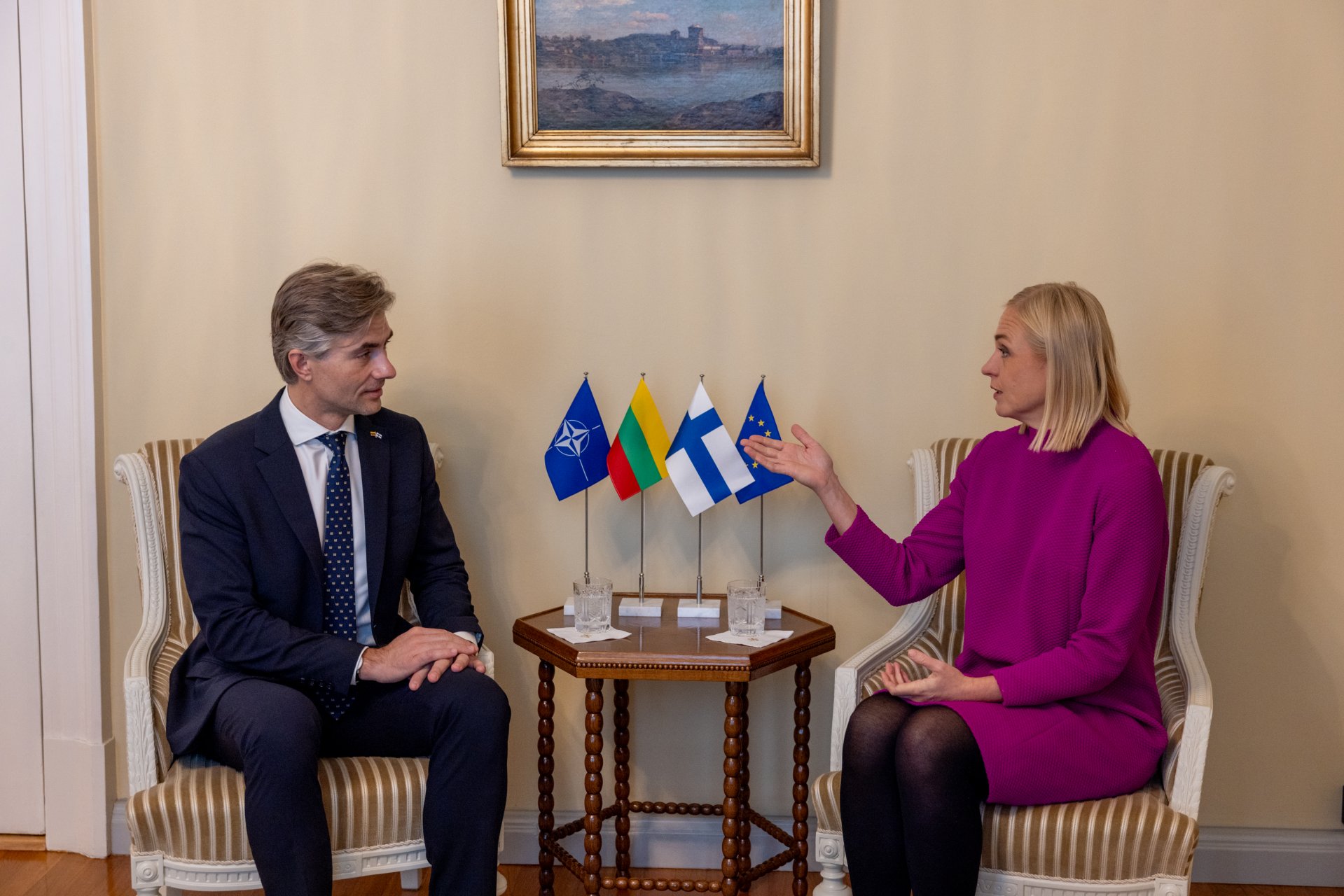
On 2 October, Minister of Foreign Affairs Kęstutis Budrys met with Finland’s Minister for Foreign Affairs Elina Valtonen to discuss bilateral relations and regional security issues, strengthening transatlantic ties, and support for Ukraine. They also discussed opportunities to expand economic cooperation, particularly in the defence industry, quantum technologies, financial technologies, life sciences, lasers, and photonics sectors.
“Finland is a close partner of Lithuania in the European Union and a reliable NATO Ally. We are united not only by intensive and steadily strengthening bilateral relations, but also by a shared approach to the security of Europe, the Arctic and the transatlantic area, all of which are closely interconnected. Lithuania is interested in expanding cooperation in the fields of civil protection, societal resilience, the protection of critical infrastructure, and mobilisation,” said Budrys.
Lithuania’s Foreign Minister stressed that the aggressor’s hybrid and so-called “grey zone” operations are becoming increasingly kinetic in nature. It is therefore essential to continue the consistent implementation of NATO capability development targets, strengthen the Baltic Sentry mission in the Baltic Sea, and devote greater attention to military mobility and the protection of critical infrastructure. According to the Minister, the best response to such malicious activity is to tighten sanctions and pressure on Russia while eliminating opportunities for sanctions circumvention.
Kęstutis Budrys invited Finland to further strengthen cooperation in the areas of situational awareness, intelligence sharing, air and maritime domain coordination, and joint military exercises.
According to the Lithuanian Minister, a strong transatlantic bond remains the cornerstone of Europe’s security.
“Europe’s security is inseparable from the United States. We must preserve the United States’ engagement in Europe, while the continued military presence of American and other Allied forces in the region remains the most important deterrent factor,” said Budrys.
He also emphasised the need for European countries to increase defence investment, accelerate the development of defence industries, and address critical capability shortfalls.
According to Kęstutis Budrys, with winter approaching, it is essential to urgently strengthen Ukraine’s air defence capabilities and ensure uninterrupted military, financial and political support.
Minister Budrys noted that Ukraine’s needs are clear, and it is the responsibility of Allies to ensure that these needs are met adequately and in a timely manner. He also called for maintaining pressure on Russia through sanctions and for ensuring that Ukraine’s path towards European Union membership continues to move forward without artificial obstacles.
The Lithuanian and Finnish ministers also discussed the impact of artificial intelligence and emerging technologies on geopolitics. According to Kęstutis Budrys, for small states artificial intelligence is becoming not only an economic issue but also a matter of national security and resilience. Closer Nordic-Baltic cooperation in the fields of artificial intelligence, data protection, quantum technologies and critical infrastructure would contribute to strengthening regional security, enhancing technological sovereignty, and increasing Europe’s competitiveness.
Social media


